


Go Ahead Given for Canada LNG to Double Capacity
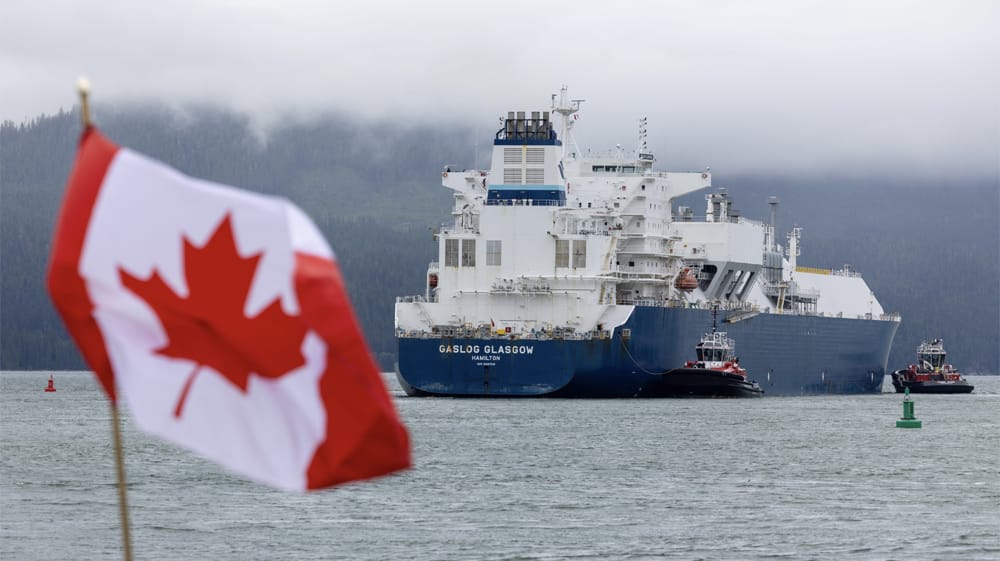
Canada LNG, the country’s first LNG export operation, reports that, along with its investment partners, the decision has been made to proceed with Phase 2 of the operation. It comes just about 15 months after the project began exports, and according to the group, it builds on Phase 1 with a new project that represents one of the largest private sector investments in Canada.
Located in Kitimat, British Columbia, the partners highlight that it is ideally located to serve the growing Asian market for LNG. It has access to an ice-free deepwater harbor and is fed by a pipeline. In its first year of operation, it shipped more than 100 cargoes.
Shell owns 40 percent of the project along with Petronas (25 percent), PetroChina (15 percent), Mitsubishi Corporation (15 percent), and Korea Gas (5 percent). It began exports in June 2025 with its first train and completed the second train in October, with an annual capacity of 14 million tonnes per annum.
“LNG Canada Phase 2 is another nation-building investment that demonstrates Canada can build big things when governments, First Nations partners, local communities, skilled trades, contractors, and investors work together with shared purpose. With FID secured, Phase 2 will double LNG Canada’s capacity from 14 to 28 million tonnes a year, putting LNG Canada on a trajectory to become one of the largest LNG facilities in the world and helping move Canada toward becoming one of the world’s top five LNG exporting nations,” said Chris Cooper, President and CEO, LNG Canada.
The partners highlight that global demand for LNG is expected to increase from 422 mtpa in 2025 to nearly 700 mtpa by 2050. According to Shell's LNG Outlook 2026, global LNG demand is expected to rise by around 60 percent by 2040 and around 65 percent by 2050, driven by growing energy demand and the need for secure, flexible, and reliable energy supplies.
“At a time when our country must build a stronger economy that allows us to be an energy superpower for the long term, this is exactly the kind of investment Canada needs,” said the Honourable Tim Hodgson, Canada’s Minister of Energy and Natural Resources.
The Phase 2 expansion will add two additional LNG trains, within LNG Canada’s existing Kitimat facility, increasing total production capacity from 14 to 28 mtpa. Phase 2 includes an additional LNG storage tank, condensate tank, loading berth, expanded utility and process systems. LNG Canada has also entered into commercial agreements to act as execution manager, working with Coastal GasLink to expand the capacity of the existing 670-kilometer pipeline through the construction of five new compressor stations.

that matters most
Get the latest maritime news delivered to your inbox daily.
As with the first phase, the LNG will be distributed between the partners based on their shares. Shell Canada reports it will receive nearly 6 mtpa of additional LNG from the expansion, which is expected to start production in the early 2030s.
Fluor Corporation, in a joint venture with JGC Corporation, has been selected to deliver engineering, procurement, fabrication, construction, and commissioning for the Phase project. The same partnership developed the first phase, and Fluor reports the new effort is a multibillion-dollar contract, of which Fluor will recognize its US$7.5 billion share in the third quarter of fiscal 2026.
