


Five Issues That Derail Vessel Control System Modernizations
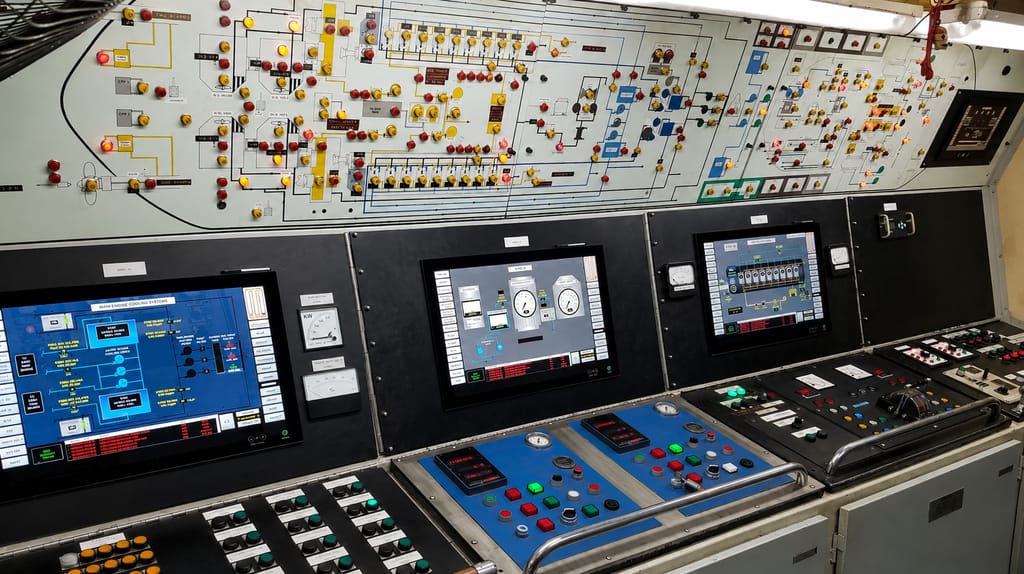
A vessel control system modernization can look straightforward on paper: remove aging components, install new hardware and software, test the system and return the vessel to service. In practice, the most difficult problems are rarely caused by a single PLC, display or sensor. They develop at the interfaces between old and new equipment, between drawings and actual shipboard conditions, and between the organizations responsible for design, installation and commissioning.
1. Starting with incomplete information
Many working vessels have been modified repeatedly over their service lives. Drawings may not reflect field changes, replacement equipment or temporary repairs that became permanent. Cable identification can be incomplete, and the original control logic may no longer be available in a usable format.
A modernization that relies only on the drawing package is exposed from the beginning. Field verification should document the installed system, available space, power sources, I/O, alarms, communications and interfaces with propulsion, generators and auxiliary machinery. The goal is not simply to confirm what exists. It is to identify the differences between the drawings and the vessel before those differences become change orders or schedule delays.

The original machinery control system relied heavily on aging analog instrumentation and legacy alarm components.
2. Treating the project as a component replacement
Replacing an obsolete PLC or operator display does not automatically modernize the complete system. The new equipment must still communicate with existing machinery, sensors, starters, drives, protective devices and remote stations. It must also preserve the operating modes, interlocks and fail-safe responses the crew depends on.
The system should be evaluated as a whole. That includes the sequence of operation, alarm management, data retention, network architecture, electrical power quality and the response to lost power or communications. A successful project improves capability and maintainability without introducing new single points of failure.
Crew input is also important. Operators know which alarms create confusion, which operating steps are unnecessarily complicated and which information they need during abnormal conditions. Involving them early helps the new system improve daily operation instead of simply reproducing the limitations of the old one on a newer screen.
3. Leaving interface responsibilities undefined
Control-system modernizations normally involve several parties: the vessel owner, shipyard, electrical installer, equipment manufacturers, software developer, regulatory representatives and commissioning team. Problems arise when each party assumes another is responsible for a particular cable, signal, drawing, setting or test.
Those boundaries should be established before work begins. A clear responsibility matrix should identify who owns the control philosophy, drawings, equipment procurement, panel fabrication, software, installation details, terminations, network configuration, test procedures and final as-built documentation. Assigning a single electrical integrator to manage these interfaces can reduce gaps and provide one technical path from design through commissioning.
4. Waiting too long to plan testing and commissioning
Commissioning should not begin when the installation is declared complete. Test requirements should influence the design from the outset. Every alarm, permissive, interlock, operating mode and failure response needs a practical method of verification.
Factory testing can confirm much of the software and panel functionality before equipment reaches the vessel. Shipboard testing should then progress from point-to-point checks to equipment-level tests, integrated system tests and operational trials. This staged approach makes problems easier to isolate and keeps avoidable troubleshooting away from the final days of the schedule.
Where practical, simulation allows the integrator and crew to exercise operating scenarios before the system is connected to live machinery. Normal starts and stops are only part of the test. Loss of signals, failed communications, emergency stops and recovery after power interruption should be verified deliberately rather than discovered during trials.
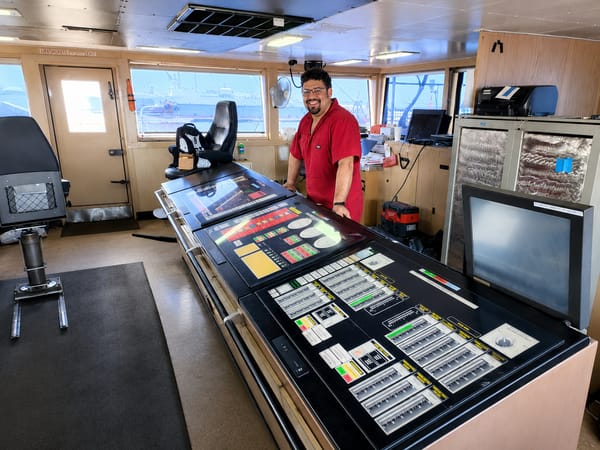
An MES engineer supports vessel control-system inspection, integration and testing aboard a working vessel.
5. Overlooking the system after delivery
A modernization is not complete when the vessel passes its final test. The crew and future service technicians need accurate drawings, software backups, parameter files, alarm lists, operating guidance and an organized spare-parts strategy. Owners should also understand who controls the source code, passwords and software licenses required to support the system.
Lifecycle planning matters because the vessel will continue to change. Good documentation and a maintainable architecture make later additions and troubleshooting faster and less expensive. Without them, even a newly modernized system can become difficult to support.
Training should be based on the finished system rather than generic product material. Crews need to understand normal operation, alarm response, backup modes and the limits of what can be repaired aboard the vessel. Maintenance personnel also need a clear process for obtaining technical support and restoring the system after a hardware or software failure.
Plan the complete system
The strongest vessel modernization projects connect field verification, engineering, equipment integration, installation support and commissioning into one continuous process. McCullough Engineering Services supports shipyards and vessel owners with marine electrical and machinery-control-system design, PLC and HMI development, power-system engineering, equipment integration, testing and field support. The objective is straightforward: define the interfaces early, verify the complete system and return the vessel to service with documentation and support that will remain useful long after delivery.
Learn more about MES at mccullougheng.com
The opinions expressed herein are the author's and not necessarily those of The Maritime Executive.
