


UK Shipbuilding and RFA Mark Milestone as Keel is Laid for Support Vessel
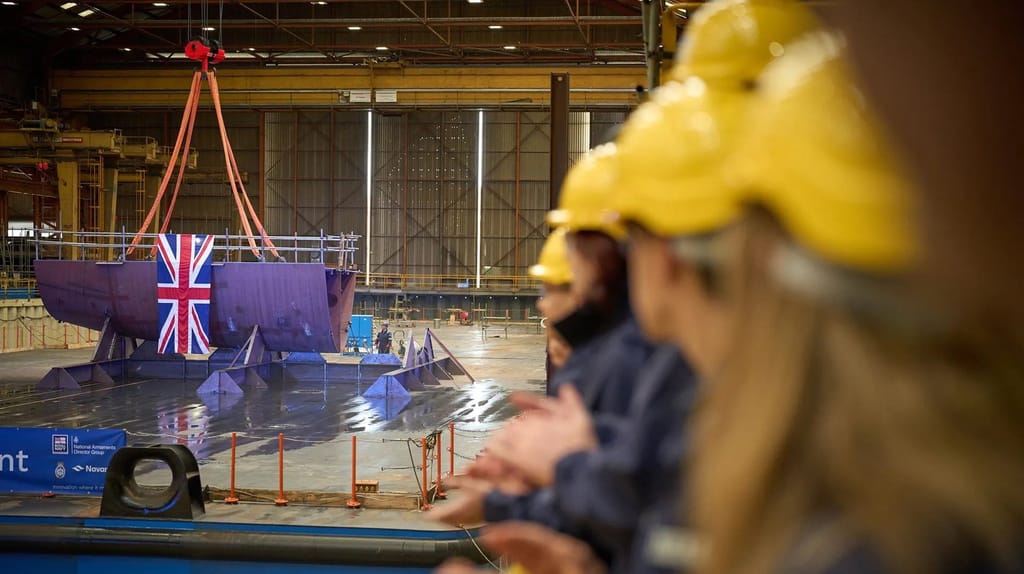
Officials from the UK’s Ministry of Defence, the Royal Navy, the Royal Fleet Auxiliary, and Navantia UK gather at the Appledore shipyard on September 3 to witness the ceremonial keel laying for the first of three Fleet Solid Support vessels for the RFA. A long time in coming, it marks more than just a shipbuilding milestone, as it is a key addition to the RFA and the revitalization of shipbuilding at Appledore and the Harland & Wolff Group, acquired by Navantia.
“Today is an important moment for Fleet Solid Support, for Appledore, and for the renewal of UK shipbuilding,” said Donato Martínez, CEO of Navantia UK. “The laying of the keel marks the formal start of assembly of the first ship and is clear evidence of the momentum we have built across the programme.”
The ceremony took place on Merchant Navy Day, which celebrates the UK’s civilian seafarers, including the men and women of the Royal Fleet Auxiliary. It involved putting the first block, a section of the bow of the future RFA Resurgent, onto the Seahorse barge in Appledore’s dry dock. The barge was built at Navantia UK’s Methil Yard and will carry completed blocks to the Harland & Wolff yard in Belfast. Other portions of the FSS vessels are being assembled at Navantia’s yard in Cadiz, Spain, with final assembly for the vessels at the yard in Belfast.
The program began in 2023 but was challenged by the insolvency of Harland & Wolff, which was rescued by Navantia. Today’s ceremony marked the next critical step following the start of test block construction at Appledore in August 2025, the completion of the Critical Design Review in October 2025, and the cutting of the first steel at Appledore in December 2025.
During the keel-laying ceremony for RFA Resurgent, head of the Royal Fleet Auxiliary, Commodore Sam Shattock, also revealed the second and third vessels would be named RFA Reliant and RFA Resourceful. He noted that RFA Resourceful is a new name embodying the spirit of the project while Resurgent and Reliant are names with storied histories for the Royal Navy. Shattock said the names are intended to convey values associated with the role that Fleet Solid Support Ships will play for the fleet.
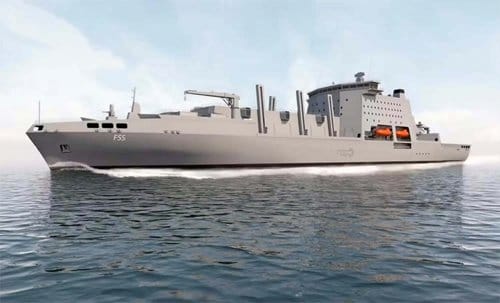
Rendering of RFA's new Fleet Solid Support vessels (Royal Navy)
At around 39,000 tonnes and 216 meters (708 feet) long, the vessels will be the largest ships in UK military service after the Queen Elizabeth-class aircraft carriers. They will provide logistical and operational support, including counter-piracy and counter-terrorism missions, and will collaborate with allies on operations. Each ship will have a core RFA crew of 101, with accommodation provided for an additional 80 personnel operating helicopters, boats, or performing other roles when required. The three Fleet Solid Support ships are designed to provide munitions, stores and provisions to Royal Navy task groups at sea.

that matters most
Get the latest maritime news delivered to your inbox daily.
As the project proceeds, it also marks the restoration of shipbuilding at Appledore, which had ceased operations when it was acquired by Harland & Wolff in 2020. The executives called it a significant moment in the regeneration of Appledore, which is undertaking its first shipbuilding activity since the completion of the Irish Naval Service offshore patrol vessel LÉ George Bernard Shaw in 2019.
Appledore today has a workforce that has grown to 210 people as part of Navantia UK’s investment of around £15 million at Appledore as part of more than £157 million across the four yards of the group. A new roof was put on the building hall at Appledore, as well as plasma-cutting equipment and a new pipe shop. Navantia looks to leverage this project and to position the UK operation to participate in the government’s planned investment in the Royal Navy in the coming years.
