


California's Port of Oakland to Expand Turning Basin to Handle Larger Ships
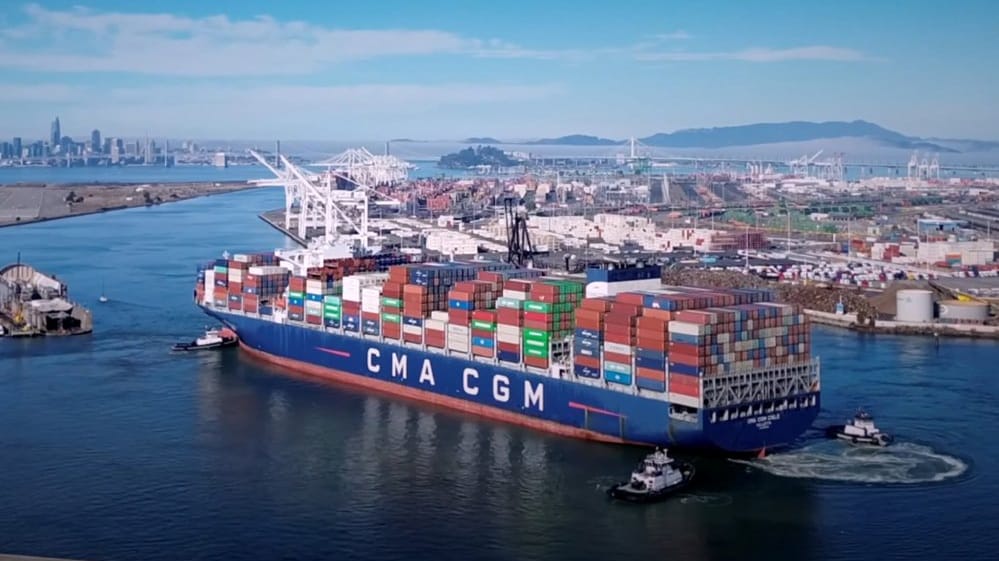
California’s Port of Oakland in the San Francisco Bay Area has completed an agreement with the U.S. Army Corps of Engineers to increase the port’s ability to handle larger vessels. After years of planning, an agreement was signed on August 27 with designs for widening and modernizing the turning basins for the Port of Oakland.
The project will expand both the inner and outer harbor turning basins. It calls for widening the estuary between Oakland and Alameda, California.
As port officials explain it, the current challenge is that at its widest point, the estuary is approximately 1,500 feet. The new generations of containerships are getting larger and longer at upwards of 1,300 feet. Often, it leaves as little as 150 feet of clearance between each side of the estuary for the big ships. When the effects of wind and currents are also factored in, the port may be limited to just one period a day when the large ships can be safely turned.
The Oakland Harbor Turning Basins Widening Project started roughly in 2020 and is now expected to be completed in 2030. Construction is scheduled to begin in 2028, and it is projected to cost $640 million. It will involve dredging just under five acres of the north Alameda shoreline. It will add approximately 344 feet to the width of the inner turning basin.
The project has gone through years of review, including an extensive environmental review process. The design agreement with the Army Corps is a critical step in the project.
Port officials are saying the project is key to modernizing the port’s infrastructure and ensuring that it remains competitive as a port city for large cargo ships. They said when completed, the project will provide more flexibility to maneuver larger ships multiple times per day. It will also reduce disruptions to ferry operations in San Francisco Bay.
Container volumes at the Port of Oakland have been largely stable for the past 20 years. Last year, 2025, it handled 2,253,976 TEU, and so far, this year it has handled 1,294,664 TEU, which is down nearly four percent versus 2025.
Port officials have highlighted the obstacles in the container operations, calling July 2025 a “challenging month.” The uncertainties in the market have meant that laden volumes have been essentially flat this year, although the port has seen a slight increase in export volumes. In July, the Port of Oakland recorded 81 vessel calls during the month, compared with 95 in July 2025.

that matters most
Get the latest maritime news delivered to your inbox daily.
In the near term, they noted they are hearing a positive outlook for the remainder of the year from the ocean carriers that call at the port. Port officials emphasize the competition from the Southern California ports of Los Angeles and Long Beach and Seattle, Washington. Oakland recently installed the West Coast’s tallest cranes, and with the expanded turning basin, they expect to enhance the Port of Oakland’s competitive position.
