


At SMM, ABS Says the Best Green Investments are Agility and Efficiency
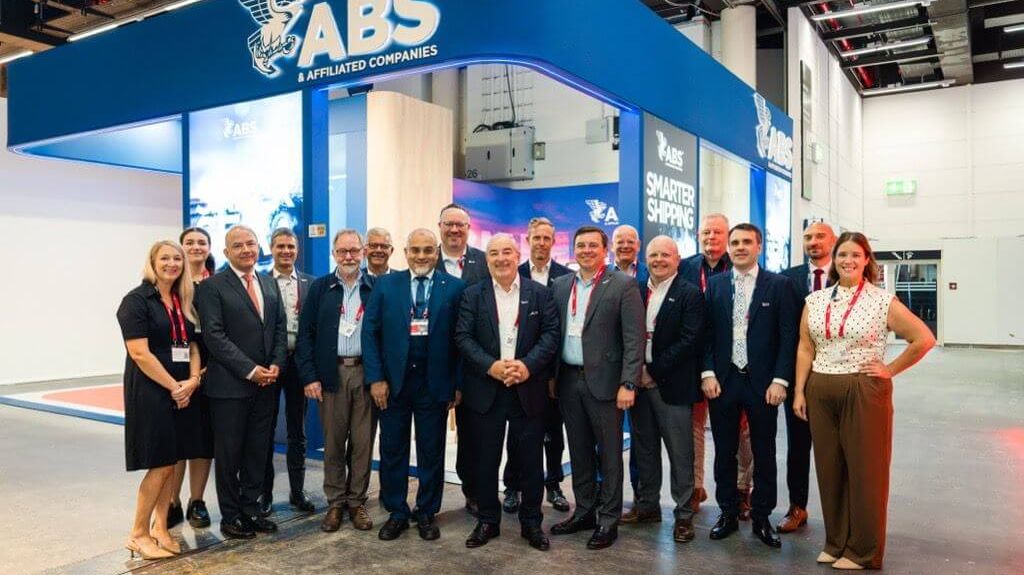
In a panel event just before the opening of SMM 2026, the American Bureau of Shipping updated its outlook for the state of green shipping and came away with a new conclusion: success doesn't depend on picking the right winning fuel - it depends on making the right capital decisions, preparing for multiple scenarios, investing in people and execution capacity, and staying ready to adapt.
At present, future fuels are constrained by a hard market reality: charterers want the least-cost quality option. One owner told ABS that not one customer had been willing to pay anything over direct regulatory cost in the last three years.
"We want to decarbonize. Very few customers, on the other hand, are willing to pay a meaningful premium for it," explained Rostom Merzouki, Vice President of Sustainability at ABS. "That means there is no guarantee that greener vessels will earn more revenue."
In this commercial environment, the watchword of the moment is efficiency, he says. Inefficient tonnage incurs present-day costs, and not just in fuel consumption. In Europe, FuelEU and ETS charges now add up to as much as $9 million per vessel per year on Asia-Europe trade lanes. Outside of the EU, vessels with the worst CII ratings charter at a discount to better B-rated ships, and sell at an even steeper discount of up to 15 percent.
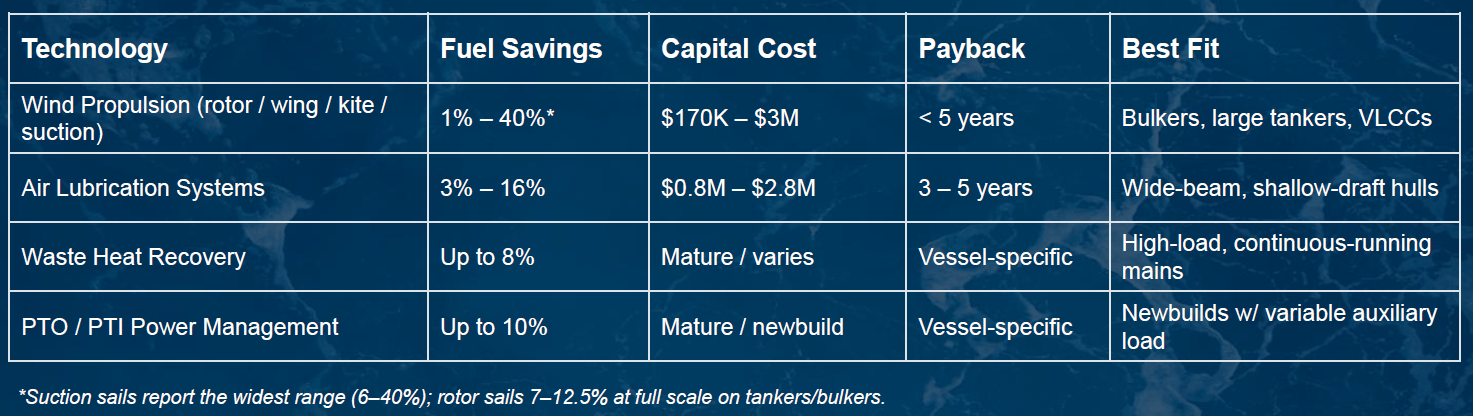
"Fuel efficiency remains the most resilient investment available today. It creates value regardless of which fuel wins, which regulation emerges in the field," he said. "Significant value can already be achieved through the technologies that are available now, like wind-assisted systems, air lubrication, waste heat recovery, digital optimization, predictive maintenance, and advanced voyage management."
Courtesy ABS
Capturing those savings requires "organizational readiness" - the staff capacity to adapt and execute - and a willingness to strike while the iron is hot. Supply chain capacity for efficiency retrofits may be limited by 2030, he says, when more and more operators may have to schedule yard periods to improve vessel fuel economy. Those jumping on the efficiency opportunity in 2027-28, he said, may be more likely to secure economical terms - and can abate the steep base-case compliance costs of the IMO NZF, if it enters into effect.

that matters most
Get the latest maritime news delivered to your inbox daily.
"Those waiting for more certainty may discover that certainty arrives after the available capacity is gone," he cautioned.
Contrary to conventional wisdom, investing in efficiency now may even be a better idea than casting the dice on a form of dual-fuel propulsion, depending upon fuel type and vessel trading pattern. "In many cases, investing in efficiency generates a stronger business case than investing in fuel flexibility that cannot be fully utilized," he said.
