


Big Three
In the ship registry business there's the Big Three and everyone else.
(Article originally published in July/Aug 2026 edition.)
The ship registry industry is undergoing a sea change.
As business booms with the global fleet reaching approximately 112,500 vessels and 2.44 billion deadweight tons in 2025, growth is consolidating around the most trusted and capable flags. These have evolved into sophisticated, round-the-clock regulatory service organizations built on compliance, predictable pricing and White List performance.
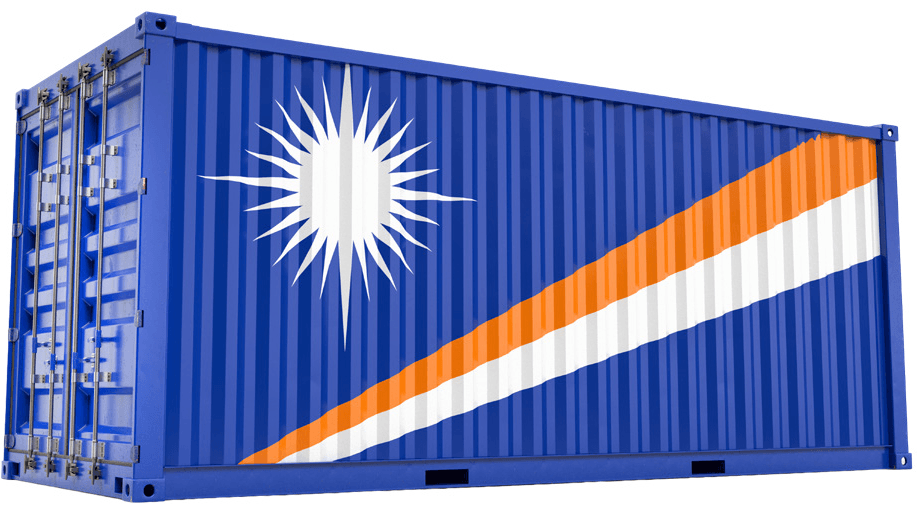
Nearly 50 percent of registered tonnage is now held by the three largest flags: Liberia with 17.4 percent, Panama with 15.2 percent and the Marshall Islands with 12.5 percent. This gives them 45.1 percent combined market share.
Their sustained growth is driven by several factors. An expanding global fleet, strong newbuild pipeline and increasingly complex regulatory requirements all play a role.
How the flags respond and adapt becomes a key competitive driver.
LIBERIA
With more than 5,900 vessels representing 307.3 million gross tons, Liberia is the largest registry out there.
In June of this year, Liberia became the first ship registry to exceed 300 million GT after having taken the lead over Panama in 2023. It did this in part through a focus on high-tonnage vessels including large containerships, tankers and LNG carriers and by targeting the newbuild market.
As market share is measured by gross tonnage and not by number of vessels, tonnage is considered a better measure of registry size.
Positioning itself as a commercially run, owner-focused registry with worldwide technical support has helped Liberia widen the gap since 2023. With 27 offices worldwide including one opened in Miami in 2023, it's become the de facto destination for new tonnage.
Another contributing factor is maintaining a good standing with the Paris and Tokyo MOUs' (Memorandum of Understanding) White Lists. These regional agreements help coordinate Port State Control inspections, which ensure that internationally trading vessels maintain suitable standards. Being "White-Listed" indicates that the registry is doing a good job of oversight as evidenced by a lack of vessel detentions for infractions. This makes it attractive to owners, charterers, banks and the insurance market.
Liberia's strategy has been one based on quality, and the results speak for themselves.
PANAMA
You may have heard about the recent dispute between Panama and China over the operation of ports along the Panama Canal.
In January of this year, Panama's Supreme Court cancelled a longstanding concession that allowed Hong Kong-based CK Hutchison to operate the Balboa and Cristóbal ports at either end of the canal, which it had been doing since the late '90s.
China viewed the decision as hostile, and soon afterward Chinese authorities sharply increased detentions and inspections of Panama-flagged ships, which impacted its status on the White List of the Paris MOU – one of the foremost international benchmarks for measuring the performance and quality of maritime administrations.
The situation has since improved with talks in Beijing and an agreement to renew the China-Panama maritime transport agreement. And while the number of detentions has fallen dramatically, the move triggered a record exodus from the registry as shipping companies moved away from the uncertainty of the situation.
Panama has also regained White List status through a number of other initiatives such as targeting high-risk vessels before they reach Paris MoU ports, strengthening deficiency monitoring, tightening registration screening, improving flag-state inspections, bolstering industry oversight and emphasizing prevention and continuous improvement to reduce incidents and enhance fleet performance.
Despite the approximate five percent loss of gross tonnage during this period, Panama retains a strong global market share of approximately 15 percent of the market. And the shakeup had a silver lining with an increased focus on quality and oversight, strengthening the services on offer.
MARSHALL ISLANDS
The Republic of the Marshall Islands (RMI) registry was recently awarded the U.S. Coast Guard's QUALSHIP 21 status for the 22nd consecutive year, making it the only registry to maintain the standard for that long. RMI-flagged vessels also represent the largest number of QUALSHIP 21-qualified ships worldwide.
QUALSHIP 21 recognizes and rewards high-quality, foreign-flagged vessels operating in U.S. waters. RMI-flagged vessels represented nearly 31 percent of ships enrolled in the program while the registry itself reached 6,295 vessels and almost 210 million GT for a total market share of approximately 12.2 percent.
"This milestone reflects the professionalism and dedication of our team, our fleet and our partners, who work each day to uphold the highest standards of safety and operational excellence," stated Bill Gallagher, President of International Registries, Inc., owner of the RMI registry. "This commitment to excellence guides every decision we make."
RMI also remains White-Listed on both the Paris and Tokyo MOUs and has a favorable rating with the Australian Maritime Safety Authority.
CHALLENGERS
While holding a much smaller percentage of global tonnage, the Bahamas, Cook Islands and Cayman Islands registries are still a force to be reckoned with. With a combined market share approaching five percent, they cumulatively account for approximately 74.4 million gross tons.
With a global market share of 3.8 percent, representing over 1,550 vessels and approximately 63 million GT, the Bahamas Maritime Authority (BMA) is staying ahead of the technology curve and recently announced the release of its blockchain-secured Digital Seafarer Record Book (DSRB).
"The launch of the Digital Seafarer Record Book forms part of the BMA's broader program of regulatory modernization and digitalization, including the recent implementation of the Merchant Shipping Regulations 2026," said Capt. Dwain Hutchinson, Managing Director & CEO. "We remain committed to leveraging technology to support customer efficiency, responsive service delivery and practical maritime administration."
The registry also recently regained eligibility for the USCG's QUALSHIP 21 program after recording only one detention from 591 U.S. Port State Control examinations in 2025. Its three-year detention ratio was just 0.55 percent.
The Cook Islands saw exceptional growth in 2024, expanding its tonnage by about 140 percent and propelling the small registry into the world's top 30 flags by tonnage. The rapid growth came at a cost, however, as a number of the vessels registered were tied to "flag hopping" tactics designed to evade sanctions on Iranian oil. This "ghost fleet" preys on small flags that lack the resources to effectively vet and enforce regulations.
The registry has since taken steps such as the launch of the Cook Islands Vessel Verification Portal – a tool designed to enhance transparency, efficiency and access to vessel information. It's also deleted 37 sanctioned tankers between 2022 and May 2025 and removed additional vessels for regulatory or insurance deficiencies. Stronger controls include restrictions involving Iranian and Venezuelan ports, ship-to-ship transfer controls, tighter seafarer vetting and regulatory audits in Europe.
The Cook Islands has emerged as a nimble challenger registry, combining rapid international growth with personalized service, global technical support and increasingly robust compliance controls.
The smallest of the covered registries by global market share at just 0.27 percent, the Cayman Islands Shipping Registry has nonetheless secured the number one position on the Paris MoU White List, achieving the highest ranking among all flag administrations evaluated under the 2025 performance assessment.
The Cayman Registry currently administers a fleet of more than 2,700 vessels and is internationally recognized for excellence across both the yachting and commercial shipping sectors. The high vessel-to-tonnage ratio reflects its status as a preferred yacht and superyacht registry.
Through its global network of offices and representatives in key maritime centers, the Cayman Registry provides responsive, high-quality services to clients worldwide.
SHIFTING TIDES
The global ship registry business is booming, but market leadership is shifting as registries compete on service, compliance and access to large, modern vessels. Liberia's rise past Panama shows that responsiveness and quality can overcome an incumbent's traditional scale while smaller registries can still secure profitable niches.

that matters most
Get the latest maritime news delivered to your inbox daily.
Future success will depend on balancing commercial growth with credible oversight, strong Port State performance and geopolitical resilience.
Sean Hogue is Executive Vice President at Baker Marine Solutions.
The opinions expressed herein are the author's and not necessarily those of The Maritime Executive.
