


CREA: Europe is Getting Results With Crackdown on False-Flagged Ships
Europe’s decision to intensify its crackdown and detentions of the shadow fleet transporting Russia’s crude is achieving results following a drastic decline in the number of vessels flying false flags and a growing number of sanctioned vessels seeking refuge in the Russian flag registry.
A report by nonprofit think tank Centre for Research on Energy and Clean Air (CREA) shows that due to detentions, the number of shadow vessels flying false flags has declined from a peak of 101 in October last year to 45 by the end of June. In the first half of this year, authorities boarded and detained some 13 tankers in European or UK coastal waters.
Among the shadow fleet vessels detained in European waters is the 2009-built Smyrtos, a crude oil tanker seized by British forces in the English Channel in June for violating Russian sanctions. In May, French troops boarded the Tagor (114,809 dwt) as she was sailing in the Mediterranean.
The CREA report shows that due to the increasing detentions and boarding, a growing number of the shadow fleet vessels are seeking refuge in the Russian flag registry. Over the period from January 2025 to the end of June this year, some 107 vessels were added to the Russian flag registry. This resulted in the number of ships now sailing under the Russian flag increasing by 36 percent from 280 vessels to 382. Notably, 87 percent of the vessels that joined the Russian ship registry over that period were already under sanctions.
The authors of the report highlight that December last year was the most active month in terms of shadow fleet reflagging. During the month, the Russian registry recorded an influx of 25 vessels. Since then, monthly additions have fallen on a monthly basis from 17 in January to just three in June, an indication that the initial surge of sanctioned vessels seeking refuge under the Russian registry has largely subsided mainly due to a draft presidential decree proposing to cap the age of vessels the registry accepts.
Notably, some 93 of the 107 vessels that joined the Russian registry were already under sanctions. 72 of them had transported Russian fossil fuels worth €7.5 billion ($8.5 billion) globally as of the end of June. After being sanctioned, the 72 vessels changed flags roughly three times more frequently, registering under a new flag every three to four months on average before settling under the Russian flag.
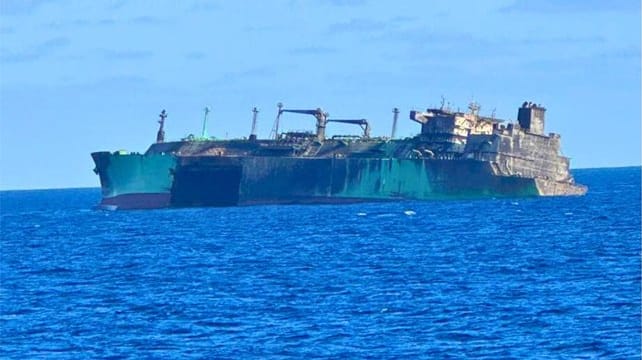
Among the vessels that have joined the Russian registry is the 2003-built Arctic Metagaz gas carrier. The vessel, which is the fifth-oldest vessel to have joined the Russian flag registry, suffered an explosion in the Mediterranean in March while transporting 60,000 tonnes of Russian LNG. Moscow did not mount any salvage operations, leaving Libya, Malta and Italy to manage the crisis.

that matters most
Get the latest maritime news delivered to your inbox daily.
The 19-year-old Boracay is another vessel that changed flags several times before settling on the Russian flag in January. The vessel became the first shadow tanker to be detained after France intercepted her off Saint-Nazaire in September last year. The vessel was out of service for two months, with the captain being sentenced in absentia to one year in prison. The vessel reemerged under the Russian flag in January with a new name, the Phoenix.
Owing to the continuous reflagging of Russia’s shadow fleet, CREA is calling on Europe to develop enforcement frameworks for Russian-flagged vessels and continue and expand its inspections and detentions of the shadow fleet, among other measures.
