


Wreck of 19th-Century Schooner Gets Protection on National Register
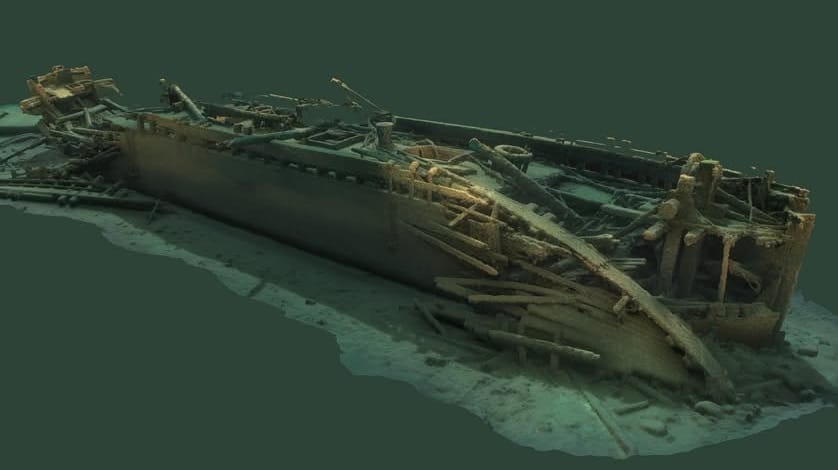
The shipwreck of a 19th-century schooner that gained fame transporting cargo in the Great Lakes is set to be accorded more protection after it was listed on the National Register of Historic Places. The FJ King shipwreck sits intact in Lake Michigan near Liberty Grove, in Door County, where it was discovered in June last year.
Constructed by Master Shipbuilder George R. Rogers in 1867 in Toledo, Ohio, FJ King was a workhorse wooden schooner that transported cargo in the Great Lakes for two decades. Historical accounts indicate the ship was originally designed for the coal and grain trade between Lake Michigan and the lower lakes. However, it was later adapted for use in the lumber and iron ore trades.
Unlike other cargo vessels, FJ King was a representative of a unique class of sailing vessels called canal schooners or canallers. This is because she was specifically designed to transit the Welland Canal locks, a canal that bypasses Niagara Falls. Owing to her design, the ship was able to carry a maximum amount of cargo through the locks with only inches to spare. While running her trade in the Great Lakes, the schooner experienced several groundings and collisions that required repair.
Her fate, however, came on September 15, 1886, just a year after she was re-rigged as a three-masted schooner. On the fateful day, FJ King was sailing with a cargo of iron ore collected at Escanaba, Michigan, bound for Chicago. In a heavy gale, the ship’s hull sprang a leak that caused heavy flooding, which the crew could not control.
Desperate efforts by the captain to turn the ship around were unsuccessful, forcing the crew to abandon ship and be rescued by a passing schooner, La Petite. The FJ King went down by its bow, with the masts breaking the surface of the water. Although salvage attempts were made to recover the ship, it was ultimately abandoned.

that matters most
Get the latest maritime news delivered to your inbox daily.
Last year, a project by the Wisconsin Historical Society and the Wisconsin Underwater Archaeology Association led to the discovery of the schooner. Today, the vessel sits upright at the bottom of the sea with the hull intact, with damage sustained during her sinking being evident at the bow.
While in March the FJ King was added to the Wisconsin State Register of Historic Places, the listing on the National Register now affords the wreck more protection. The listing means that divers are not allowed to disturb the wreck by removing, defacing, displacing, or destroying artifacts or the structure of the shipwreck.
