


U.S. Navy Orders $25 Billion Worth of Missile Interceptors
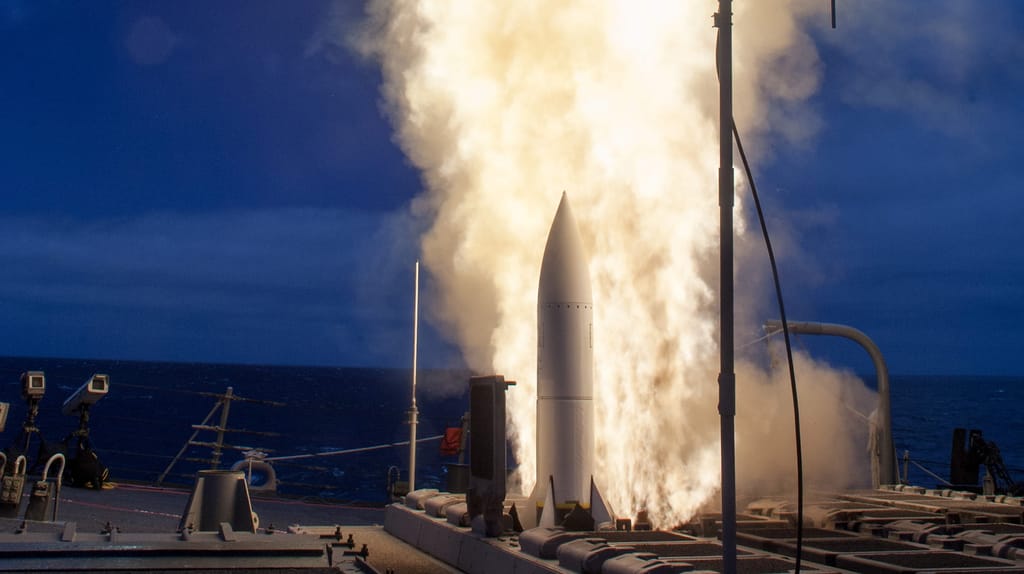
The U.S. Navy has signed a five-plus-two year deal with Raytheon for up to $25 billion worth of SM-6 multipurpose interceptor missiles. This SM-series variant is designed for long range anti-air warfare and has proven capability for shooting down cruise missiles, drones, and ballistic missiles, plus a secondary application as an antiship missile - all at lower cost than an SM-3.
During the high-intensity phase of the war with Iran this year, the U.S. military's global stockpiles of all high-end interceptors (Patriot, THAAD, SM-3, SM-6) substantially declined, according to the Congressional Budget Office. The office estimates that "the United States has probably used between one-half and two-thirds of its inventory of those munitions since June 2025."
The size and multiyear structure of the new contract is is intended to correct that deficit, providing the long-term visibility that defense contractors need in order to scale up production. As of yet, Congress still has to agree to fund the contract (and others like it) with appropriations. A continuing resolution environment is expected to extend through at least early December, without a full FY2027 defense budget.
Pricing from the FY2025 budget request puts the value of one SM-6 at roughly $6 million for procurement only (CBO estimates the price to be lower, at $4 million). Assuming a comparable cost structure going forward, the award would yield a production rate many times higher than the previous 125-unit-per-year contracts.
“Combat credibility depends on having enough weapons, produced at the speed and scale the Fleet requires,” said Adm. Daryl Caudle, Chief of Naval Operations in a statement. “This SM-6 award gives industry the demand signal and stability to expand production, strengthen the munitions industrial base, and build the magazine depth our Fleet needs."

that matters most
Get the latest maritime news delivered to your inbox daily.
In a parallel but far larger deal, the U.S. Army has committed to pay up to $59 billion for additional Patriot interceptors, the standard go-to ballistic missile defense munition for shoreside applications.
The Army is also heavily augmenting its antiship capability, investing in a new class of long range missiles capable of tracking and hitting moving maritime targets - a basic requirement for a Western Pacific contingency. A prototype award round was announced Tuesday for competing missile designs from Anduril, RTX, Castelion, Lockheed Martin and Mach Industries.
