


Spill From Grounded Tanker Begins to Reach Oman's Shores
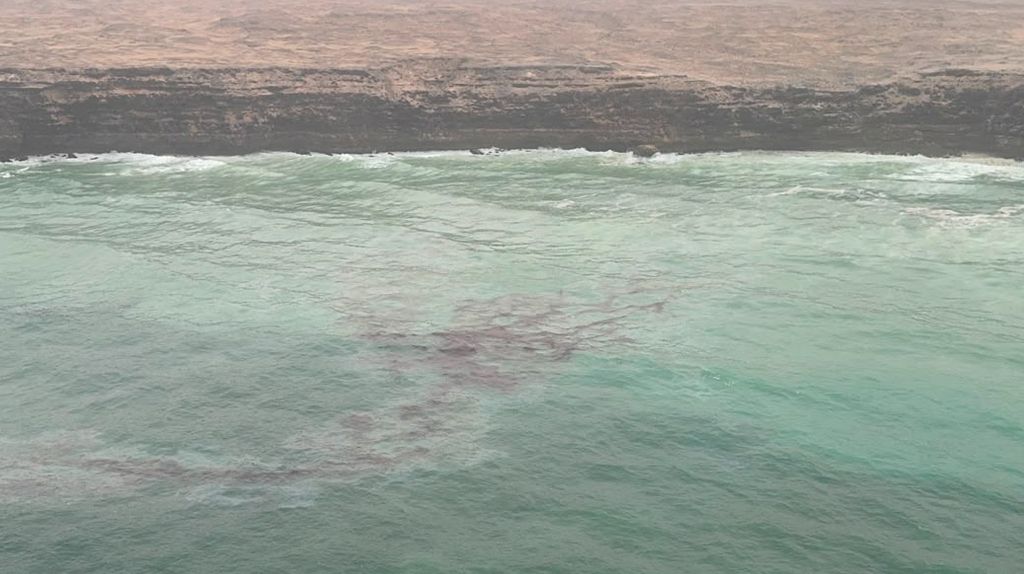
The crude oil spill emanating from the wrecked tanker Caroline Bezengi continues to spread unabated off the southeastern coast of Oman, and it is threatening to damage remote and environmentally sensitive regions where there are few local resources for a spill response. Oman's environment agency warned on Wednesday that it is on track to reach shore at the small settlements at Ras Madraka and Masirah Island.
Caroline Bezengi is a sanctioned shadow fleet tanker affiliated with the Russian oil trade. At the end of May, she passed southbound through the Suez Canal and the Red Sea, carrying 800,000 barrels of Novorossiysk-origin crude for eastern markets. On June 8, while under way off southern Yemen, the tanker suffered a suspected limpet mine blast and lost propulsion - a mode of attack consistent with prior shadow-fleet incidents, potentially linked to Ukrainian interests. She drifted unassisted until June 30, when she ran aground on the shores of Al Qibliyah Island, a rocky wildlife sanctuary about 25 nautical miles off mainland Oman. She has now been aground without pollution abatement for six weeks, has partially sunken, and has developed extensive hull damage.
While Caroline Bezengi has likely leaked some tens of thousands of barrels so far, based on independent assessments of spill surface area, her potential to spill oil is still strong. The majority of the cargo is still on board, the bottom is shallow and hard, and the wave action from the monsoon season will keep the hull moving against the rocks. In a grounding on an exposed shore, salvage operations become more difficult and the potential for environmental damage goes up as the clock runs - as seen with the Rena and the Wakashio, among countless others. The monsoon surface conditions on scene have so far precluded any salvage operations, a spokesperson for IMO told Reuters.
In the rare event of the release of the entire cargo, the resulting spill would exceed the size of the Exxon Valdez and Prestige events combined. Wildlife will be affected, according to Greenpeace. The NGO estimates that the spill now covers about 600 square kilometers, and is on track to impact coral reefs, sea turtles, seabirds, sea turtles and the rare Arabian Sea humpback whale. Several of the remote areas affected by the spill are used by birds and turtles for nesting.

that matters most
Get the latest maritime news delivered to your inbox daily.
External resources for pollution abatement appear slim. The owner has not responded to requests for help. The vessel's insurer is an unknown entity claiming offices in Kyrgyztan, not a London-based IUMI member. Russia-linked shadow fleet tankers often sail with dubious insurance, as they lack access to Western cover due to sanctions.
The IOPC Funds, an intergovernmental entity financed by oil cargo buyers to prepare for the costs of a major spill, told Reuters that it has no role in paying for the response because the incident was an "act of war," and therefore not covered.
