


Report: U.S. European Command Needs Extra Destroyer to Defend Israel
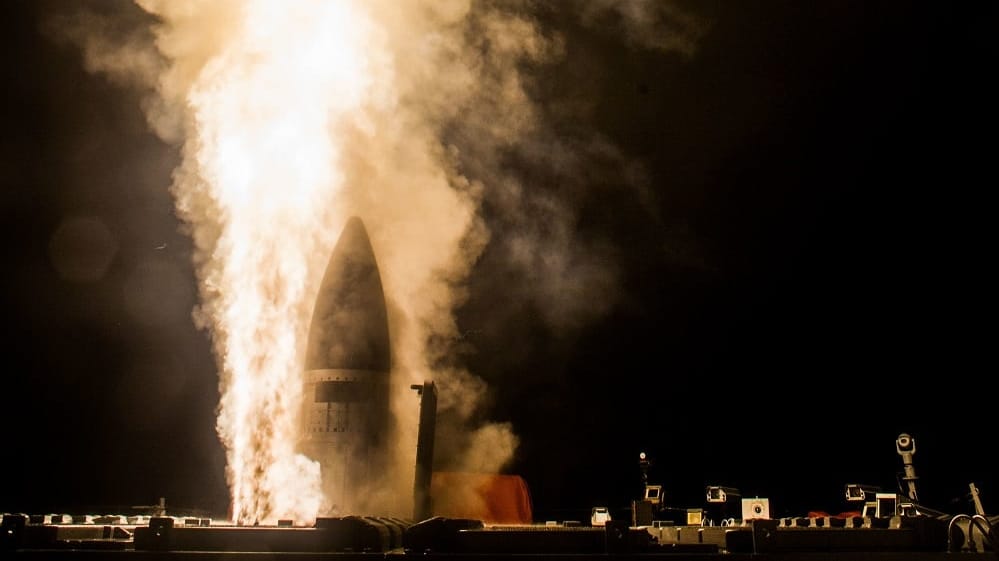
The head of U.S. European Command has informed the Pentagon that his forces will soon have so few air defense interceptors in inventory that it will have to make a choice: defend Israel from the threat of Iranian ballistic missiles, or defend Europe and the United States homeland from the threat of Russian ballistic missiles, the Washington Post reports.
Since the start of the conflict with Iran, U.S. forces have expended hundreds of scarce Patriot and SM-series interceptors to shoot down Iran's salvos of Israel-bound ballistic missiles - some of which have maneuvering capability and are difficult to hit. During the first months of active hostilities, U.S. shoreside batteries and U.S. Navy destroyers launched about 300 advanced interceptors of various types to protect Israeli territory, compared to about 190 interceptors launched by Israeli forces, Pentagon data reviewed by the Washington Post revealed. About 200 of the American launches were scarce THAAD missiles, valued at $12 million per unit.
The remainder - and others since - include SM-2 and SM-3 interceptors launched from U.S. Navy destroyers stationed in the Eastern Mediterranean. U.S. 6th Fleet has five air defense destroyers operating out of Rota, and they have been rotating through to provide sustained protection for sites in Israel and Jordan, with inevitable effects on maintenance and material condition. Two were on station as of last week, according to the Washington Post.
The Post's Dan Lamothe reports that the available Navy air defense capability is getting low enough that Gen. Alexus Grynkewich has requested a sixth destroyer, and has warned that without it, he will be forced to make tradeoffs between the defense of the U.S. homeland or the defense of Israel.

that matters most
Get the latest maritime news delivered to your inbox daily.
The Pentagon declined to comment on the report, but it aligns with previous warnings about the shrinking inventory and its implications for American interests globally. American think tank CSIS estimates that U.S. air defense batteries have expended about half of the entire existing inventory of THAAD interceptors and two-thirds of the inventory of Patriots since the start of the conflict, including those used for defense of Israel.
"Expended munitions create a near- to medium-term risk for U.S. readiness to fight a war against China in the western Pacific. The Trump administration’s munitions request of $95 billion in the FY 2027 defense budget and $21 billion in the war supplemental reflects this urgency," commented CSIS' Mark Cancian and Chris Park.
