


Goldman, Rystad See Room for $120 Oil if U.S.-Iran Conflict Continues
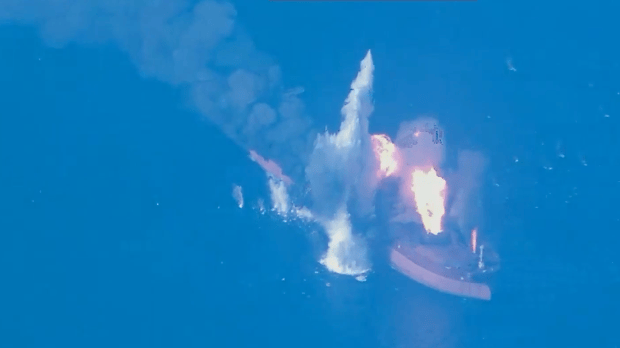
As commodity traders adapt to a forecast of prolonged uncertainty and disruption in the Strait of Hormuz, oil prices are rising again - and analysts and Goldman see room to grow. Daab Struyven, who co-chairs commodities research at the investment bank, told Bloomberg TV on Monday that there could be a "meaningful upside to crude oil prices," which are already at their highest level in six weeks.
As of Monday, Brent futures were trading in the range of $97, up $10 from levels seen early last month. Despite concerted efforts by the GCC states and the United States to reinstate large-scale oil flows through the Strait of Hormuz, traders remain cautious, especially after the exchange of fire over the weekend.
"Events over the last few days do suggest that the risk of shipping disruptions broadening and intensifying is an important one," Struyven said, adding that he sees room for Brent to run as high as $120 per barrel.
Iran says that a deal with Oman on navigation in the Strait of Hormuz could be released within days, but it has always conditioned such an arrangement on U.S. compliance with Iranian demands - first and foremost, a lifting of the naval blockade and sanctions regime on Iranian oil exports. Any technical agreement with the Omani government on partitioning control of the strait would take effect only after resolving the standoff with the Trump administration.
Jorge Leon, head of geopolitical analysis at Rystad, said that oil price fluctuations are very much driven by market expectations of tanker transit volume through the Strait of Hormuz. Rystad assesses that the U.S.-led effort recently averaged eight million barrels per day through the strait, but says that traffic has now come down sharply to about 4-5 million barrels per day.
In a worst-case scenario, if this situation persists for several months and there is no sign of a diplomatic agreement between the U.S. and Iran, Rystad sees potential room for Brent to reach $120, Leon confirmed.

that matters most
Get the latest maritime news delivered to your inbox daily.
A pending Omani-Iranian deal on joint management of the Strait of Hormuz could potentially make things worse, he cautioned. "What I'm more worried about is that this deal will probably enact fees through the Strait of Hormuz, and I doubt the U.S. will allow for that," he told Bloomberg. "It increases the risk for more escalation."
Iran's decision to announce an expanded "restricted zone" in the Gulf of Oman adds further pressure on shipping interests, increasing the risk that a vessel might end up on Tehran's blacklist of vessels targeted for attack. Coming soon, according to Iran Supreme National Security Council chief Mohsen Rezaei, any ship that passes the U.S. Navy blockade line at the entrance to the Gulf of Oman could be blacklisted. This creates new ambiguity for shipowners about whether they can safely operate west of the line, even far away from the strait. The policy appears aimed at the STS transfer areas off Fujairah, where the covert "shuttle" tankers that run GCC oil around the strait hand off their cargo to foreign-flag tankers. If Iran could deter or attack this link in the shipping chain, it would materially slow the movement of Gulf crude to global markets.
