


UK Government Announces New Projects to Support Shipbuilders
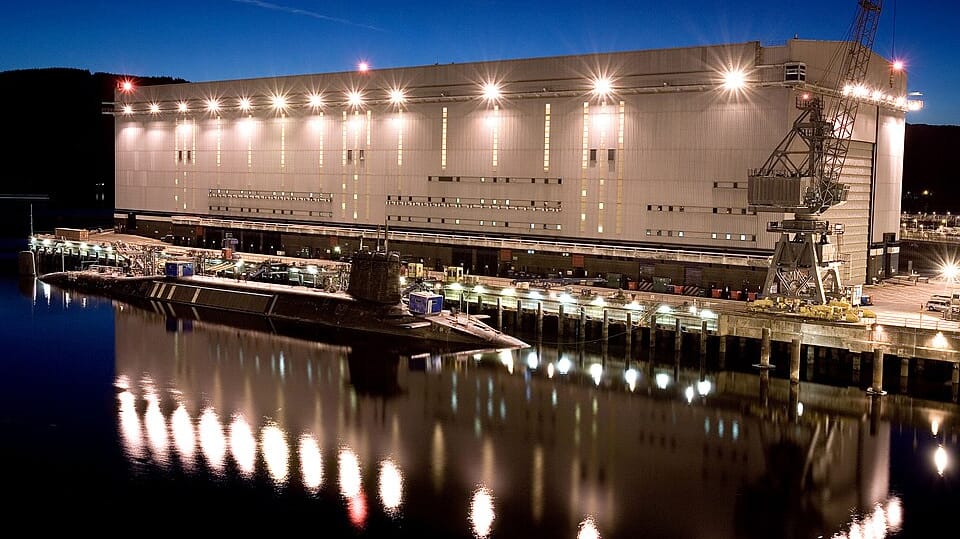
The UK Government announced two new projects it will be undertaking that will be bid out only to the national shipbuilding industry. The Chancellor of the Exchequer, John Healey, said they would herald a “new age of industrialization” for the UK while contributing to national security.
The government said it would back two major projects, the building of new dry docks for the Royal Navy’s submarine service and the building of a new marine research vessel to be deployed by the government. It will limit the bidding for the projects to UK-based companies only to ensure that they provide critical work for the shipbuilding industry.
“Britain has a proud shipbuilding heritage, and every pound of this strategic investment in a critical sector is backing British jobs on the Clyde and businesses across the UK, supporting growth” in every part of the UK, said Healey. He pledged it would become a “new age of industrialization.”
One of the projects calls for the building of three new floating docks for the submarine service. The BBC reports that the last floating dry dock built in the UK is believed to be the Admiralty Dock 60, built in the 1960s and used by the government until the late 1990s at Faslane. It was later sold for commercial use.
Currently, the submarine base at Faslane, the BBC reports, has only one shiplift available for submarine maintenance.
Healey called building new dry docks a program of importance for national security and one that could be used to ensure the sovereign British industry. The project, known as Programme Euston, calls for three large dry docks for HM Naval Base Clyde. They will be built in the UK and used to provide critical maintenance work for current and future nuclear submarines. They will carry out inspections, upgrades, and repair work.
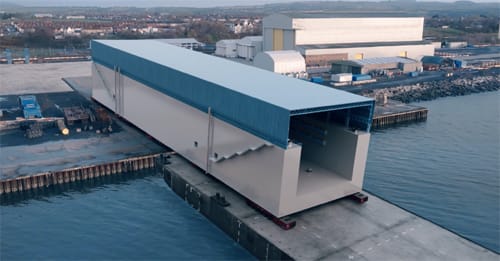
Navantia UK released a rendering of the new dock being built at its Methil yard (Navantia UK)
No timetable was released for Programme Euston, but Navantia UK quickly released a statement making a pitch for the work. It highlighted the company’s investment in the shipyards at Methil, Fife, and Belfast, since the Spanish company took over the failed Harland & Wolff Group. It cited Navantia Group’s experience in developing similar capabilities for the Spanish Navy.
Navantia UK is currently working on the new support ships that are being built for the Royal Navy. The keel for the first of the three Fleet Solid Support ships was recently laid, with supporting work at the company’s yards including Appledore and Belfast. The Methil yard also completed construction of Seashore, a barge to be used in the program.
The Government also said it would commit up to £115 million ($152 million), according to the BBC, for the second project, the building of a new marine research vessel to be used by the Centre for Environment, Fisheries and Aquaculture Science (Cefas). An executive agency of the United Kingdom government Department for Environment, Food and Rural Affairs, it is responsible for marine research, including fishing stocks, mapping the seabed, monitoring pollution, and responding to marine incidents.
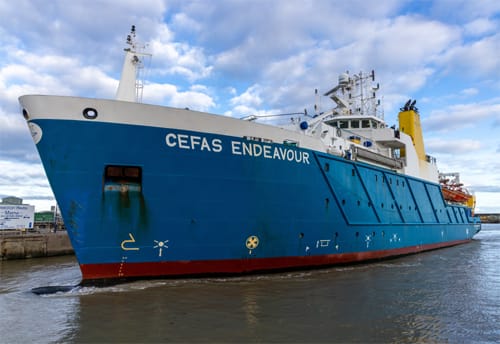
The current government marine research vessel will be replaced with a larger ship (Cefas)
The agency currently has a vessel, Cefas Endeavour, built by Ferguson on the Clyde and commissioned in 2003. The nearly 3,000 GT vessel is 74 meters (243 feet) long and accommodates up to 17. It is used by the agency’s scientists and technicians, or RV Cefas Endeavour is also available for third-party charter.
According to the government, the research vessel is nearing the end of its life and will be replaced by a new vessel expected to be operational in 2031 or 2032. They noted that the seas and marine environment contribute more than £200 billion annually to the economy (based on 2021 data), and the new vessel is critical to maintaining the seas.

that matters most
Get the latest maritime news delivered to your inbox daily.
The plan calls for a larger new ship at a length of 85 meters (279 feet) that will accommodate more than 40 people. It will be equipped with automation and robotic technology, as well as employ artificial intelligence. It will run on clean fuels.
The government said the two projects represent billions of pounds being invested in the industry. They will help to create high-skilled jobs and contribute to national security while bolstering the lagging shipbuilding industry.
