


German Seaports Paralyzed by Daylong Strike Over Contract Impasse
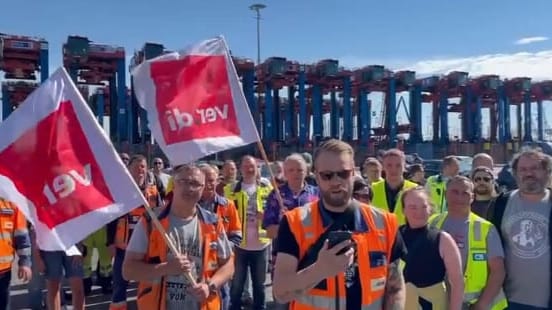
Germany’s main service union, Ver.di, invoked a daylong strike that is impacting a total of six seaports and has brought most container and cargo operations to a standstill. The union is calling it a “warning strike” over what it sees as an impasse in contract negotiations, while the employers' association is calling the strike “disproportionate” and the union’s reaction to its offer “imcomprehensible.”
Ver.di called for the action among its 11,000 members who work at the container terminals and other key positions in the seaports, demanding a fairer wage offer and a return to the negotiations. The strike began Monday night, August 17, and spread to more locations with the day shifts on Tuesday. Work is not expected to fully resume until Wednesday. Early reports from Ver.di indicated that as many as 2,100 members were off the job in Hamburg, Germany’s largest port, and gathered for a demonstration.
The strike included Germany’s three largest seaports, Hamburg, Bremerhaven, and Wilhelmshaven, and the three regional ports of Bremen, Emden, and Brake. The union targeted major employers and facilities, including the container terminals in Hamburg, the EUROGATE Container Terminal in Bremerhaven, the auto terminals, and the North Sea Terminal in Bremerhaven. The action included major companies including Eurogate, HHLA, BLG, and J Muller Weser. More than a dozen companies were being directly impacted by the strike.
The action quickly raised fears harkening back to 2024. The last round of negotiations had resulted in a series of job actions increasing in intensity and resulting in large backlogs at the ports. Small disruptions and delays were expected from today’s action, with a port spokesperson telling German broadcaster NDR they expected to clear any backlogs quickly. Hapag-Lloyd warned customers of potential delays.
The employers' association ZDS (Central Association of German Seaport Companies) reported the impasse on August 14, calling the decision of Ver.di and its members “incomprehensible.” It asserts that its offers “far exceed the qualifications of other industries.”
ZDS offered a 5.1 percent increase in basic hourly wages as well as an increase in 2027 in vacation pay and bonuses at the large container operations. “Given the difficult economic conditions, the employers’ offer is above average and more than adequate compared to others in the industry,” said ZDS.
Ver.di is demanding an 8.2 percent wage increase with a minimum of at least €2.50 per hour for employees to ensure, it says, that the lower wage groups see the benefits.
Another sticking point is the duration of the contract, with Ver.di demanding 12 months. ZDS proposed 19 months and said in its statement that data showed that the average duration of German contracts exceeds 25 months.

that matters most
Get the latest maritime news delivered to your inbox daily.
ZDS called its offer “far-reaching” when compared to other sectors of the economy, while Ver.di said in a statement, “The employees want a better offer, and they deserve it.” The union says members have “overwhelmingly rejected” the current offers.
Media reports that a new round of negotiations has now been scheduled for August 24-25 in Hamburg.
