


Reading the Trump Administration's Maritime Action Plan (MAP)
Haven't read the MAP yet – the Maritime Action Plan? Relax. We've got you covered.
(Article originally published in July/Aug 2026 edition.)
The Trump Administration's much-anticipated Maritime Action Plan (MAP) was released in February and immediately received the endorsement of just about everyone in maritime – and for good reason. For the first time in recent memory, the U.S. has a blueprint – call it a map – of how to get from point A to point B.
Point A, of course, is the current situation.
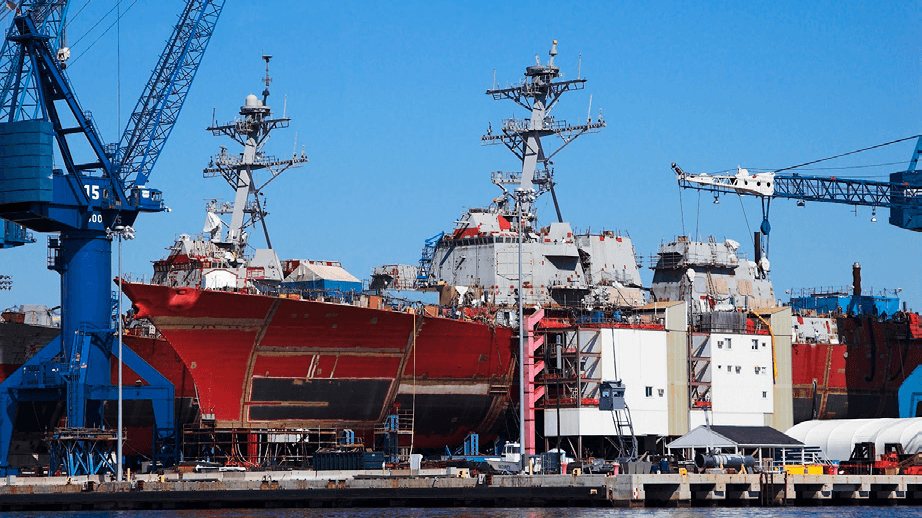
Less than one percent of new commercial ships are built in the United States. With only 66 total shipyards—consisting of eight active shipbuilding yards, 11 shipyards with build positions, 22 repair yards with drydocking, and 25 topside repair yards—the United States does not have the capacity necessary to scale up the domestic shipbuilding industry to the rate required to meet national priorities. Strategic competitors, meanwhile, dominate the market and build ships at a fraction of the cost of U.S. production.
That's how the co-authors – Secretary of State Marco Rubio and Office of Management & Budget chief Russell Vought – put it in their "Introduction" to the MAP. Furthermore, they explain:
This status quo poses significant security and supply chain dependency issues. A self-sustaining domestic shipbuilding sector is critical for national and economic security. The United States can neither afford for its trade to and from foreign markets to be ferried almost entirely on foreign-built, -crewed, and -flagged ships, nor for the MIB (maritime industrial base) to be unable to build and maintain the vessels the United States needs to defend American interests on the high seas.
Point B is where we want to be when we fix all this – with the MAP as our guide.
The MAP calls for policies that modernize government procurement processes and streamline regulations to accelerate shipbuilding and reduce costs. By streamlining regulatory processes, strengthening interagency coordination, and providing reliable long-term funding and demand for U.S.-built ships, shipyards, and mariners, America will rebuild maritime strength at the speed and scale required to meet the challenges of today and the future.
Well, that's a tall order. Let's see how we do all that. But first, a confession.
I dreaded having to read the MAP. Why? Because I was all too familiar with the dialect peculiar to bureaucrats, politicians and lobbyists called "bureaucratese," having served in government for a spell during the Reagan Administration.
Everything in Washington is written in bureaucratese.
Think acronyms – lots of them. Bureaucratese is riddled with acronyms. The MAP has a convenient two-page list at the end – 76 in all – in a 35-page document, each of them used at least twice and actually more like six or seven times. So that's about 10 acronyms per page.
Acronyms are annoying, but equally annoying is vague and general language that doesn't mean anything, or using ten words when five would do, or repeating the same idea in different ways over and over again – all characteristics of bureaucratese.
So I put it off and only recently decided to bite the bullet. Now that I've read it – and re-read it – I felt it only right, dear readers, that I save you the trouble.
Okay, back to the main event.
FOUR PILLARS
The MAP is built on four pillars:
– Rebuild U.S. shipbuilding capacity and capabilities
– Reform workforce education and training
– Protect the maritime industrial base (MIB), and
– Bolster national security and industrial resilience.
Let's look at each one in turn and see what they involve.
With only eight shipyards capable of building vessels over 400 feet in length, Pillar 1 is about rebuilding the U.S. shipbuilding base. It's the cornerstone of the entire MAP and calls for expanded investment in shipyard capacity, establishing Maritime Prosperity Zones (100 of them in the next 10 years) around ports and shipyards, and getting our more shipbuilding-savvy allies involved.
Funding is key, and there are various proposals involving Title XI, public-private partnerships, federal loan guarantees and even a one-cent-per-kilogram tax on all cargo imported in non-U.S.-flagged vessels. Proceeds from such a tax (tariff?) would help establish the Maritime Security Trust Fund, which would in turn invest in shipyard expansion projects and related initiatives.
In the meantime, and this is the most interesting part to me, the U.S. should turn to its allies – South Korea and Japan, in particular – for the know-how necessary to build the expanded fleet, and we all know this is already happening with Hanwha's takeover of Philly Shipyard being Exhibit A. Related to this is the reflagging of foreign vessels into the U.S. fleet as a stopgap measure until we're able to bulk up on our own.
Having expanded the shipyard base in Pillar 1, Pillar 2 is all about mariner training and education and assuring that the U.S. will have the maritime workforce necessary to build and crew the newly expanded fleet. It focuses on enhancing the capabilities and resources of the U.S. Merchant Marine Academy and the six state maritime academies in producing credentialed mariners and also on the vocational and trade schools that graduate the pipefitters, welders, electricians and skilled craftsmen needed in our shipyards.
"Scalable maritime initiatives" include an innovative military-to-mariner (M2M) program aimed at facilitating the transition from military service to credentialed mariner by maximizing credit for military training and sea service. Another is the mariner incentive program (MIP) – don't you just hate these acronyms? – that would provide additional funding mechanisms to attract, train and retain future mariners, among them the possible exclusion from federal income tax of mariner income on foreign trade routes.
Having secured the expanded fleet and workforce needs in Pillars 1 and 2, Pillar 3 focuses on protecting the maritime base, which involves things like trade policy, customs enforcement and federal procurement programs, all of which affect the demand for U.S.-flag vessels.
And here we get pretty specific.
At the top of the list of recommended actions is expanding Cargo Preference requirements from the current 50 percent to as much as 100 percent of federal cargoes provided the necessary number of U.S.-flagged ships is available.
Another is a new maritime preference requirement: "As ships are being built in the United States, require high-volume exporting economies (read China) to transport a gradually increasing percentage of their U.S.-bound containerized cargo on qualifying U.S. vessels."
And a third is to establish a so-called "Land Port Maintenance Tax," similar to the Harbor Maintenance Tax, under which merchandise entering the U.S. through land ports would be subject to a modest tax (0.125 percent of the value of the merchandise), ensuring that land ports pay their fair share of infrastructure upkeep.
Pillar 4, strengthening national security and industrial resilience, is a catchall category that includes such things as streamlining federal procurement policy and implementing all the recommendations under the first three pillars. It does focus on the Arctic and the need for an adequate strategy and resources to protect our interests there – another welcome inclusion.
NEXT STEPS
So there you have it. What comes next is the big question.
The consensus seems to be that enactment of the FY 2027 National Defense Authorization Act, which includes a number of MAP provisions like the Maritime Security Trust Fund, will get the ball rolling. Or maybe Congress will finally pass the SHIPS Act?
Stay tuned!
Jack O'Connell is the magazine's Senior Editor.

that matters most
Get the latest maritime news delivered to your inbox daily.
This article appeared in the July/August issue of The Maritime Executive. To read the latest edition of the magazine, go to The Maritime Executive July/August 2026 Ship Management edition. To subscribe to the magazine, please go to https://www.maritime-executive.com/subscribe.
The opinions expressed herein are the author's and not necessarily those of The Maritime Executive.
