


Architecture of Adaptability: Designing Vessels to Stand the Test of Time
The marine and maritime industries are currently navigating a sea of rapid technological evolution. For commercial and government vessel owner-operators, the pressure to design vessels that remain relevant for a 30- or 40-year-plus lifespan is industry standard. Whether driven by tightening emissions regulations, the promise of alternative fuels, or the competitive aspects of autonomous operations, the goal is to "future-proof" vessels.
However, in the world of naval architecture and marine engineering, true longevity is not found in a single "silver bullet" solution. Instead, it is the result of a holistic, customized design process that prioritizes flexibility and operational reality over one-size-fits-all promises.
The Complexity of Choice
"The idea of future-proofing can be a little misleading because it implies there is a universal solution, and if you do this, your vessel is going to be covered through for the next several decades," says Boksa Marine Design (BMD)’s President Jeff Kuenning.
In reality, the "best" technology is entirely dependent on the vessel’s specific mission, its marine domain, and its geographic infrastructure. For instance, while electric propulsion is transformative for a ferry on a fixed short-haul route with shore-power, it presents different hurdles for a river push boat.
"What happens when that system breaks down?" Kuenning asks. "They can't wait to fly a tech rep in to fix their system if they're moving along the Mississippi River."
Bridging the Knowledge Gap: The Value of Vendor Relationships
Many operators find themselves overwhelmed by the pace of innovation. Emerging solutions in carbon capture, hydrogen fuel cells, and batteries are hitting the market at record time. Oftentimes, operators do not have the internal resources to vet every new claim, which is why a partnership with an experienced multi-disciplinary engineering firm is essential.
Because firms like BMD maintain deep, technical relationships with global equipment vendors, they serve as a vital filter for the owner.
“We understand not only what a piece of equipment promises on a spec sheet, but how it actually impacts a vessel's design and performance,” says Luke Tiefenthaler, marine systems engineer at BMD.
Owners are increasingly seeking experts who can provide these holistic recommendations, leveraging strong vendor working relationships, practical implementation experience, and an understanding of how to turn complex vendor data into a clear roadmap that meets both short-term operational needs and long-term goals.
The Holistic Design Requirement
A vessel is not a collection of independent parts; it is a single integrated structure. Implementing new technologies often has cascading effects. Consider the impact of onboarding a new hybrid system:
- Weight & Stability: New power systems often weigh more and take up more space, requiring a recalculation of trim and performance.
- Systems Integration: Marine electrical engineers must manage complex power management systems that now govern not just auxiliary and hotel loads but propulsion as well.
- Structures & Auxiliaries: Increased weight may require structural reinforcement, while new power electronics often demand enhanced cooling and ventilation.
"This is why a holistic approach is critical. When naval architects, structural engineers, and systems integrators work in unison, they can identify trade-offs in real-time," says Tiefenthaler. "For example, if a chosen engine or propulsor adds a significant weight or space burden, the naval architect must adjust the hull design, structure, or arrangement to maintain speed, power, range, and/or stability.”

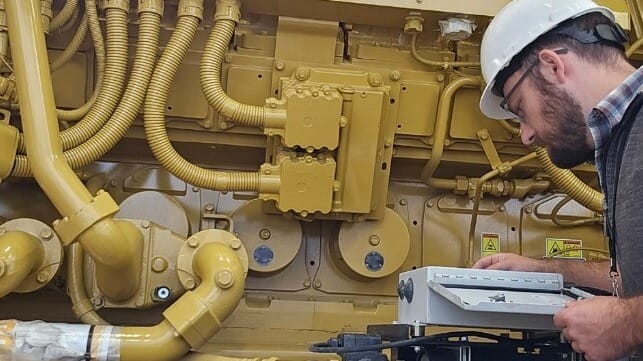
Boksa Marine Design's Marine Electrical Engineer Jordan Anger performs field verification on electrical upgrades to a switchboard.
Innovation You Can Implement Now
While much of this conversation focuses on the future, there are still gains that can be made today for new and existing vessels. In fact, there are technologies available now that don’t require extensive shipyard time or even taking the vessel out of the water.
From advanced fuel-flow meters and automated data-gathering sensors to software-based optimizations, these solutions can immediately reduce fuel consumption and wear on machinery.
"There are enhancements we can make right now to improve a vessel’s performance," says BMD’s Ethan Trupia, senior marine electrical engineer. "We can implement automated systems that fine-tune pumps and fans to run at their peak efficiency points, providing a real rate of return without a massive overhaul."
Flexibility Over Finality
If a design cannot be truly "fixed" for the next half-century, it can and should be made flexible. This involves designing margins into systems to accommodate future growth.
- Electrical Margins: Sizing electrical systems that incorporate additional reserve capacity and adding a more robust communications network to accommodate future data needs allow for the seamless addition of next-generation equipment down the line.
- Structural Allowances: Designing "drop-in" capability for emerging technologies allows an operator to adapt once the supporting infrastructure and regulations catch up.
- Regulatory Foresight: Understanding the trajectory of global emissions ensures a vessel won't be rendered obsolete by a sudden policy shift.
The Role of Systems Integration
As vessels become more computerized, the role of the systems integrator becomes paramount. However, innovation must be balanced with simplicity.
"There’s sometimes a tendency to overcomplicate things where it really benefits to have a voice in your ear to say, 'Let's simplify, let's standardize,'" says Tiefenthaler. “It’s also helpful to have historical knowledge of what’s worked well in the past, to help predict what might work best in the future.”
A resilient system is one that is straightforward to operate, easy to maintain, and backed by a robust redundancy plan.
Proving the Path Forward
The bridge between a conceptual future and an operational reality is built on data. Feasibility, risk, and detailed trade studies are critical “future-proofing” tools in proving that a customized solution will meet objectives, while also defining long-term needs for vessels. By evaluating ROI, engineers provide substantive value.
Ultimately, ensuring a vessel stands the test of time isn't about picking the newest technology; it’s about a deep technical partnership. It’s about understanding the "devil in the details" at the design level to avoid catastrophic issues later.
"Real longevity is achieved through flexible design, holistic integration, and a respect for operational reality," says Kuenning. "This allows us to design and build practical vessels that are ready for whatever the next 40 years may bring."
To learn more about preparing your vessels for future technologies and regulations, contact Boksa Marine Design for a customized consultation.
This message is sponsored by Boksa Marine Design.
The opinions expressed herein are the author's and not necessarily those of The Maritime Executive.
