


Op-Ed: Kharg Island Strikes Have Little Effect if Iran's Tankers Sail On
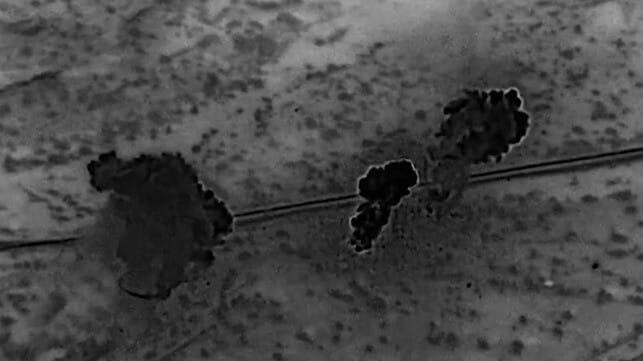
It is unclear what the aim was behind the overwhelming air attack mounted against Kharg Island on March 13, which President Trump has described as “one of the most powerful bombing raids in the history of the Middle East.” The raid however was restricted to the military sites and emplacements manned by the IRGC to defend the island, and apparently was designed not to damage the oil infrastructure of the terminal – which is believed to be still operational.
Whereas strike packages to reduce Iranian military capability have proven to be highly effective - having for example demonstrably reduced the Iranian capability to launch missiles and drones - strikes to rein in Iranian military ambitions have had less clear-cut effect. The Kharg Island raid has not apparently had the desired consequence of persuading the Iranians to reopen the Straits of Hormuz, as the Iranian leadership appears willing to tolerate the loss of its own military manpower.
If the raid to destroy Kharg Island’s military defenses was a precursor to occupying the island, it should be appreciated that any occupying force would then immediately become a target for an Iranian counter-attack, which the Iranians have demonstrated by their well-targeted attacks on US military across the Region would be casualty-heavy. An occupying force would be particularly vulnerable as the island is a relatively small area, and difficult to maneuver within in a tactically-advantageous manner. The terminal facilities would inevitably be destroyed, and hence rendered useless as a bargaining chip to bring the Iranians to the negotiating table.
In contrast, halting the operations of the terminal while keeping it intact would be a powerful lever to use against the Iranians. The Iranian regime needs money to keep itself in power, both to finance its repressive internal security operation and to restore all the offensive military capability destroyed in recent days, but also to support the subsidies and economic measures needed to keep ordinary Iranians under control; without subsidies and bribes to keep the internal security apparatus operational, anti-regime sentiment would likely become unstoppable.

that matters most
Get the latest maritime news delivered to your inbox daily.
However, the island does not need to be occupied to close down the operations of the terminal; with both air and naval superiority already achieved, the US military command could simply declare the island a no-go area for tankers, at very little risk to US personnel, thereby shutting down loadings and depriving the regime of the revenues it currently obtains by exporting its oil into the world market. At the same time, the offshore loading terminal at Kooh Mobarak on the Jask peninsula outside the Gulf should also be closed down.
Moreover, Iran-linked shadow fleet tankers are still able to ply their trade without hindrance, notwithstanding the de facto state of war which exists between the United States and Tehran. If a shut-down of Kharg Island was forced upon the Iranians, coupled with seizures of shadow fleet tankers in transit, the financial pressures would be felt quickly on the home front. Any loss of their ability to maintain their repressive grip on the country would force them to the negotiating table, their key strategic goal being to protect the regime.
The opinions expressed herein are the author's and not necessarily those of The Maritime Executive.
