


U.S. Coast Guard Finalizes Five-Ship Icebreaker Order With Davie Defense
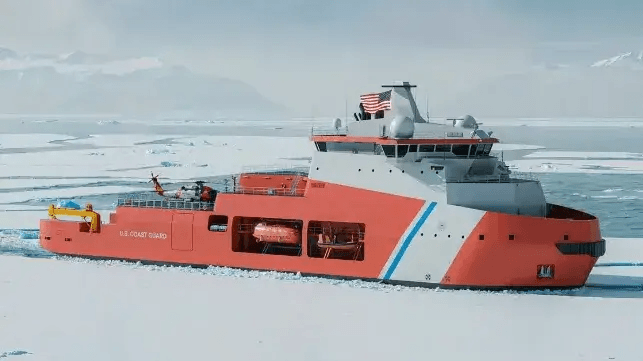
The U.S. Coast Guard has finalized its contract with UK-owned shipbuilder Davie Defense for the delivery of five Arctic Security Cutters, the new medium icebreakers that will complement the capabilities of the American-built Polar Security Cutter.
It is the first of three different Arctic Security Cutter contracts, and it builds on an initial contract with Davie announced earlier this year. The Arctic Security Cutter procurement is one program, but it is on track to order two vessel designs - much like the Coast Guard's twin-class Medium Range Cutter (WMEC) program or the Navy's twin-class Littoral Combat Ship (LCS).
"Finalizing this contract represents decisive action to guarantee American security in the Arctic," said Admiral Kevin Lunday, the commandant of the Coast Guard. "The Arctic Security Cutters will deliver the essential capability to uphold U.S. sovereignty against adversaries’ aggressive economic and military actions in the Arctic."
Davie's first hull is scheduled to deliver by 2028, within President Donald Trump's current term in office. The last of the series should deliver by early 2035. Two will be built at Helsinki Shipyard, and the other three will be constructed at the former Gulf Copper yards in Galveston and Port Arthur, where Davie says it plans to invest up to $1 billion in improvements.

that matters most
Get the latest maritime news delivered to your inbox daily.
The other two initial contracts went to Rauma Marine Constructions (for two hulls to be built in Finland) and Bollinger (for four hulls to be built to Rauma's design in Louisiana). Two more final contracts will be announced soon, the Coast Guard said in a statement, likely for these two yards. The overall procurement plan calls for a total of 11 vessels.
The Coast Guard is moving fast to commit to shipbuilding and infrastructure contracts. Its historic $25 billion budget boost from Trump's One Big Beautiful Bill Act will expire if unused by 2029. The service has already contracted for more than $13 billion in repair and recapitalization work.
