

Libyan Coast Guard Opens Fire on Rescue Vessel and Threatens to Seize It
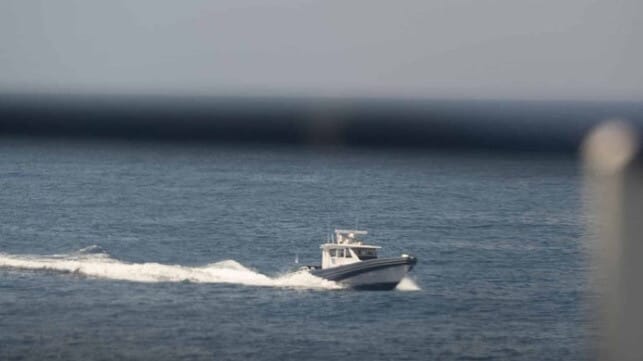
A migrant rescue vessel in the Central Mediterranean has reported another violent encounter with the Libyan coast guard - this time, accompanied by the threat of vessel seizure in international waters.
Libya's militia-operated coast guard has a fraught relationship with the migrant rescue NGOs of the Central Mediterranean, which retrieve passengers from unseaworthy boats and deliver them to safety in Italy. The European-sponsored Libyan coast guard believes it has jurisdiction over rescues in international waters, and it has an active program to conduct "pullbacks" to bring maritime migrants back to Libyan holding centers, where a range of human rights abuses have been well documented. In the course of these operations, the militia-affiliated service has shown its willingness to use force to drive off NGO rescue vessels that approach too closely. The rules of engagement appear to have loosened considerably: on Monday, a Libyan coast guard patrol boat opened fire on the rescue vessel Sea-Watch 5, the operator reports - then threatened to board the ship and divert it to a Libyan port. If substantiated, it appears to be a first for the small Libyan coast guard, and a significant escalation.
On Monday morning, just after the crew of Sea-Watch 5 finished rescuing 90 people in distress at a position about 55 nautical miles north of Tripoli, a Libyan militia boat approached. The crew aboard the patrol boat fired about 10-15 shots at the rescue vessel, and conveyed their intent to board the ship and take it - along with all of the occupants - to Libya. The Sea-Watch 5's crew sent a mayday and contacted authorities in Italy and Germany; in the meanwhile, two Libyan patrol boats stayed in pursuit as Sea-Watch 5 headed north, away from Tripoli and towards safety. After a few hours, the boats turned around, allowing Sea-Watch 5 to proceed on her mission - resulting in the rescue of another 64 people.
Sea-Watch identified one of the militia vessels as a Corrubia-class patrol boat, donated to Libyan authorities by the Italian government.
Just one week before the encounter, Germany's interior ministry expanded its existing security alert zone for waters of the Central Mediterranean in order to include Libya's EEZ. The ministry assessed that migrant rescue vessels were at particular risk. In a statement, Sea-Watch said that the German government had adopted a contradictory policy: on the one hand, it is materially supporting the Libyan coast guard via EU-backed training opportunities and rescue coordination centers; and on the other, it is declaring a shipping security zone due to the risks posed by the same EU-backed Libyan coast guard. Sea-Watch called for Germany to resolve this tension by imposing diplomatic consequences in Libya's government.
"[Germany] acknowledges the real danger posed by the so-called Libyan coast guard while at the same time continuing to support it. The current governing coalition has even made it possible once again to train the so-called Libyan coast guard, instead of clearly opposing it," commented Sea-Watch spokesperson Marie Naab last week.
The NGO also took the European Commission to task for an allegedly permissive response to Libyan forces' pattern of violence. In a press conference Tuesday, an EC spokesperson described the Libyan coast guard's activities as a technical matter.

that matters most
Get the latest maritime news delivered to your inbox daily.
"Our engagement, as I said here many times, is really to support a comprehensive and rights-based migration management, including the protection of migrants," the EC spokesperson said. "We have been engaging in dialogue and providing training to improve the operating procedures and we'll continue to do so."
In addition to its challenged relationship with Libyan militia forces, Sea-Watch is unpopular with Italian authorities, who have repeatedly attempted to impound its vessels to prevent further rescue activities. In February, a court in Palermo, Sicily ordered the Italian government to pay the NGO a total of $89,000 in compensation for the detention of the group's earlier vessel, the Sea-Watch 3.