

Caspian Shipping Routes into Iran Under Pressure
Other media outlets have joined The Maritime Executive’s examination of the alternative trade routes into Iran, now that the U.S. blockade of Iranian ports and ships – plus the foreclosure on ship-to-ship transfers – is having a marked effect.
Before the blockade, 80% of Iran’s imports were handled through the port of Bandar Abbas, and Iran’s transport infrastructure was set up to handle the distribution of goods landed at Bandar Abbas efficiently across the country. Now that Iran is looking for alternative trading routes, the channels which used to handle the remaining 20% of imports are struggling to handle the extra volume of goods now diverted from Bandar Abbas.
The build-up of traffic on Turkish road routes into Iran is particularly marked, with trucks now queuing for at least a week to get through the border crossing point at Bazargan. Practical limitations of moving freight over long trucking routes through the difficult terrain of northwest Iran in winter probably mean that volumes cannot increase by more than 100% from pre-blockade levels – far less than is needed to make an appreciable difference to prices of foodstuffs and essentials within Iranian cities.
The IRGC in any case needs to search every truck and keep a careful watch over incoming goods, given the ease with which remotely operated machine guns, Starlink terminals, bomb-equipped drones and other paraphernalia of intelligence-led warfare have been imported into Iran in the past. Clearly, internal security is a major worry for the IRGC in current circumstances, and watchfulness is needed.
The U.S. Treasury’s Operation Economic Outcast and CENTCOM’s Task Force Iron Gate appear also to be having a dampening effect on use of land routes. Years after the fall of Saddam Hussein in 2003, federal authorities in Iraq are now starting to take back control of border crossings and customs clearance posts in Kurdistan, where both the KDP and PUK have profited from and facilitated a back-door trade with Iran in oil and other goods.
Newspapers have given much coverage to the 25-mile queue of trucks at Yalama, on the border between Kazakhstan and Uzbekistan. This border crossing lies only midway on the 2,250-mile truck route between Xinjiang and Iran, and having waited a week or two to get across the border at Yalama, there are still two more borders to cross before the trucks can get to Tehran.
There are likely to be similar limitations on the ability to increase traffic on the railway routes into Iran through Turkmenistan, from Russia through the Inche-Burun border crossing and from China through Sarakhs. There are also huge delays on the Iran-Pakistan border, but principally of trucks moving crude oil.
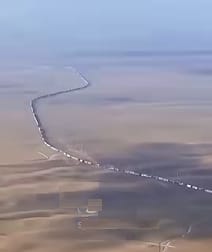
990 trucks on November 13 waiting weeks to cross the Kazakh-Uzbek border at Yalama (SyMedia.kz)
This leaves then the sea route across the Caspian to Iran from Russia. Whether raised between Presidents Trump and Putin at their conference in Shenzhen or not, this is a difficult route for Operation Economic Outcast and Task Force Iron Gate to bear down on, although Ukrainian attacks on shipping have to be contended with, and there may be more.
Last month, very little merchant traffic moving north-south in the Caspian was showing up in AIS feeds. In several snapshots this week, however, an average of about 25 vessels were on the move north-south and showing up on VesselFinder and MarineTraffic maps, including those with Iranian or Russian flags, unidentified vessels and those indicating a destination or arrival in an Iranian or a Russian Volga port.
The biggest Caspian Sea ships, in order to manage the Volga-Don Canal system, tend to be limited to about DWT8,500, 135m in length, with a shallow 4m draft. But most cargo ships average about DWT6,000, much smaller than a general cargo ship serving Bandar Abbas. Regional tankers, which mostly use Bandar Amirabad in the southeast corner of the Caspian, are far smaller even than the smallest oceangoing LR1. Limits on volumes will also have been introduced by the collapse of the Kerch Bridge, blocking access from the Black Sea into the Sea of Azov and thence into the Volga-Don Canal system.
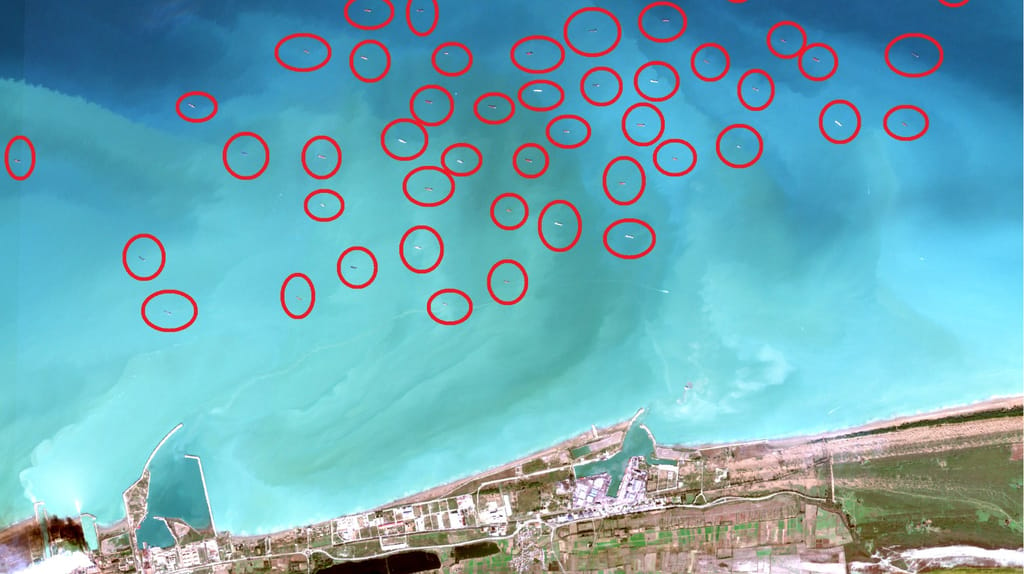
A more acute problem for the sea trade in the Caspian appears, however, to be port capacity in Iran. Showing up in satellite imagery, 20 ships are waiting off Bandar Anzali, although only nine of these ships are showing up on AIS. On AIS, 16 are waiting off Nowshahr. More than 60 are on satellite imagery on November 24 off Bandar Amirabad, again only about half of which are showing up on AIS.
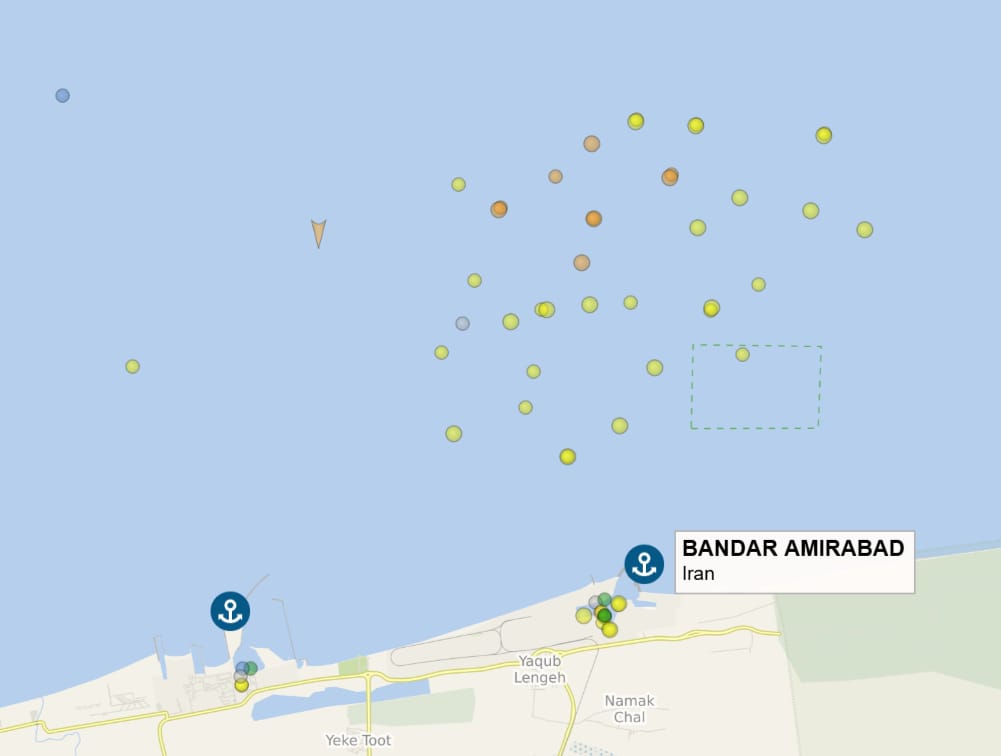
The AIS picture of ships waiting off Bandar Amirabad on November 24 (VesselFinder)

that matters most
Get the latest maritime news delivered to your inbox daily.
The blockages and delays on Iran’s rail and road routes, and on the sea route across the Caspian, make it very difficult for the IRGC to make up the loss of imports no longer coming in through Bandar Abbas. With the regime under pressure on many fronts, and these infrastructure failings needing a lot of time and resources to fix, shortages will build up, and are already being felt widely across Iran.
The regime’s saving grace is that the Iranian people are used to hardship, and after nearly 50 years of IRGC-enforced velayat-e faqih rule have unusual powers of endurance.
The opinions expressed herein are the author's and not necessarily those of The Maritime Executive.