

Op-Ed: Ports May Only Have Seconds to React to a Cyber Attack
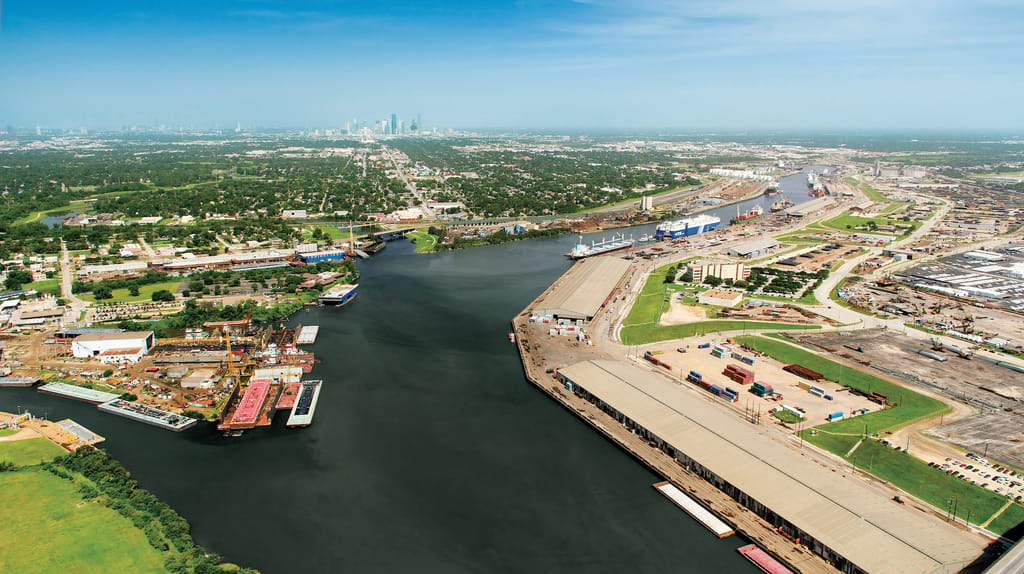
On August 19, 2021, attackers used a zero-day in a widely used password reset tool to reach a server at Port Houston. I was the Information Security Officer. We detected the intrusion, contained it, and reported it before it touched operations.
At the time, almost nobody knew who was behind it. Nearly two years later, Microsoft and allied agencies identified a PRC state-sponsored group, Volt Typhoon. Microsoft and federal officials have since described the Port Houston intrusion as the initial discovery that started that investigation. CISA has warned that the same group is pre-positioning inside U.S. critical infrastructure.
Five years later, two things have changed for every U.S. port, terminal, and vessel operator regulated under the Maritime Transportation Security Act. Attackers move much faster, and what was guidance in 2021 is now regulation.
CrowdStrike’s 2026 Global Threat Report recorded an attacker moving from a first foothold to other systems in 27 seconds. Two years earlier, the fastest it had seen was just over two minutes. Mandiant’s M-Trends 2026 puts the average time to exploit a vulnerability at negative seven days—meaning the most serious flaws are being used before a patch exists.
Verizon’s 2026 Data Breach Investigations Report found that exploiting vulnerabilities is now the most common way into an organization, ahead of stolen passwords, for the first time in the report’s 19 years. AI is a large part of the reason. It helps attackers find flaws, write exploits, and move through networks faster than a human operator could.
The attack on Port Houston came through a zero-day. For 18 days there was no patch to apply. What carried the day was detection and people who already knew what to do when the alert fired. That is still the only defense on day zero, and the window has shrunk from hours to minutes.
Decide in advance who is authorized to isolate a system, and make sure they know it. If an alert fires at 10:15 on a Thursday morning, the person who sees it should not have to find someone to ask.
In 2021, reporting a contained cyber incident was voluntary for U.S. MTSA-regulated facilities. We reported anyway. Our first call was to the U.S. Coast Guard’s National Response Center, and the report went from there to the FBI and CISA. Within four weeks, it fed a joint federal advisory that warned every organization running the same software.
That report helped far more than one port. It became part of the work that later exposed Volt Typhoon. You rarely know whether your “minor” incident is the missing piece in someone else’s picture.
After the NRC report, call your local Captain of the Port. The NRC puts the report into the system. A direct call makes sure the Coast Guard leader responsible for your port hears it from you, with context.
Write down who makes the NRC call, who approves it, and who calls the COTP right after. Keep those numbers on paper, not only on a network you may have to shut down. In Europe, NIS2 sets the clock outright: an early warning within 24 hours.
For five weeks, the Port Houston incident was not public. Then, on September 23, 2021, it was named in Senate testimony and reported in the press on the same day. There were hours, not days, to respond.
The port’s statement was two sentences: it had defended itself, it had followed its Facility Security Plan, and no operational data or systems were affected. It was short and accurate, and there was nothing to walk back. Your disclosure timeline may not be yours to control. Have a holding statement drafted and approved, and know who signs off on it.
In 2021, U.S. maritime cybersecurity ran on Coast Guard guidance, NVIC 01-20, and MTSA-regulated facilities didn’t have to submit cyber updates to their security plans until that October. The attack arrived first. That has changed.
The U.S. Coast Guard’s rule on cybersecurity in the Marine Transportation System took effect July 16, 2025, for U.S.-flagged vessels, Outer Continental Shelf facilities, and MTSA-regulated facilities. Regulated entities must name a Cybersecurity Officer, report reportable cyber incidents to the National Response Center without delay, train their people, and run cyber drills twice a year and an exercise once a year. Cybersecurity Assessments and Cybersecurity Plans are due by July 16, 2027.
Much of what helped in 2021 is now written into the rule: a known reporting path, a plan people have practiced, and an incident response plan that has been exercised before it’s needed.
European ports face the same shift under the EU’s NIS2 Directive. It covers inland, sea, and coastal passenger and freight water transport companies (not individual vessels), port managing bodies and their port facilities, and vessel traffic service operators.
NIS2 puts the reporting clock in writing: an early warning to the national CSIRT or competent authority within 24 hours of becoming aware of a significant incident, a full notification within 72 hours, and a final report within one month. It also makes management bodies directly accountable for compliance.
The rollout has been uneven. Member states had until October 17, 2024, to write NIS2 into national law. In July 2026, the European Commission referred Ireland, Spain, France, and the Netherlands to the EU Court of Justice for failing to do so.
| U.S. MTSA-regulated entities | EU ports and water transport (NIS2) | |
|---|---|---|
| Who’s covered | U.S.-flagged vessels, OCS facilities, MTSA-regulated facilities | Water transport companies, port managing bodies and port facilities, VTS operators |
| Reporting | Reportable cyber incidents to the National Response Center, without delay | Early warning in 24 hours, notification in 72 hours, final report in one month |
| Plan | Cybersecurity Plan approved by the Coast Guard, due July 16, 2027 | No single approved plan: minimum risk-management measures (Art. 21), approved by the entity’s own management, under each member state’s law |
| Accountability | A designated Cybersecurity Officer | Management bodies directly accountable |
Volt Typhoon has targeted communications, energy, transportation, and water systems as well as ports. The lessons travel. Any operator of critical infrastructure faces the same shrinking window and the same choice: rehearse the response now, or improvise it later.
Requirements set the minimum, and attackers don’t wait for compliance dates. The most useful preparation costs little: a “what if” discussion with your team. What if the password reset server is compromised? Who pulls it offline? Who calls the Coast Guard? Who speaks to the press?
A cybersecurity plan on paper will satisfy an inspector. A plan your people have already talked through is what stops an attacker.

that matters most
Get the latest maritime news delivered to your inbox daily.
With July 2027 less than a year away, every U.S. MTSA-regulated facility should be having that conversation now. European operators under NIS2 face the same attackers on the same clock. Whatever the deadline or the regulator, the conversation is the same.
Chris Wolski is founder and CEO of Applied Security Convergence and the former Director of Information Security at the Port of Houston Authority, where he led the response to the 2021 intrusion later linked to Volt Typhoon. He volunteers as Chief of the Houston InfraGard Maritime Cross-Sector Council and co-leads the Security Subcommittee of the Coast Guard Sector Houston-Galveston Area Maritime Security Committee. A U.S. Navy veteran and recipient of a U.S. Coast Guard Meritorious Service Citation, he teaches maritime cybersecurity compliance at Texas A&M University School of Law.
The opinions expressed herein are the author's and not necessarily those of The Maritime Executive.