
Judge Denies Release of Tanker as Owners Seek to Limit Liabilities
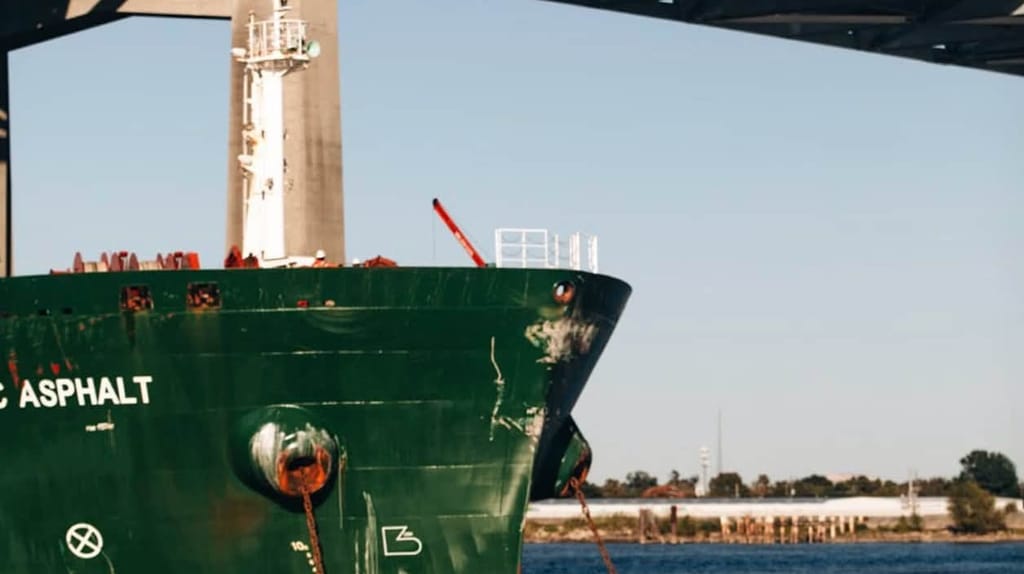
Legal claims are mounting in the days following the tanker Atlantic Asphalt plowing into the docked river cruise ship American Heritage. While the salvage operations are underway and the investigations have begun, attention is also shifting to the courts, where the owners and managers of the vessel have made their first public statements.
A total of 13 lawsuits have already been filed, according to a review of court records by New Orleans’ WWL-TV. It reports that there are eight cases in the federal court with another five filed in the local district court. Among the most recent filings are two New Orleans police officers who claimed they were injured in the response, as well as two passengers who are claiming injuries.
Miraculously, no one was killed in the incident, which saw people fall into the water as the river cruise vessel rolled to its side. Only one person remained in the hospital as of yesterday, according to a report from WDSU News. There were approximately 190 passengers and 50 crewmembers on the boat when it was hit.
In a hear on Monday, however, judge Wendy Vitter responded to the first arguments from lawyers for the tanker. They contended in a filing with the US District Court that the vessel was in “good order” and that the steering failure being blamed for the allision was “sudden and without warning.”
The lawyers argued that the vessel, which has been under detention since the November 13 incident, should be released. The judge disagreed and ordered the vessel to remain in New Orleans under detention. In addition, a local judge in the New Orleans’ Civil District, Judge Kern Reese, signed an additional order to preserve evidence related to the vessel, its navigation, maintenance, and condition. This order includes the crew, operator, insurers, and other affiliates of the Atlantic Asphalt.

American Heritage on its side post-colision (NTSB photo)
These actions come as media reports are starting to detail a long list of issues with the vessel. Pole Star and others have been digging into the reports from the U.S. Coast Guard, Canada’s Transportation Safety Board, and others. While the ship has been cited for various issues in its Port State inspections, they were mostly not related to operations and safety, except Canadian inspectors in August 2025 cited issues with the operation of the emergency generator.
The review of past incidents, however, found the vessel experienced two breakdowns in 2024, including a loss of communications between the bridge and main engine and another time where the automatic pilot malfunctioned. The Coast Guard cited the vessel for faulty electrical wiring, the records showed that on December 25, 2025, the vessel had a complete failure of its electrical power system while in Canada.
Lawyers for the ship’s owners, Nave Shipping, and the operator, Thome Ship Management, filed in the federal court seeking to limit liabilities. WWL reports the lawyers filed a valuation from a London-based broker setting the value of the vessel at $24.5 million, which would be if accepted by the court, the maximum liability for the companies.
that matters most
Get the latest maritime news delivered to your inbox daily.
As the issues are heard in the court, the U.S. Coast Guard reported the savage operations began on November 17. The priority has been the approximately 17,000 gallons of fuel in the ship’s tanks as well as emptying the sewage tanks. WDSU cites Coast Guard representatives that said the pumping operations could be completed by the end of the week. They said a salvage plan could be approved by the end of the week or next week, but it could take months to fully remove the vessel and restore full navigation to the stretch of the Mississippi River. Navigation with restrictions is proceeding in the area.
American Cruise Lines expressed its appreciation for the outpouring of support for elected officials, first responders, and others in the wake of the tragedy. The company said it was proud of its captain and crew for their professional response and grateful to the first responders in New Orleans who stepped in quickly to assist. It recognized Captain Leonard Stewart, whose immediate and decisive actions with the crew allowed for the rapid evacuation of the vessel and who remained on the bridge as the vessel capsized, calling for aid and keeping the ship alongside the dock for as long as possible. Another one of the company’s vessels, American Splendor, was assigned to operate the remainder of the 2026 program from New Orleans as the company works to recover from the incident.