


Analysis: Foreign-Flag Waiver Doesn't Put Jones Act Fleet at Risk
Poten: International vessels will complement rather than displace Jones Act tankers during the waiver period.
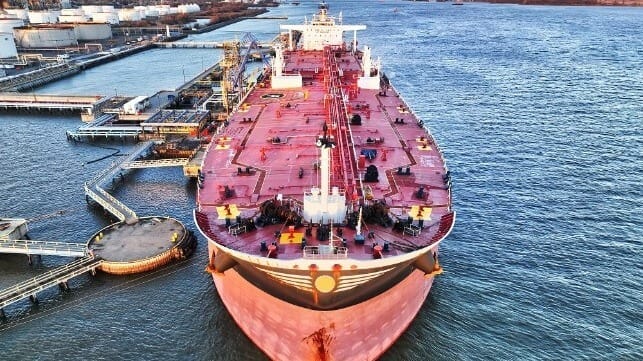
On March 18, 2026, the Trump administration announced the approval of a 60-day Jones Act waiver to allow foreign-flagged ship to move cargoes between U.S. ports. The Jones Act (official name: Merchant Marine Act of 1920), is a federal statute that requires the use of U.S.-flagged, U.S.-built, U.S.-owned (at least 75%) and U.S.-operated (at least 75% crewed by U.S. citizens) vessels to move any cargo between U.S. ports. The White House referenced the need to "ensure that U.S. airfields and military installations are properly supplied, particularly from the U.S. Gulf Coast, so that the U.S. can avoid a shortfall that would adversely affect military operations."
The Trump administration also suggests that the waiver will help "mitigate the short-term disruptions to the oil market as the U.S. military continues meeting the objectives of Operation Epic Fury" and to "allow vital resources like oil, natural gas, fertilizer, and coal to flow freely to U.S. ports for sixty days."
Over the years, the Jones Act has had both vocal supporters as well as detractors. In this Tanker Opinion we'll discuss some of the pros and cons of this legislation, as we try to figure out whether this most recent waiver will meet its objectives.
As mentioned, the Merchant Marine Act of 1920, named after its sponsor, Senator Wesley Jones of Washington State, is a cabotage law meant to ensure that the United States maintains a strong domestic maritime industry for reasons of both national security and economic stability. It was primarily enacted to help rebuild the U.S. merchant marine fleet following World War I as the U.S. realized it was dangerously dependent on foreign vessels for military logistics and domestic commerce.
More than 100 years later, the situation has not really changed dramatically. Relative to the size of the U.S. economy and the length of its coastline, the size of the Jones Act compliant fleet is quite modest. There are only a few shipyards in the United States that build commercial ships and prices are very high relative to international competition.
Critics argue that this leads to higher prices for consumers, in particular for those living in non-contiguous U.S. areas like Alaska, Hawaii and Puerto Rico, which rely heavily on ocean shipping. Proponents of the Jones Act argue that it is a critical pillar of national security, economic stability and domestic safety. Labor unions, shipbuilders and military leaders support the law. A frequently quoted PricewaterhouseCoopers study from 2019 argues that the Jones Act supports approximately 650,000 American jobs.
We don't think that the announced 60-day waiver period puts the Jones Act at risk. The Trump administration is in favor of strengthening the U.S. maritime industry. Last month it released a Maritime Action Plan, a comprehensive strategy aimed at revitalizing U.S. shipbuilding, strengthening the maritime industrial base, and boosting national security. It focuses on increasing domestic ship production, expanding the U.S.-flagged fleet, and enhancing port infrastructure to combat the long-term decline of U.S. maritime competitiveness. In Congress, the 2025 SHIPS for Americas Act, a legislative package with strong bipartisan support has broadly similar aims.
So, what could be the impact of this waiver period? At first glance, it seems that it may facilitate certain crude oil and product moves that were unlikely before. Due to the limited availability of Jones Act crude oil tankers (most of them are committed to the Alaska trade), domestic crude oil movements were rare. With the waiver, we anticipate U.S. crude to be transported to refineries on the U.S. East or West Coast to replace barrels from the Middle East. Similarly, we could see U.S. Gulf refiners move product to the East Coast (gasoline) and/or West Coast (jet fuel) if/where needed. A reported fixture of a foreign flag vessel to move refined products from the U.S. Atlantic Coast to Hawaii is an example of a voyage that a Jones Act vessel was unlikely to make, since it would take the vessel out of rotation for a very long time.

that matters most
Get the latest maritime news delivered to your inbox daily.
The vast majority of Jones Act tankers are on long-term charter and we expect that this fleet will continue to be fully employed during this waiver period. The conflict in the Middle East has elevated international flag freight rates, minimizing and at times even eliminating the freight differential between U.S. and international flag vessels. Under these circumstances, we think it is more likely that international flag vessels will complement rather than displace Jones Act tankers during the waiver period.
This analysis appears courtesy of Poten & Partners.
The opinions expressed herein are the author's and not necessarily those of The Maritime Executive.
