


Waste-to-Biochar Process Could Reduce Cruise Ships' Costs and Emissions
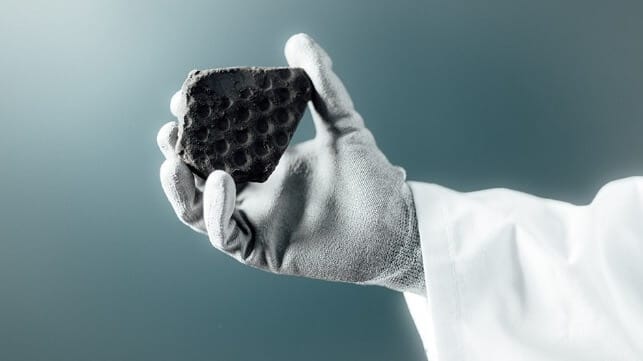
The largest cruise ships are floating towns, with thousands aboard - and they have waste handling requirements to match. Waste disposal is a major cost center for cruise lines in some operating regions, and wet waste - food waste and sewage sludge - can be one of the most expensive components to handle. Generated by the tonne, it can't be thrown away in a typical landfill and needs special handling. But there is another option: heating it until it turns to biochar, an inert substance similar to charcoal, which can be safely disposed of at low cost. To learn more, TME spoke recently with Alejandro Álvarez Camino, Vice President for Products and Engineering at Evac Group.
Can you tell us about the HydroTreat biochar option, and what your customers say about how it works in a seagoing application?
HydroTreat is designed to address ‘wet waste’ on board, which is a combination of food waste and sludge. Food waste includes leftovers from galleys and restaurants and preparation waste such as peelings and trimmings. Sludge is the residual by-product from onboard wastewater treatment systems. While around 98% of wastewater is cleaned and discharged as treated water, the remaining 2% becomes bio-residue or bio-sludge.
Traditionally, many vessels have discharged this waste overboard where regulations permit it. However, increasingly strict local and international regulations are restricting this as an option. In certain areas discharge is prohibited, restricted by volume, or subject to operational limitations. That creates both environmental concerns and operational challenges. Ships may need to alter routes to reach discharge zones, increasing fuel consumption, or pay significant port fees to land waste ashore. HydroTreat addresses this by processing wet waste on board and transforming it into biochar, which is a sterile, stable, carbon-rich material.
Customers value the operational independence this provides. They are no longer forced to plan voyages around discharge zones or port reception facilities. The system converts regulated, potentially hazardous wet waste into a safe, dry and a compact end product that does not rot, smell or attract pathogens. This reduces handling challenges and improves onboard hygiene.
Compared with alternatives such as incineration or pyrolysis, HydroTreat avoids visible emissions and, importantly, captures carbon within the biochar rather than releasing CO2 through burning or decomposition.
What are the disposal requirements for biochar, and does it allow for less expensive disposal options?
From a disposal perspective, the benefits are significant. Today untreated wet waste, particularly international catering waste, is often classified as hazardous because of biosecurity risks. Landing such waste in ports can be costly due to strict handling and treatment requirements. By converting this material into sterile biochar, HydroTreat effectively transforms hazardous waste into a stable, non-putrescible product. Even before a specific regulatory category for biochar is fully defined, this change in material characteristics already reduces disposal complexity and cost. In addition, the treatment process reduces volume, which further lowers transport and landing fees.
Regulatory frameworks are still catching up. At present, biochar is not always formally defined as a separate category in maritime or port regulations, but discussions are underway with authorities including the US FDA, European bodies and MARPOL-related committees to establish clearer definitions and pathways for use. The longer-term ambition is for biochar to be recognised not simply as waste, but as a usable by-product; for example, in industrial applications or as a soil improver. While that regulatory progress may take several years, the direction of travel is clear: tighter discharge rules and greater scrutiny of onboard waste streams.
For shipowners investing in assets with 25–30-year lifespans, HydroTreat offers a way to future-proof operations. It reduces reliance on discharge permissions, lowers disposal costs, captures carbon in a stable form and positions vessels ahead of the regulatory curve.
Does the system have cost of ownership benefits for the operator compared with other ways of handling solids? Perhaps in certain high-regulation regions?
The total cost of ownership (TCO) benefits from HydroTreat depends very much on the vessel profile and where it operates.
From a regulatory standpoint, MARPOL provides an overarching framework, but how sludge and catering waste are handled in practice varies significantly by region and port. In some areas, such as parts of the Baltic, sludge can be discharged to shore facilities free of charge. In those cases, the direct financial incentive is more limited, because the operator is not facing high landing fees in the first place.
However, in other high-regulation and high-cost regions, the economics can look very different. In ports such as Miami and parts of the Caribbean, handling fees for international catering waste and sludge can be extremely high. Ships can spend millions of dollars per year on landing and processing fees, particularly large cruise vessels generating significant volumes of food waste. In those operational profiles, HydroTreat can materially reduce disposal costs by converting regulated, hazardous wet waste into sterile biochar with lower handling requirements and reduced volume. In some cases, the investment can be paid back within a few years.
By contrast, for a cargo vessel operating mainly in international waters with a small crew and limited food waste generation, the cost benefit may be non-existent. If discharge at sea is still permitted and volumes are low, the business case is weaker. That is why the TCO discussion must always be tailored to the specific vessel type, route pattern and port calls.

that matters most
Get the latest maritime news delivered to your inbox daily.
In highly regulated regions like the Baltic, even where current port reception may be affordable, the direction of regulation is toward tighter discharge controls and greater scrutiny of sludge treatment and by-products. HydroTreat reduces dependence on discharge permissions and port infrastructure, which can become a strategic advantage as regulations tighten. Beyond direct disposal savings, there are also reputational and sustainability benefits that increasingly factor into total cost of ownership.
HydroTreat can offer strong TCO benefits in high-fee, high-regulation operating profiles, particularly for cruise vessels and ships calling frequently at ports with strict biosecurity and catering waste rules. In lower-cost, low-volume scenarios, the financial case is less viable. That is why each installation begins with a detailed review of operational patterns, regulatory exposure and waste volumes to build a clear, vessel-specific value proposition.
