


US Coast Guard Has Stopped Vessels Carrying Oil to Cuba
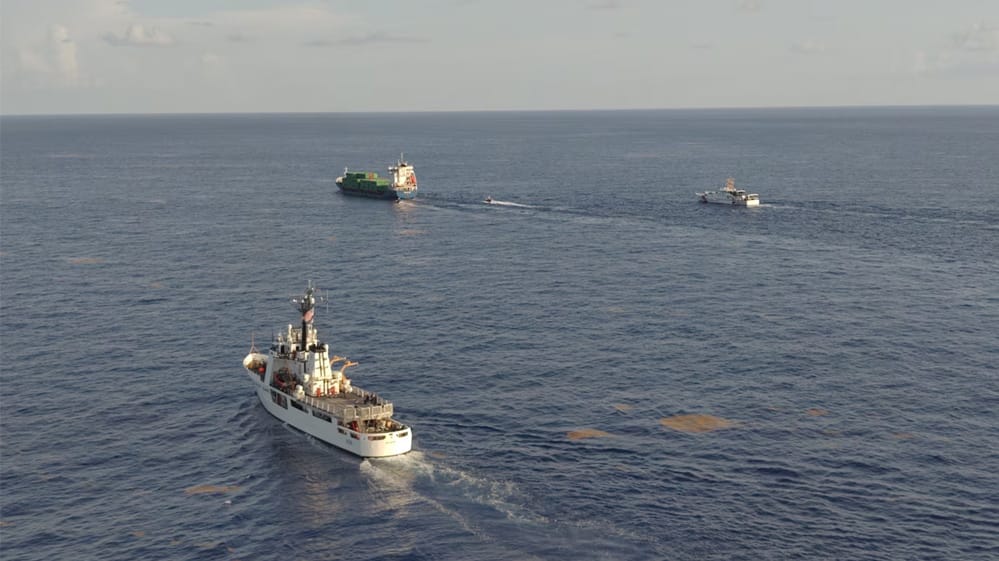
The U.S. Coast Guard confirmed that it has been stopping vessels transporting oil to Cuba, with two ships stopped earlier in the summer. It has resumed the enforcement of the Trump administration’s imposed embargo on fuel shipments to the Caribbean island after the U.S. permitted some emergency oil shipments earlier this year.
“Illicit fuel shipments violate international law and pose severe environmental threats in the Caribbean Sea," said Vice Adm. Nate Moore, deputy commandant for operations, in a Coast Guard statement. “As the Coast Guard leverages our unique authorities and capabilities on the high seas, coordinated efforts are vital to stopping illegal fuel shipments and upholding international law.”
The statement confirmed that a small container vessel, Grace, had been stopped in early September and was taken to Progreso, Mexico, where the Mexican Navy searched the vessel. They reported finding “large quantities of fuel in the vessel’s ballast tanks” and additional containers on deck believed to be transporting illicit fuel.
“The unsafe stowage of fuel in ballast tanks represents an inherent hazard to the marine environment. The actions of the United States and Mexico prevented an unregulated fuel transfer in the Caribbean Sea, where deceptive shipping practices, unsafe vessel conditions, and concealed cargoes can increase the risk of oil spills and other pollution incidents that threaten coastal communities, fish stocks, and sensitive marine ecosystems,” the Coast Guard said in its statement.
It asserts the vessel was “employing tactics common amongst the ‘dark fleet,’" without providing further details.
The cutters Alert and Charles Sexton were involved in the interdiction, which The New York Times reports took place between Mexico and Cuba on September 5. The vessel’s AIS was showing its previous port as Colón, Panama, on August 31. The action also involved USCG aircraft and a law enforcement team.
The vessel was not officially identified but appears to be a 2001-built containership that has a capacity of 340 TEU. It is 100 meters (328 feet) in length, and Equasis lists it as having been acquired by interests in Latvia in May 2026. It is registered in Comoros and remains at Progreso, Mexico.
In addition, the Coast Guard confirmed it stopped a smaller vessel earlier in the summer, Jaira Provider (2,647 dwt), which was also transporting illicit fuel to Cuba. The Coast Guard refers to the offshore tug/supply ship as a “substandard vessel.” The ship was built in 1978 and is approximately 67 meters (220 feet) in length. It is registered in St. Kitts and Nevis.
The New York Times reports the supply ship had 210,000 gallons of fuel aboard when it was stopped, but no amount of fuel has been reported from the containership. It would be a relatively small amount of fuel for Cuba, which depends on international deliveries beyond its limited local capabilities.
Cuba has been struggling since the Trump administration closed down its ability to import fuel from Venezuela earlier this year. There have been repeated reports of power blackouts and fuel shortages on the island. At the end of March, the U.S. seemed to relax its embargo and let a tanker carrying an emergency fuel shipment from Russia reach Cuba. A second shipment, however, was diverted after reports earlier in 2026 that the USCG had tracked and approached other tankers, discouraging attempts to reach the island.
The New York Times, however, points out that the U.S. Treasury has issued individual licenses for fuel imports from the United States to individual businesses on the island. Mexico and China also sent emergency aid shipments to the island earlier this year.

that matters most
Get the latest maritime news delivered to your inbox daily.
Cuba’s Foreign Minister was the latest to lash out about the blockade, telling the United Nations General Assembly it is an act of war. He said, The New York Times reports, that the Trump administration’s pressure campaign had become “crueler and more dangerous.”
Talks between the United States and Cuba appear to have made little progress toward resolving the dispute. The administration appears determined to force regime change through its economic efforts.
