


Trump Resumes Strait of Hormuz Threats
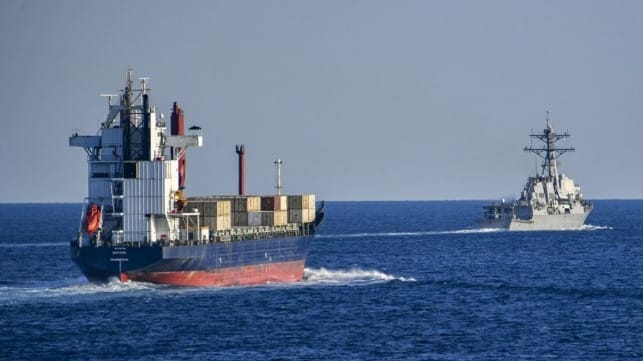
As the reality of the Strait of Hormuz energy restriction begins to set in for overseas markets, President Donald Trump has reinstated his pledge to reopen the waterway, having previously signaled that the task would be up to other nations.
On Monday, Trump said that the strait was enough of a priority that the U.S. would destroy Iran's potable water supplies if Iran didn't give it up. "If the Hormuz Strait is not immediately ‘Open for Business,’ we will conclude our lovely ‘stay’ in Iran by blowing up and completely obliterating all of their Electric Generating Plants, Oil Wells and Kharg Island (and possibly all desalinization plants!)," he said.
On Tuesday, the president told reporters that he did not see a need to take action to open the strait. "When we leave the strait will automatically open," President Trump claimed in a conversation with the New York Post. "I don’t think about it, to be honest." He added in a social media post that other nations could "go get their own oil" from the waterway, without U.S. help.
On Wednesday, he resumed Monday's pledge to use U.S. military force to make Iran give up control of the waterway. "We will consider [a ceasefire] when Hormuz Strait is open, free, and clear. Until then, we are blasting Iran into oblivion or, as they say, back to the Stone Ages!" Trump pledged, leaving the timetable open for an extended U.S. intervention. Separately, he told reporters that the U.S. would be leaving the conflict "within maybe two weeks, maybe a couple of days longer," and "it doesn't matter if they come to the table or not" to achieve a negotiated deal.
The conflict's secondary effects are beginning to set in for markets overseas. Thailand and Sri Lanka have already experienced fuel shortages, and rationing plans have been made in New Zealand. Undersupplied Asian buyers are bidding up available LNG, oil and product cargoes, driving up prices globally. For middle distillates in particular, "the market is signaling a genuine shortage with limited ability to rebalance," said Sparta's James Noel-Beswick in a research note on Wednesday. "Surging spreads and persistent eastbound flows into a diesel-starved Asia indicate that global supply is insufficient, leaving prices highly sensitive to any disruption, particularly in the Middle East."
The impact on distillate pricing is beginning to affect U.S. markets as well. In California, the U.S. region most exposed to Asian energy price signals, average diesel prices broke past the $7.50 per gallon mark this week - setting a new state record in the process. The national diesel average settled at $5.50, about $0.30 short of the all-time record.

that matters most
Get the latest maritime news delivered to your inbox daily.
For Europe, the economic impact could be high if the supply disruption lasts - potentially "as heavy as we recently experienced during the Covid pandemic or at the start of the Ukraine war," German Chancellor Friedrich Merz told Politico this week. The EU - dependent upon the Gulf for refined diesel and jet fuel - has advised member states to prepare for "voluntary demand saving measures," like travel reductions.
The UK and France are attempting to address the problem through talks with a group of 35 like-minded partners, said to exclude the United States. The group is set to meet this week, and UK Prime Minister Keir Starmer said that the partners would "assess all viable diplomatic and political measures we can take to restore freedom of navigation, guarantee the safety of trapped ships and seafarers and to resume the movement of vital commodities."
