


Study: Wind Propulsion is Key to Shipping's Decarbonization
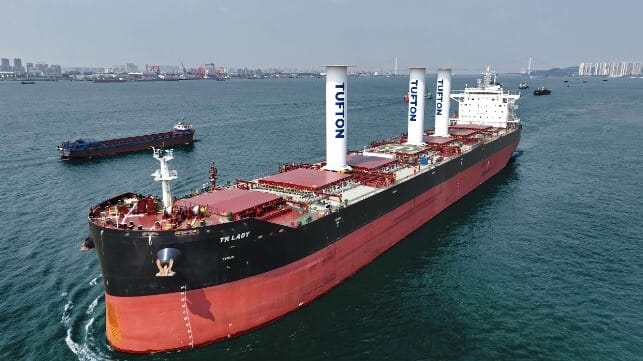
A new study highlights the potential of wind propulsion in helping the shipping industry decarbonize. With only a fraction of oceangoing vessels deploying wind-assisted propulsion, the research suggests that retrofitting a majority of the world's fleet with the technology could be a significant step towards meeting global climate goals.
The global merchant fleet is estimated at around 60,000 vessels of more than 1,000 gross tonnes. Yet only about 100 have been fitted with wind propulsion solutions such as Flettner rotors, suction sails and wing sails, which harness wind energy to supplement engine power and reduce fuel consumption.
While the shipping industry has been slow to adopt wind propulsion, the new study underscores the technology's importance in decarbonization efforts, particularly because alternative renewable e-fuels may not be competitive at scale until the 2040s.
The study, commissioned by Brussels-based NGO Seas At Risk, shows that wind propulsion can cut fuel consumption by 6.3 to 9.4 percent across all suitable vessels. That translates to a potential 7.8 percent reduction in annual CO? emissions by 2050, delivering up to 760 million tonnes of cumulative CO? savings.
Conducted by the UK-based Tyndall Centre for Climate Change Research, the study modeled main engine emissions across the global fleet. The team identified 25 suitable ship types covering around 60 percent of global shipping emissions. Using modeling across 1.74 billion kilometers of real voyage data from 2024, annual fuel and emissions savings were calculated for over 34,000 vessels.
The findings showed that wind propulsion can cut fuel consumption by one to 12.5 percent depending on ship type, and by 6.3 to 9.4 percent across all wind-suitable vessels depending on the number of sails installed. The estimates are conservative; the true potential is greater when optimization happens in parallel, including weather routing, slow steaming, and efficient hull design (for newbuilds).
Bulk carriers and tankers showed the highest potential, owing to their large deck space. Deploying systems on those two ship types alone should deliver 50 percent of the total emissions savings.

that matters most
Get the latest maritime news delivered to your inbox daily.
“The ships needed to reach 2030 climate targets are already at sea and they can be powered by wind. Retrofitting sails cuts fuel use and emissions now, while alternative fuels remain decades away from being available at scale,” said Anaïs Rios, Seas At Risk Senior Shipping Policy Officer.
Rios added that wind propulsion is not a future prospect — it can be deployed today.
