


Royal Navy Describes "Intense" 72-Hour Operation Tracking Russian Vessels
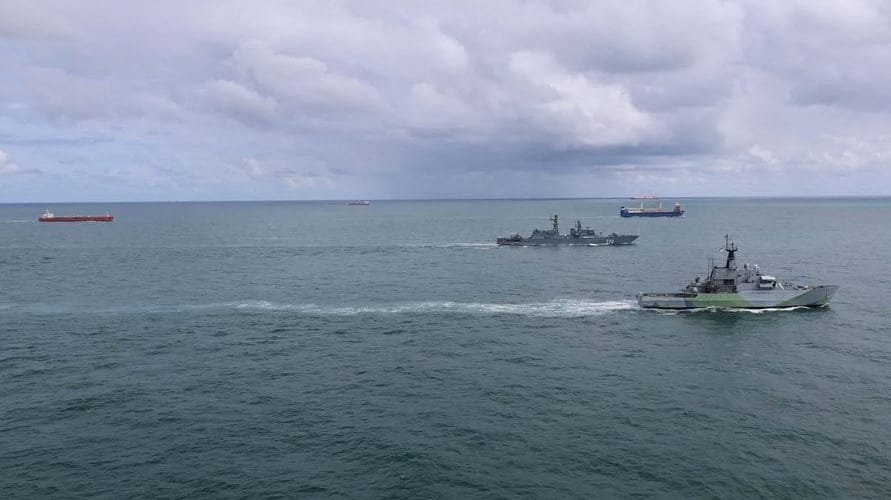
The Royal Navy provided additional details on its recent tracking efforts as more Russian vessels transited the English Channel to reach the Atlantic. According to the Royal Navy, it is part of an overall 25 percent increase in Russian activity that it has tracked over the first eight months of 2026.
Four of the UK’s warships, HMS Duncan, HMS St Albans, HMS Severn and HMS Mersey, were involved in the latest efforts using radar, sensors, and helicopters to monitor the movement of the Russian vessels. While it has become a fairly routine exercise to track the vessels’ movements, the volume has increased, and the Royal Navy believes it is pressuring the Russians. It says that some vessels have rerouted to avoid the possibility of being seized after the UK stopped the tanker Smyrtos in June and French forces have stopped several tankers.
“Since that successful operation, we have seen Russian shadow fleet vessels increasingly forced to change their routes, imposing significant cost and delays to their journeys,” said General Sir Gwyn Jenkins, the First Sea Lord and Chief of Naval Staff.
The Sunday Times details just how many Russian vessels are rerouting. It writes that the Irish Naval Service “recorded an 189 percent increase in shadow fleet transits off Ireland’s west coast, from 132 between January and September last year to 382 this year, including 303 since March.”
The Royal Navy continues to track the ships that are not rerouting. It says that HMS Duncan, HMS St Albans, and HMS Severn were all involved in tracking the Russian destroyer Admiral Levchenko as she escorted cargo vessels General Skobelev and Sparta south through the UK waters. Both General Skobelev and Sparta are part of Russia's shadow fleet and have been sanctioned for transporting Russian crude oil and military hardware.
Russia also deployed the frigate Neustrashimy to escort the cargo vessels. This follows a familiar trend in which Russia has increased the escorts of its military cargo ships and tankers while passing through the North Sea and English Channel.
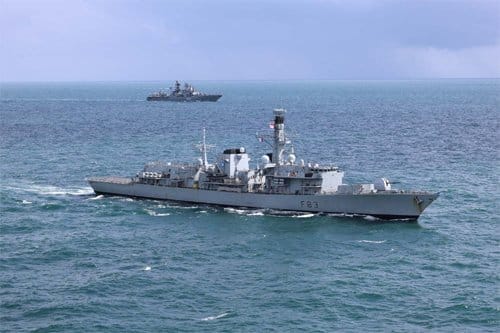
HMS St Albans tracking Russian destroyer Admiral Levchenko (Royal Navy)
These vessels were part of the convoy that was detected passing Gibraltar on August 27. They are part of the return by the Russians to the Mediterranean, likely bound for the Syrian port of Tartus.
The UK also detected another member of the Mediterranean convoy, the replenishment vessel Akademik Pashin. HMS Mersey was deployed to shadow its movements through the English Channel.

that matters most
Get the latest maritime news delivered to your inbox daily.
The UK contends that, working with international partners, it will continue to target the Russian shadow fleet and the revenues that fund Russia’s illegal war while reducing Moscow’s ability to threaten European and global security. It highlights that the UK has sanctioned more than 500 vessels and says that Russia’s oil and gas revenues are down by 24 percent year-on-year versus 2025.
The Royal Navy ships tracked the Russian group from the North Sea through the English Channel. They ultimately handed over monitoring duties to a NATO ally off the coast of France near Ushant. Spotters detected the ships on August 27 off Gibraltar continuing their voyage into the Mediterranean.
