


Iran Exploits Attack on Small Product Tanker to Assert Hormuz Control
The Islamic Revolutionary Guard Corps Navy continues its campaign of attacking vessels and exploiting the incidents to assert that it has total control over the Strait of Hormuz. While it continues to exaggerate the claims in its propaganda warfare, it appears to have an effect, as the confirmed transits through the Strait of Hormuz remain low.
In its latest report, it said a Togo-flagged tanker, Trend, was attacked. The IRGC claims the vessel was set ablaze and stopped from its “illegal passage.” It was the third report of a tanker attacked this week.
Rear Admiral Ali Ozmaei announced the attack and used it to emphasize his position that Iran “continues to maintain control over the waterway.” He went on to say that any vessel attempting to cross the Strait of Hormuz “illegally would face destruction.” He reiterated Iran’s position that vessels should not attempt to transit “without explicit authorization.”
The vessel that was identified, Trend, is a small product tanker, 7,119 dwt. Built in 2008, it has been managed for the past few years out of the UAE. Its last AIS position was shown as being anchored off the UAE as of September 15.
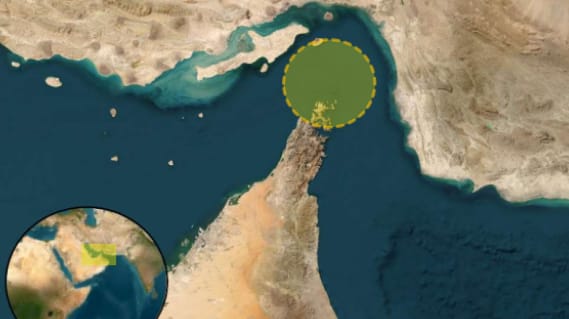
With most vessels making the transit “dark,” it is harder to verify the claims of attacks. However, UK Maritime Trade Operations did receive information today that a tanker had been hit by a projectile that caused a fire. It was advised, however, that the fire was out and there were no reports of injuries to the crew. The report to UKMTO placed the vessel 16 nautical miles northwest of the Omani coast near Khasab.
UKMTO also received a delayed report of another attack on Wednesday, September 16. It said a tanker was reported struck, but had few other details. This has been consistent with most of the recent reports, which are delayed and lacking details. Oman only confirmed on Tuesday that it had helped evacuate the crew from another tanker that appeared to have been attacked several days earlier.
The tracking services are also being challenged to confirm the number of vessels making the transit. Kpler data cited by Reuters suggested that only four vessels made the transit through the Strait of Hormuz on Thursday, September 17. Three of the vessels it believes were inbound, but it notes the difficulty of tracking dark vessels.
Kpler further reported that three LNG carriers “reappeared” outside the Strait of Hormuz, Reuters writes. It believes all of them had loaded in Qatar, with two resuming transmissions outside the Strait and one identified as arriving in India.
It also appears that Saudi Arabia and other Gulf states are increasing their use of ship-to-ship transfers, with their vessels making the risky transit to bring oil to vessels waiting in the Gulf of Oman. Reuters cited information from Vortexa on Wednesday that believed it identified a Qatari Energy vessel making an STS to another Qatari vessel off the coast of Oman.
Martin Kelly, Head of Advisory at EOS Risk Group, had commented earlier this week, citing Iran’s attempts at intimidation of vessels, a charge U.S. Central Command has made when it refutes Iranian claims. Kelly wrote, “Iran's kinetic activities are not sufficient to stop shipping from transiting via the Omani route with 10-20 ships transiting per day. Iran is using misinformation as a non-kinetic fire to achieve the same effect, that is, attempting to deter shipping from transiting the Strait of Hormuz via Oman, by scaremongering shipping into believing mines are present.”
CENTCOM continues to highlight that it continues to maintain its blockade of Iranian shipping. As of September 18, it is the count had risen to 105 commercial vessels that U.S. forces have redirected since the blockade was resumed.
While Iran continues with its threats and intimidation, the international community continues to speak out. The Secretary-General of the International Maritime Organization, Arsenio Dominguez, told a subcommittee meeting this week, “We are reaching a point where these conflicts are being used as a pretext to attack merchant vessels and innocent seafarers.”?
The IMO has confirmed as of September 15, 80 attacks on international shipping in and around the Strait of Hormuz, resulting in the deaths of at least 22 seafarers and injuries to many others. On Thursday, Peninsula Petroleum added to the count, reporting that the body of a second missing crewmember from the tanker Hercules Star had been found. The vessel was attacked on September 9 while at anchor off the UAE. The first seafarer was confirmed killed when the vessel was attacked, and now the company says the surviving seafarers have been repatriated.
“The ability of commercial ships to navigate international waterways safely, predictably and without unnecessary impediment is crucial to international maritime law and to the global trade system... Shipping must not be held to ransom,” Thomas Kazakos, Secretary General of the International Chamber of Shipping, told a meeting of the UN Security Council convened by Bahrain. “The current situation in the Strait of Hormuz and surrounding region demonstrates the importance of this issue.”

that matters most
Get the latest maritime news delivered to your inbox daily.
Kazakos was speaking to emphasize the critical importance of protecting maritime security and the freedom of navigation. The global trade association for merchant shipowners and operators was highlighting to the UN the importance of protecting the established international legal framework governing the world’s oceans.
