

Regional Efforts to Steer Maritime Security in Western Indian Ocean
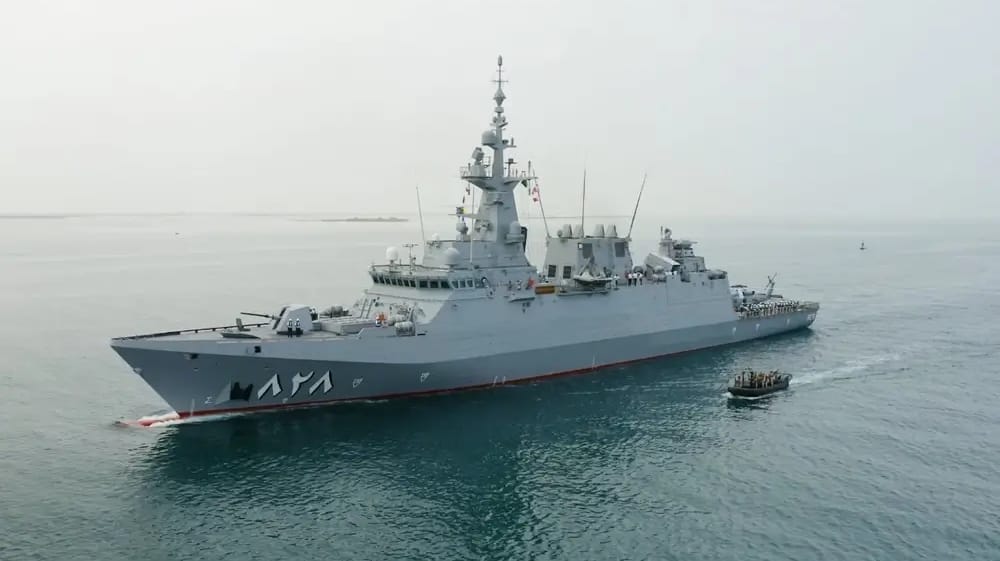
2026 has been another complicated year for maritime security in the Western Indian Ocean (WIO) region. The start of the Hormuz crisis early in the year has sent the global shipping industry into a reset. In addition, the Hormuz tension has triggered one of the largest energy supply shocks globally. As the escalation continues to evolve, spillover effects are also visible in other critical maritime fronts in the WIO.
Yemen’s Houthis, with ties to Iran, have strengthened their positions near the Bab al-Mandeb Strait. The withdrawal of Yemen’s Internationally Recognized Government forces from the western coast effectively handed the Houthis control over the busy international shipping corridor in the southern Red Sea.
While the Houthis have given assurances that commercial shipping is not a target of their current offensive near the Bab al-Mandeb area, a ban for Saudi- and Israel-linked vessels is still in place. It therefore remains to be seen whether the security guarantees will hold in the long term.
Again, cases of Somalia-based piracy have been on the rise this year, causing fears of the historical maritime high-risk area off the Horn of Africa. As with the past cases in around 2011, Somali pirate networks continue to demonstrate strong capability in targeting commercial shipping in the WIO. Unfortunately, the return of Somali piracy comes at a time the security environment in the region is substantially different.
Counter-piracy efforts 15 years ago were largely led by international naval task forces. The United States has refocused its assets on the Iran war, with a wider target to maintain influence in the Indo-Pacific theater. On the other hand, the European navies have bigger fish to fry back at home, leaving no spare assets for Indian Ocean operations.
In view of these shifts, the WIO states ought to advance a regionally anchored maritime security architecture. This means renewed investment in maritime domain awareness, better information sharing and support to local authorities to address root causes for piracy.
To help us break down this conversation on regional maritime security efforts for the WIO, TME’s Africa correspondent Brian Gicheru had a chat with the Djibouti Code of Conduct (DCoC) team. The DCoC framework, together with its Jeddah Amendment, is a platform to combat piracy and maritime crime in the WIO and Gulf of Aden. The regional security framework is supported by the International Maritime Organization (IMO).
How would you characterize 2026 in terms of maritime security in the WIO and the Red Sea area?
While the term “unprecedented” is often overused, the extent of maritime disruption, the nature of that maritime disruption, and the diversity of actors involved in it have made 2026 an unprecedented year with regard to maritime insecurity. That is true globally, but nowhere is it more true than in the DCoC region, where armed conflict, terrorism, piracy, sanctions busting, and maritime crime have impeded major chokepoints and created economic pressures and uncertainty felt by every human on Earth. How the region responds to these maritime security crises will similarly have worldwide effects.
Since the adoption of the Jeddah Amendment in 2017, the regional maritime security environment has continued to evolve, with emerging threats and a resurgence of Somalia-based piracy. How has DCoC/JA adapted its capacity-building and regional cooperation efforts to address these challenges?
Following the adoption of the Jeddah Amendment in 2017, there was a deliberate shift toward building national capacity and creating the enabling conditions for effective implementation at the national level. Central to this has been institutionalizing the whole-of-government approach envisaged under Article 3 of the Jeddah Amendment, strengthening national maritime security governance, interagency coordination and information sharing.
Building on these foundations, the DCoC/JA has progressively advanced toward regional operational cooperation through the establishment of Working Group 3 and, most recently, the Combined Maritime Task Force (CMTF). These efforts are underpinned by the adoption of the Regional Maritime Security Strategy, its Implementation Plan and Risk Register, and the Common Maritime Lexicon.
This represents a structured progression from strengthening national capacities to enabling coordinated regional action, with greater regional ownership, interoperability and collective responsibility for maritime security.
There has been an ongoing debate on addressing root causes of maritime crimes in the WIO. Is it happening, and how is DCoC/JA involved?
Maritime insecurity is fundamentally a symptom of land-based problems. People live on land, and therefore, if they are engaging in illicit activity at sea, they intend to bring the spoils of that activity back to shore. Unfortunately, 2026 has seen a spike in instability on land, in line with a major uptick in maritime security challenges.
DCoC/JA does not have the mandate to address all the issues leading to maritime insecurity, but it is fundamentally working to reduce the impact of the symptoms and, in the process, create the conditions that would allow for the resolution of the foundational causes on land. If criminals and other bad actors are not able to reap the benefits and rewards of committing offenses at sea, it undermines their ability to continue being nefarious players who destabilize the security of the region.
Some observers have argued that the maritime security ecosystem in the WIO is crowded. Indeed, major naval coalitions operate within this region, not to mention regional maritime safety campaigns. Is there an overlap of mandate from the different players?
It is crowded, and it should be. It’s the most challenging region of the world with regard to maritime security, and it affects every person on Earth. Therefore, it is not inherently a problem that a lot of actors are taking an interest. The problem is when the initiatives and efforts of those international actors undermine the efforts of the region and signatory states to be able to chart their own course for how to secure the region to the benefit of those who actually live there.
What needs to happen is that the region needs to lead on coordinating these different efforts such that it is beneficial to everyone involved. The DCoC/JA has created the mechanisms to be able to do that. Overlaps are also not inherently problematic, as long as they do not end up working at cross purposes.
The goal, therefore, is to marshal all the resources, assets, and interests able to contribute toward maritime security in a manner that is coordinated, synchronized, and moving toward maximum efficiency and effectiveness. The newly adopted Regional Maritime Security Strategy and affiliated Implementation Plan provide the blueprint needed to do that. Every actor – from within the region and beyond – should focus on ensuring that any action taken helps advance the Strategy and is coordinated through the responsible regional entity.
The DCoC/JA is therefore now in the position of being able to do effective crowd management and ensure that all the maritime security actors are moving toward the vision of a safer, more secure, more stable, more resilient and more prosperous maritime domain.
During the recent DCoC/JA High-Level Meeting in Madagascar, the signatory states agreed to establish a Combined Maritime Task Force (CMTF). What does this entail? Will it be military-led, or what structure will CMTF take?
The intention for the CMTF is not to replace international naval efforts but rather to complement them while enabling regional states to assume greater responsibility for their own maritime security. The CMTF will build on existing national capabilities and regional maritime security arrangements to better counter piracy and protect seafarers. Signatory States agreed to develop CMTF’s legal framework and Concept of Operations in 2027.
There is already an existing Regional Maritime Security Architecture (RMSA) advanced by the Indian Ocean Commission. On its part, DCoC/JA has information-sharing and operational coordination working groups. Tell us about your synergies with IOC, especially from an operational standpoint. Are you working with other partners in the region to advance your mission?
The DCoC/JA and the IOC-led RMSA are complementary but fundamentally different in nature. The DCoC/JA is a regional agreement among 22 signatory States, providing an overarching framework for maritime security cooperation, while the RMSA is a project-driven initiative that has established important regional information-sharing and operational coordination capabilities.

that matters most
Get the latest maritime news delivered to your inbox daily.
The RMSA pursues similar objectives, albeit within a smaller geographical scope. Given that all its beneficiary States are signatories to the DCoC/JA, there is no need to duplicate structures or capabilities. Rather, the RMSA, particularly through the RMIFC (Regional Maritime Information Fusion Centre) and RCOC (Regional Coordination Operations Centre), should be seen as supporting the implementation of the Jeddah Amendment.
Furthermore, we work closely with other regional and international partners, including EUNAVFOR ATALANTA, the Combined Maritime Forces, EU CRIMARIO, UNODC, INTERPOL and India’s IFC-IOR, to leverage existing capabilities, enhance interoperability and strengthen regional ownership of maritime security.