

Russia Plans to Build Railway Ferries to Supply Cut-off Kaliningrad
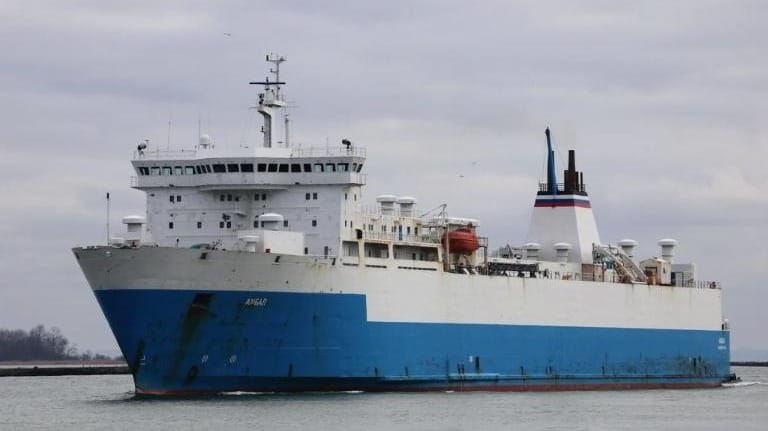
Russia is building two railway ferries in the expectation that land routes from mainland Russia to the exclave of Kaliningrad will be further restricted. Kaliningrad sits on the Baltic coast, isolated from Russia and Belarus by Lithuania and Poland. Since February 2022, and under diktat from the European Union, sanctioned and dual-use materials have been denied entry to Kaliningrad across road borders, and on the rail link from Russia via Belarus which enters Kaliningrad through Lithuania.
Although Kaliningrad is geographically quite small, it has an extensive internal railway system, which was previously used to ship in coal, metals, construction materials, timber, technical equipment and oil products – indeed, most of the goods which, from an efficiency perspective, would normally be carried by rail. These materials now have to be brought into the exclave by ship from the St. Petersburg area.
Kaliningrad used to have a healthy and cost-efficient light manufacturing sector, serving consumers in Eastern Europe, and competitive because wages and manufacturing costs were low. This is no longer the case, and the Kaliningrad economy is now struggling, becoming much more dependent on supporting the exclave’s substantial defense infrastructure.
The Russian response to this partial blockade has so far been muted. This is in part because the Russians signed up to Article 99 of the 1994 EU and Russia Partnership and Cooperation Agreement, which expressly authorizes the EU to filter Kaliningrad cross-border traffic on security grounds.
The Russians have protested, but appear to be coping with the restrictions quite well, building up a regular container line between Kaliningrad and St. Petersburg. This is supplemented by the sanctioned Russian military cargo fleet, which presumably carries military material. However, they have clearly calculated that the blockade could become tighter, and, given the importance of retaining their only ice-free port in the Baltic, have been planning mitigation measures.
This mitigation comes, according to the Ukrainian UA Media website, as a plan to build two further railway ferries to serve the Kaliningrad-St. Petersburg route. The first flaw in this $620 million plan is that the ships are to be built in the Crimea, which is now thoroughly under the eye of Ukraine’s drone force. Presumably the Ukrainians would wait until just before the ferries were completed before destroying them. In any case, without a fully serviceable Kerch Bridge, and with sea access from the Sea of Azov now blocked, building anything in the Crimea presents challenges.

that matters most
Get the latest maritime news delivered to your inbox daily.
The second flaw in the plan is that delivery of the two new ferries was planned for 2030, whereas the need for the new ferries has suddenly become very urgent indeed. They are needed both to bolster lift capability across the Kerch Strait, to where they might be diverted, and to service Kaliningrad.
It has now transpired that the single railway ferry currently serving the Kaliningrad-St. Petersburg route, the sanctioned Ambal (IMO 8807416), was attacked by Ukrainian drones on November 21 when located 20 nautical miles north of Ust-Luga. This was at about the same time as the sanctioned Russian military cargo ship Sparta II (IMO 9160994) was also attacked in the Gulf of Finland. It is not clear whether the Ambal has been damaged sufficiently to be taken out of service, but the problem of keeping Kaliningrad supplied has now become much more acute. Ambal is on November 27 showing up on AIS at the anchorage off the naval port of Kronstadt.