

Op-Ed: Why the UN's Shipping Agency Must Adopt Its Climate Agreement
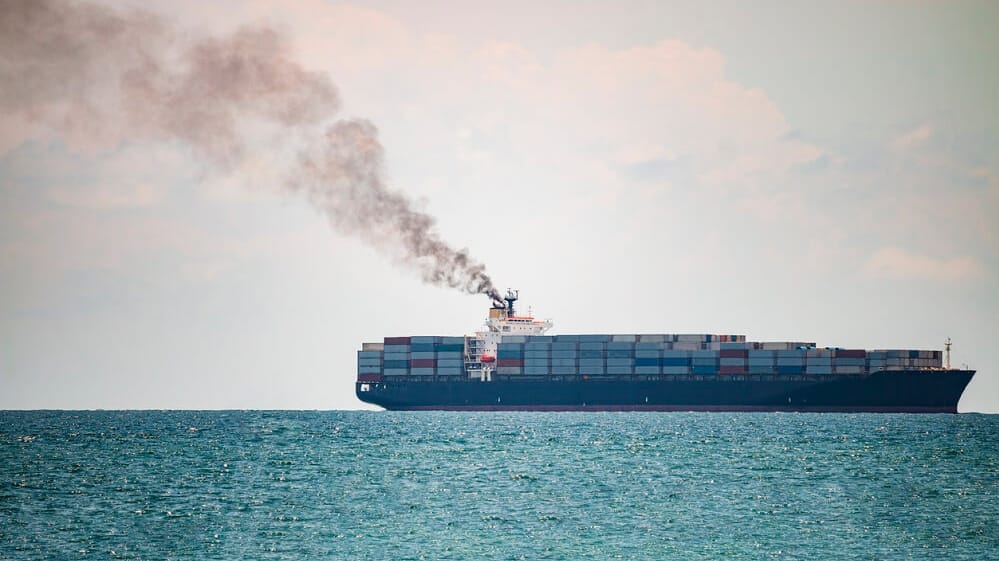
The global shipping sector makes up 2-3% of global greenhouse gas emissions - pumping one billion tonnes of GHGs into the atmosphere every year, as much as the world's fifth-biggest emitting country, Japan. The UN shipping agency, the International Maritime Organization, has committed to cutting emissions through its GHG Strategy goal, with a goal of reaching net-zero by 2050.
Crucial to achieving this is the Net-Zero Framework (NZF) - the IMO’s long-negotiated mechanism for reducing shipping emissions. The IMO must adopt this framework before the end of the year, during its upcoming meeting in London.
The NZF has been stalled since October of 2025, when a handful of countries, led by the United States and Saudi Arabia, blocked adoption. Several delegations supportive of the deal said that they received intimidation and threats from US officials representing the Trump Administration.
That pressure resulted in postponement. As this next IMO meeting approaches, momentous midterm elections have changed the country’s political landscape. For now, it remains unclear whether the US will return to the IMO with the same tactics.
In any case, countries that supported the NZF when originally approved, but subsequently came under pressure to object to its adoption in October 2025, will now likely be reassessing their positions. They are likely wondering if they can again stand firm in support of the NZF in a new political landscape.
Adoption of the NZF “as is,” without further delay or distraction, is key to realizing the goals of the IMO’s GHG Strategy - decarbonization by 2050, with targets of a 30% reduction in absolute emissions by 2030 and 80% by 2040 - and to protecting our global climate.
Coming after years of negotiations, the Net-Zero Framework reflects the IMO’s own Comprehensive Impact Assessment and will deliver on its goals. The NZF brings together a multitude of interests and positions, is supported by a broad majority and is the shipping sector’s best shot at reducing climate-warming emissions.
Since October 2025, when IMO member states voted to adjourn the adoption session for one year, various alternative proposals to the NZF were introduced and discussed intensively. However, they were neither able to demonstrate a comparable reduction in emissions nor to gather sufficient support. The alternative proposals aimed at supplanting or distracting from the NZF have now fallen away, proving the NZF as the best course ahead.
In the ensuing period, the world has seen a year of increased climate impacts: floods, droughts, heatwaves, and wildfires. UNEP’s Limiting Overshoot Spotlight Report shows the consequences of global inaction: global warming is expected to cross 1.5°C, despite international obligations to protect the climate system from anthropogenic greenhouse gas emissions.

that matters most
Get the latest maritime news delivered to your inbox daily.
There is no longer time for going in circles; every IMO member state must get behind the Net-Zero Framework and adopt it before the year ends.
Lukas Leppert is President of the Clean Shipping Coalition.
The opinions expressed herein are the author's and not necessarily those of The Maritime Executive.