


Israel Eliminates IRGC Navy Leadership in Strike on Bandar Abbas
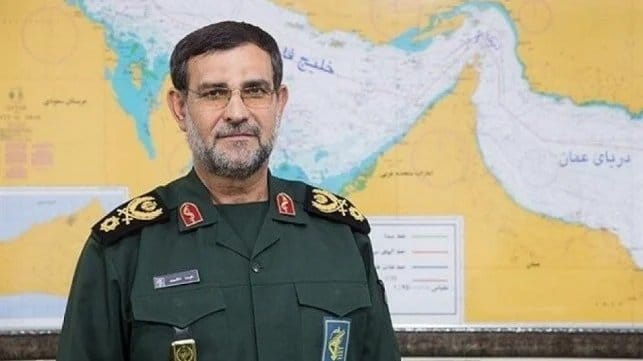
Israel announced on March 26 that it had killed the leader of the Islamic Revolutionary Guard (IRGC) Navy, Rear Admiral Alireza Tangsiri, in a strike on an IRGC Navy leadership meeting being held in Bandar Abbas. Among the other senior IRGC Navy leaders present at the meeting and killed in the same strike was Commodore Behnam Rezaei, the IRGC Navy's long-standing intelligence chief.
This attack is extremely significant, far more so probably than the elimination of most of the surface fleet of the regular Navy (Nedaja). The Americans had been focused on the destruction of the Nedaja fleet, an easy capability to destroy, but which, in practice, had very little involvement in the harassment or targeting of shipping, which was very much the role of the IRGC Navy. Indeed, some analysts considered the Nedaja to be one of the forces that could have been turned against the regime, so its destruction in some regards is a blow to those seeking the overthrow of the regime. One incident in which the Nedaja targeted foreign shipping occurred in the Straits of Hormuz on July 5, 2023, when the US-built corvette IRINS Bayandor (F81) made an abortive attempt to seize two Marshall Islands-flagged tankers, the TRF Moss (IMO 9732826) and the Chevron-chartered Richmond Voyager (IMO 9827683).
The IRGC Navy, however, has led the regime's anti-shipping campaign. Its small boats were frequently reported to be harassing shipping, including in the past several close passes to U.S. warships and the U.S. Coast Guard vessels stationed in the region.
The IRGC Navy was an extremely active supporter of the Houthis' attacks on shipping, stationing first the MV Saviz (IMO 9167253) (now the Comoros-flagged Wave), and then the MV Behshad (IMO 9167289) (now Mansar) in a picket position off the Dahlak Bank just inside Eritrean territorial waters in the Red Sea, from late 2016 until January 2024, to provide intelligence and targeting information. The IRGC delivered Russian and Chinese satellite intelligence to the Houthis through its senior seat on the Houthis' Jihad Council. Commodore Rezaei was a key figure in establishing the Houthis' intelligence structure. The IRGC also helped train up a cadre of technical officers and engineers, both in-country and at technical training institutes in Iran, who were then able to maintain, adapt, and then build and eventually design drones and missiles suited to Houthi needs, in effect making the Houthis almost independent of continued Iranian support, albeit with still some critical dependencies.
Closer to home, it is the IRGC Navy that has conducted most anti-shipping operations. It has acquired some larger ships, notably the now destroyed Shahid Bagheri Class missile corvettes and several converted merchantmen used as drone carriers. But these acquisitions were largely a vanity project: the IRGC Navy's real focus has been on fast attack and speedboat operations. These small craft, often equipped with short-range anti-ship missiles, have been used for a variety of tasks, including the planting of limpet mines on ships, mining, interceptions at sea, and gun attacks, often leading to hijackings and boardings.
IRGC Navy forces at sea have been coordinated with an armory of drones and anti-ship missiles, using mobile launchers and underground protected storage sites.
Supporting this whole IRGC Navy force array has been a well-developed and discreet intelligence organization, to detect and identify targets, utilizing its own radar, electronic signature detection, visual observation, and shore-to-ship challenges.

that matters most
Get the latest maritime news delivered to your inbox daily.
“Over the years, Tangsiri was responsible for attacks on oil tankers and commercial vessels and personally threatened the freedom of navigation and trade in the Strait of Hormuz and the international maritime domain,” the IDF said, announcing his death. Tangsiri was a naval brigade commander during the Iran-Iraq War and took command of the IRGC Navy in 2018. He frequently spoke out, taunting the Americans, and on Tuesday, he asserted that Iran controlled the Strait of Hormuz on social media. He posted the confirmation that a container ship had been turned back for not complying with the IRGC’s orders.
Destruction of the whole IRGC Navy command group is an extraordinary coup, particularly at a moment when they would have been planning a continuation of the Strait of Hormuz closure. But the elimination of Commodore Rezaei, the IRGC Navy intelligence chief, would have been a particular blow to Iran's strategic capability at this critical juncture, because without targeting data, the IRGC Navy is rendered largely ineffective. The coming days will reveal whether what remains of the IRGC Navy command structure is resilient.
