


IRGC Demonstrates Administrative Control Over the Strait of Hormuz
Iran has declared its intention to manage the "open" navigation of the Strait of Hormuz in perpetuity, and taken steps to put its plan into action. "Non-hostile" vessels may arrange passage with Iranian authorities, coordinated in advance (and in some cases, paid-for); vessels associated with Israel, the U.S. and other parties linked to the conflict are prohibited. The Islamic Revolutionary Guard Corps (IRGC) exercised this newfound authority in an administrative capacity for the first time on Wednesday, refusing passage to a container ship attempting to transit out from the Gulf to Pakistan.
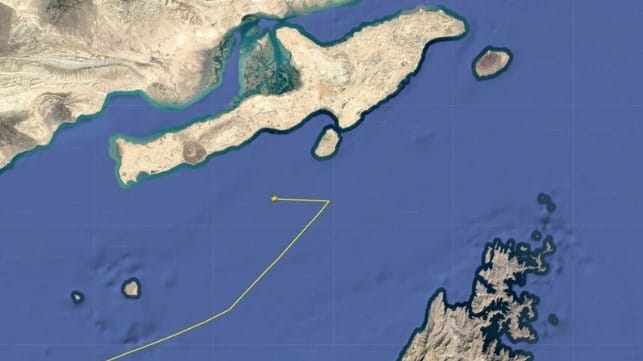
On March 24, the 6,800 dwt container feeder Selen attempted to make the crossing from the Arabian Gulf to the Gulf of Oman, bound for Karachi and broadcasting "Food for Pakistan" in her AIS destination signal. AIS data provided by Pole Star Global shows that the vessel approached the Iranian-controlled traffic lane near Qeshm, but at 1000 GMT, she reversed course and went to anchor just off the southwestern coast of the island. Selen remained in place as of 2330 hours GMT.
In a statement, the commander of the Islamic Revolutionary Guard Corps' navy confirmed that the boxship had been refused permission to pass - the first time that the IRGC had claimed an administrative rejection under its formalized Strait of Hormuz control protocol. Previous IRGC enforcement actions employed lethal force to disable or destroy any unauthorized vessels, without warning.
"The container ship Selen was turned back by the IRGC Navy due to failure to comply with legal protocols and lack of permission to pass through Strait of Hormuz," the IRGC said. "The passage of any vessel through this waterway requires full coordination with Iran's maritime authority."
So far, that coordination appears to be increasingly common. Windward counted five vessels on AIS in the Iranian-controlled tolling lane at Qeshm on March 23. Among them, the Chinese boxship Newvoyager (IMO 1088396) is confirmed to have paid for passage, per Lloyd's List.

that matters most
Get the latest maritime news delivered to your inbox daily.
Iranian management of the strait is the key priority in budding negotiations over a potential end to the conflict. Iran's continued control of the waterway is unacceptable to neighboring states in the Gulf, which want to ensure that it is ended in any peace deal.
"The Strait of Hormuz is not a bargaining chip, nor a tool of pressure. It is an international passage that must remain open without condition or restriction, under any circumstance," said former Qatari Prime Minister Sheikh Hamad bin Jassim bin Jaber Al Thani. "Any attempt to impose unilateral control over it, or to turn it into a tool of extortion, represents a direct threat not only to the Gulf Cooperation Council states and the region, but to the global economy as a whole."
