


Hormuz Shutdown Hits Key Industrial Commodities, Including Bunker Fuel
Bunker fuel prices and regional inventories are both changing fast
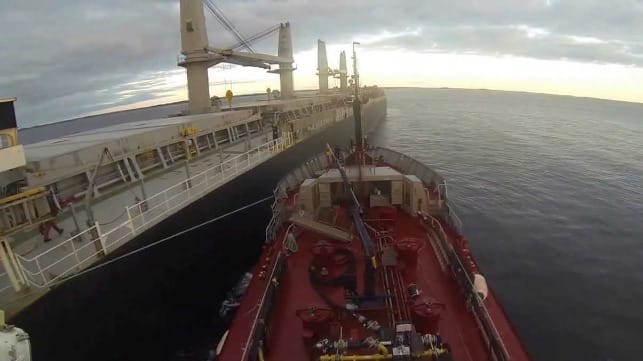
The Strait of Hormuz shutdown is having a direct effect on the price of oil and LNG, and in some downstream and byproduct markets, the impact is becoming acute. Net global oil supply is expected to fall by eight million barrels per day in March, according to the IEA. International commodity markets for sulfur, helium, urea, naphtha and petchem products are all linked to Mideast energy production, and shortages have knock-on effects on other sectors of the industrial economy - not least shipping, which is already facing price spikes and availability issues for bunker fuel.
In Singapore, VLSFO prices have doubled since the beginning of the U.S.-Iran conflict in late February, and are now clearing the $1,000-per-tonne mark - up from just $400 at the beginning of the year. Worldwide, Ship & Bunker predicts VLSFO prices in the range of $700 per tonne throughout Q2.
But pricing is half of the story. Basic availability of bunker fuel is now in question at some ports. Maersk, one of the world's largest consumers of bunker fuel, says that it is taking steps to move its own fuel supplies around in order to make sure it has bunkers where needed - effectively reinventing a supply chain for its fuel.
"Whilst it is our assessment that there is currently sufficient fuel globally, it is unevenly distributed. We are?proactively redistributing fuel to ensure vessels can?continue to?bunker where needed and keep our ocean network running without interruptions," Maersk said in a customer advisory this week. "This means we are better positioned to have the necessary access to fuel and the ability to move it to necessary locations."
Ship & Bunker notes that - as an easy way to ease bunker prices - regulators could waive the IMO2020 VLSFO fuel requirements and allow ships to start burning HFO without scrubbers once more. Shipping would regain access to cheaper and more abundant fuel, and the distillate ingredients that go into making VLSFO would be freed up for blending into high-value fuels used by other sectors (MGO, diesel and jet fuel, all in short supply).
Third-order effects: export restrictions
Some nations have a strong dependence on specific oil grades, and have geared their refining system and energy trade around these supplies. On the U.S. Gulf Coast, refiners are dependent on heavy sour crude for their feedstock mix, traditionally sourced from Canada or Venezuela. In East Asia, many refiners and petchem plants have arranged their business models around Mideast oil supplies. Japan sources 95 percent of its oil from the Mideast, and South Korea gets about 70 percent.

that matters most
Get the latest maritime news delivered to your inbox daily.
This dependency is putting the foreign customers of these Asian refiners on edge. New Zealand has no refineries of its own and sources about half of its fuel from South Korea; it would be affected quickly if the Korean government were to restrict exports of diesel, gas and jet fuel in order to preserve supplies for the Korean economy. Seoul has already imposed a nationwide fuel price cap on refinery supply prices in order to reduce the impact on consumers.
If Korea does restrict refined product exports, New Zealand could be in a tight spot: it presently has less than 50 days' supply of diesel, and even less of jet fuel, according to the New Zealand Herald. More supplies are expected soon, but talk of possible energy rationing measures - work-from-home orders, preferential fuel access for business users, and other interventions - is already in process. Fuel prices are rising, and Air New Zealand has already begun canceling routes to reduce jet fuel use where it would be uneconomical.
