

CBO: U.S. Navy's Shipbuilding Plan Faces Cost Blowout
The U.S. Navy's latest 30-year shipbuilding plan would cost about $54 billion a year, well above the Navy's own estimate, according to a Congressional Budget Office analysis released Thursday.
CBO uses its own formulas for cost estimation, based on past real-world costs, vessel size and complexity, and expectations about future wages and inflation. Its numbers are almost always higher than the U.S. Navy's own cost projections. All Navy shipbuilding programs are currently over budget to some degree, giving the office reason to expect higher expenses in general.
CBO estimates that the Navy's fiscal 2027 plan would cost an average of $54 billion a year in 2026 dollars over the next three decades. That would be about 40 percent more per year than what Congress has typically appropriated for shipbuilding in recent years (adjusting for inflation).
Over the 30-year timespan to 2056, CBO's estimate of shipbuilding expenses is $250 billion higher than the Navy currently predicts ($1.47 trillion, far more than the Navy's $1.23 trillion projection).
CBO noted that recent shipbuilding budgets have been the highest since the 1980s. But even if that level of funding continued every year through 2056, the Navy could not afford to buy all the ships in the plan, the office projects.
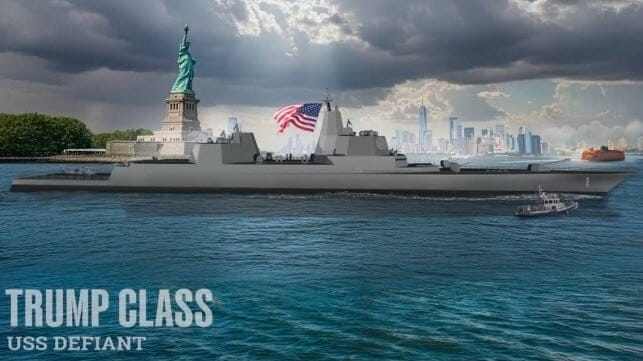
The plan, submitted to Congress in May, would grow the battle force from 286 ships today to 398 by 2056, the largest U.S. fleet since 2001. It includes 15 of the new nuclear-powered Trump-class battleships - which are likely to be delayed in the FY2027 budget - and 72 medium unmanned surface vessels.
In August, CBO estimated the first nuclear-powered battleship, USS Defiant, would cost about $23 billion, with follow-on hulls at about $18 billion each. That is far above the Navy's initial estimate of about $15 billion for a conventionally powered lead ship. The Navy revealed that the planned battleships will be nuclear-powered in May.

that matters most
Get the latest maritime news delivered to your inbox daily.
Long construction timelines are a major cost driver. In its August report, CBO found that DDG-51 destroyers now take an average of about 11 years to deliver, compared with about five in the early 2000s. It also said Newport News Shipbuilding is behind schedule on three aircraft carriers and many submarines.
The cost of shipbuilding is not the only budgetary pressure that the Navy will face in the years ahead. The Government Accountability Office has separately estimated that modernizing the Navy's public shipyards will cost about $200 billion and take decades - a funding priority that will necessarily compete with new construction.