Op-Ed: A Bridge Crew's AI Alert Must Become a Judgment Drill
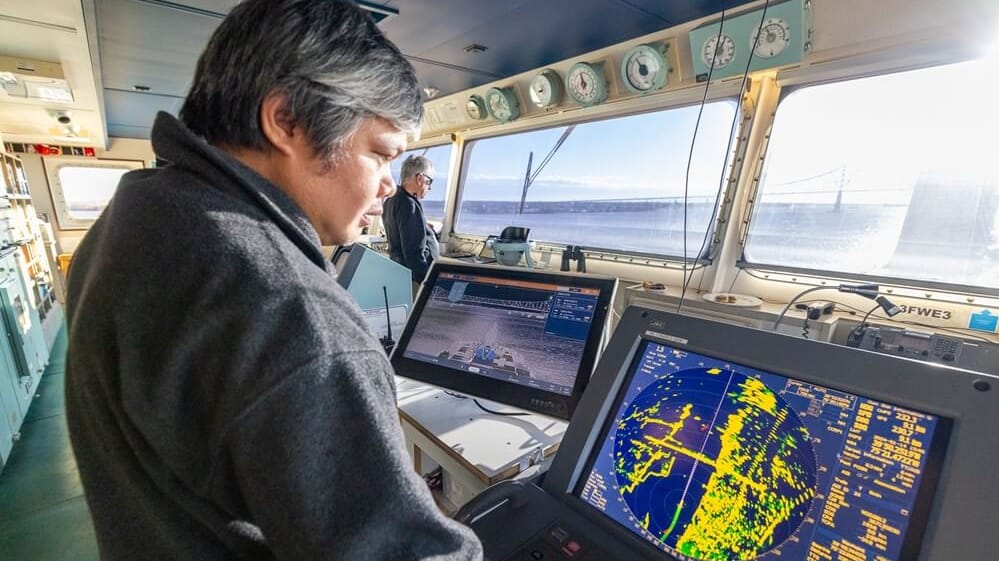
When an AI watchkeeping tool flags a contact as routine, what should a junior officer do if an independent observation tells a different story? That question deserves a place in maritime training before automated summaries become another familiar feature of the bridge.
In a September 2026 report, The Maritime Executive described how ship managers use AI-assisted watchkeeping to improve situational awareness and coach navigators. One executive stressed that the technology works best with capable, motivated mariners.
The promising part of that account is the use of data to strengthen seamanship. The unresolved question is how a vessel can tell whether its next generation of watchstanders is learning to challenge the tool.
A bridge team can acquire two different habits from the same technology. In one, officers see useful prompts and become quicker at checking evidence. In the other, they gradually learn to recognize the system's conclusions while losing practice reconstructing how those conclusions were reached. Routine voyages may offer few opportunities to discover which habit has taken hold.
Consider a deliberately hypothetical training exercise. A watchkeeping assistant presents an apparently reassuring summary of a developing situation. The instructor then supplies a conflicting observation from a separate source.
The point is not to create a realistic collision narrative or prescribe a maneuver. The point is to ask the trainee to explain the discrepancy before deciding what advice deserves confidence.
An instructor can examine four things in the discussion. Can the watchstander state what the automated summary actually claims? Can the person identify the underlying observations that would confirm or contradict it? Can the trainee name what remains unknown? And can the team explain when the matter needs to reach the officer or master with decision authority?
The exercise should use simulated information and the vessel's existing procedures. Qualified maritime personnel must determine the scenario's technical realism and the proper escalation boundaries. A behavioral scientist can help design the learning test, but the ship's navigational decisions remain with the people trained and authorized to make them.
There is a clear regulatory reason to preserve that distinction. The International Maritime Organization explains that Rule 5 of the collision regulations requires a proper lookout using sight, hearing, and all appropriate available means to appraise the situation and collision risk.
A summary on a screen may contribute information. It does not relieve the crew of its obligations to maintain awareness and exercise professional judgment.
This kind of drill differs from conventional software familiarization. Asking a cadet to locate an alert teaches interface use. Asking the cadet to explain why a plausible alert might be incomplete teaches a transferable skill.
The same reasoning applies when a system merges camera, radar, or other inputs into a compact conclusion. A trainee who can recite a recommendation has not necessarily learned to evaluate its foundations.
Research outside maritime operations illustrates both promise and limits. In a published study of customer-support workers, Erik Brynjolfsson, Danielle Li, and Lindsey Raymond found that AI assistance helped less-experienced employees improve their work and learning.
That finding cannot establish navigational safety effects. It does show why organizations should test what a novice learns, rather than assuming that assistance either always builds expertise or always erodes it.
A maritime operator could add brief discrepancy exercises to existing simulator sessions, debriefings, and supervised watchstanding development. Instructors might record whether trainees recognized contradictory evidence, justified escalation, and corrected an initial assumption when new information arrived. Repeating the test over time would reveal patterns in training, although it would not by itself prove a reduction in incidents.
There is also a useful question for experienced officers: How do they show a junior colleague their reasoning when the automated answer happens to be correct? The most important lesson may occur when the senior watchstander explains what was checked, why the conclusion is credible, and what evidence would have changed it. Without that exchange, a correct screen can conceal an empty learning opportunity.

that matters most
Get the latest maritime news delivered to your inbox daily.
The maritime industry's next challenge is therefore to make supervision of automation a skill that crews can practice and demonstrate. If AI takes over some of the routine interpretation, bridge training has to preserve the ability to rebuild that interpretation whenever the situation demands it.
Gleb Tsipursky, PhD, is a behavioral scientist, CEO of Disaster Avoidance Experts, and author of The Psychology of AI Adoption at Work: From Resistance to Results (Georgetown University Press, 2026).
The opinions expressed herein are the author's and not necessarily those of The Maritime Executive.