

Can an IMO Circular Override Basel Consent Requirements for Ship Recycling?
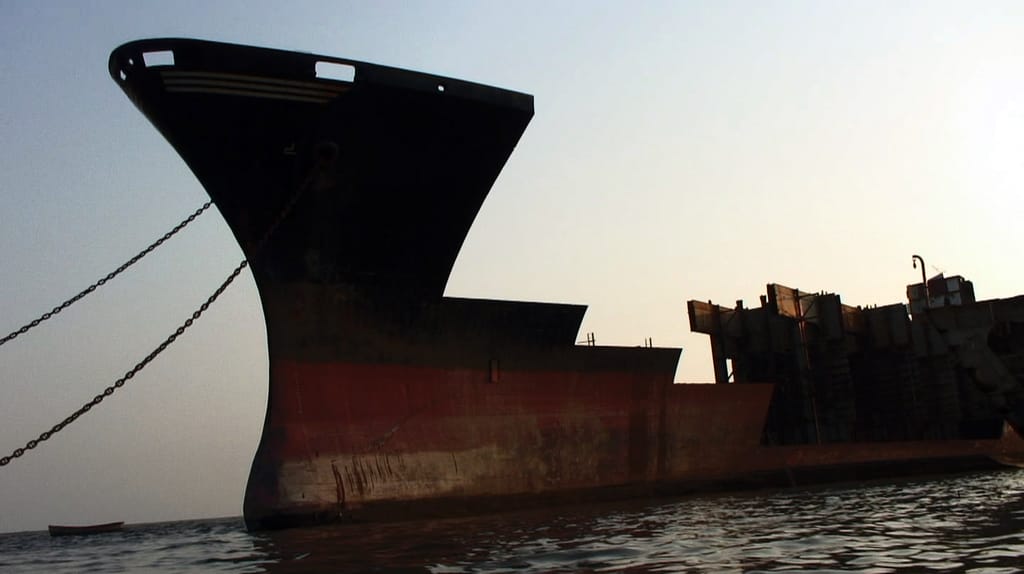
A tanker arrives in Chattogram for recycling. It carries a certificate confirming compliance with the Hong Kong Convention. Its steel will be recovered and sold, generating revenue and supporting employment.
But the vessel also contains asbestos, contaminated oil and other hazardous materials. Where will these substances go after dismantling? Who will ensure their safe disposal? These questions are central to a legal controversy surrounding the International Maritime Organization's (IMO) Circular HKSRC.2/Circ.1, issued on November 1, 2024.
The circular provides provisional guidance on implementing the Hong Kong International Convention for the Safe and Environmentally Sound Recycling of Ships (HKC) alongside the Basel Convention on hazardous waste. Paragraph 3 invites countries that are parties to both conventions to consider an approach under Article 11 of Basel. Bangladesh communicated its decision to follow this guidance to the Basel Convention Secretariat in October 2026.
The question is whether an IMO circular can legally allow Bangladesh to import end-of-life ships without the prior informed consent otherwise required under Basel. The answer depends on Article 11, whose conditions cannot be bypassed through administrative guidance.
Why Basel Still Matters
The Basel Convention was adopted in 1989 to regulate international movements of hazardous waste, particularly shipments to countries with limited capacity for environmentally sound disposal. Its prior informed consent (PIC) procedure requires notification and applicable consent from the States concerned before a covered hazardous-waste movement proceeds.
Ship recycling presents a particular challenge. An end-of-life vessel may remain seaworthy while legally qualifying as hazardous waste. The Basel Convention's Conference of the Parties recognized this dual character in Decision VII/26. Consequently, compliance with maritime requirements does not automatically remove a ship from Basel's scope.
Bangladesh, India and Pakistan accounted for approximately 85 percent of global scrapped gross tonnage in 2025, according to the NGO Shipbreaking Platform. Ship recycling supplies steel, creates employment and supports industrial development.
However, its economic benefits cannot justify transferring hazardous-waste risks to workers and surrounding communities without adequate safeguards. Basel addresses these risks by requiring States to examine the legality of waste movements and the capacity of receiving destinations to manage hazardous materials safely.
What the IMO Circular Proposes
The HKC entered into force on June 26, 2025. It establishes requirements concerning hazardous-material inventories, ship recycling plans, authorized recycling facilities and recycling operations. IMO Circular HKSRC.2/Circ.1 addresses how States should approach the relationship between the Hong Kong and Basel Conventions.
Paragraph 3 is particularly significant. It invites States party to both conventions to consider notifying the Basel Secretariat under Article 11, with assurances concerning environmentally sound waste management. For shipowners and recycling States, this approach may simplify procedures.
However, a serious legal question arises if the guidance is interpreted as permitting HKC compliance to replace Basel's consent requirements automatically. An IMO circular is guidance. It cannot amend a binding treaty or independently exempt States from their international obligations. The central issue is therefore whether Bangladesh's proposed approach satisfies Article 11 of Basel.
Article 11 Does Not Permit an Unrestricted Choice
Article 11 allows Basel parties to enter into bilateral, multilateral or regional agreements or arrangements concerning transboundary movements of hazardous waste. However, this permission is conditional. Such agreements or arrangements must not derogate from environmentally sound management and must contain provisions no less environmentally sound than those provided by Basel, particularly taking account of developing countries' interests.
Article 11 therefore permits legally controlled alternative arrangements. It does not give States an unrestricted choice between Basel and the HKC.
A government relying on Article 11 must establish the relevant agreement or arrangement and demonstrate compliance with its legal conditions. Simply notifying the Basel Secretariat of an intention to apply HKC procedures does not, by itself, establish equivalence.
Bangladesh should therefore identify the legal arrangement supporting its decision, explain its scope and demonstrate how environmentally sound management will be secured. Without such evidence, exporting and transit States may remain uncertain whether a particular movement can lawfully proceed without otherwise applicable Basel consent.
The Conventions Are Complementary
Some argue that the HKC, being specifically designed for ship recycling, should take precedence over Basel's broader hazardous-waste regime. This argument is legally weak as a general proposition.
The two conventions regulate different but connected aspects of the same activity. The HKC addresses ships, recycling preparations and recycling facilities. Basel regulates covered transboundary movements of hazardous waste and their environmentally sound management.
Both obligations can operate simultaneously. A ship can satisfy HKC requirements, obtain applicable Basel consents and proceed to an authorized recycling yard. Additional paperwork does not establish legal incompatibility.
Article 30 of the Vienna Convention on the Law of Treaties provides rules concerning successive treaties relating to the same subject matter. It does not automatically extinguish compatible obligations under an earlier treaty. More importantly, Article 15(2) of the Hong Kong Convention preserves rights and obligations under other applicable international agreements. There is therefore no general legal basis for treating the HKC as automatically replacing Basel consent.
Certification Is Not Proof of Safe Disposal
The distinction becomes clearer after dismantling begins. Even an authorized recycling yard generates hazardous waste requiring safe transportation, treatment and disposal beyond its premises. Regulation 20(4) of the HKC requires such waste to be transferred only to authorized facilities. Yet, as of October 2026, the IMO's SENSREC program still described Bangladesh's first dedicated treatment, storage and disposal facility at Mirsarai as a proposed project.
Effective waste management also requires licensed transporters, waste tracking, regulatory inspections, occupational health protection, medical care and prompt remedies for injured workers. These safeguards form part of Basel's broader environmentally sound management requirements. Most extend beyond the yard and depend primarily on public regulatory authorities, although recyclers retain their own legal responsibilities. Without verified downstream capacity and effective State oversight, HKC certification alone cannot establish environmentally sound management or justify replacing Basel consent under Article 11.
Bangladesh Must Justify Its Decision
Bangladesh's decision to follow paragraph 3 has consequences beyond its domestic regulatory system. Exporting and transit States must be able to independently determine whether their international obligations permit particular ship movements. Bangladesh's unilateral notification cannot automatically release those States from their Basel obligations.
The government should immediately publish the legal basis of its decision and demonstrate how Article 11 has been satisfied. It must identify the applicable arrangement, the movements covered and the safeguards ensuring environmentally sound management.
Institutional responsibilities must also be clear. The Bangladesh Ship Recycling Board should supervise ship and yard compliance within its statutory mandate. The Department of Environment should lead oversight of downstream hazardous-waste transportation, treatment and final disposal, supported by independent technical and legal verification. Unless a qualifying Article 11 arrangement demonstrably covers a particular movement, the applicable Basel requirements must continue to be observed.
The Risk of Breaching Both Conventions
The greatest danger is that procedural simplification could expose States to violations of both conventions. Importing ships without required Basel consent or a valid Article 11 arrangement risks breaching Basel. Equally, the HKC's objective of safe recycling cannot be achieved without environmentally sound management of hazardous waste beyond the yard.
While Basel addresses both transboundary movements and downstream waste management, the HKC primarily regulates the technical aspects of ships and recycling facilities, relying on effective domestic waste-management controls. In Bangladesh, the Department of Environment has no direct mandate to implement the HKC, potentially creating a regulatory gap in downstream oversight if Basel safeguards are bypassed.
The conventions are therefore complementary, and HKC compliance cannot replace Basel obligations. The IMO's provisional guidance may facilitate coordination but cannot override binding treaty obligations. Bangladesh must demonstrate a valid Article 11 arrangement, adequate downstream waste-management capacity, independent verification and access to justice for its workers before dispensing with otherwise required Basel consent.

that matters most
Get the latest maritime news delivered to your inbox daily.
The ultimate legal test is not whether a ship arrives in Chattogram, Gadani or Alang with an international certificate, but whether its hazardous waste can be safely managed through final disposal. A certificate may establish compliance with recycling requirements, but it cannot eliminate environmental risks or override binding treaty obligations. Bangladesh's credibility as a responsible ship-recycling nation depends on meeting this legal test, rather than attempting to circumvent it through questionable interpretations and procedural shortcuts.
Dr. Ishtiaque Ahmed is Professor and Chair of the Department of Law at North South University, Bangladesh. A former Merchant Marine Engineering Officer, he holds a Doctor of the Science of Law (J.S.D.) degree from the University of Maine School of Law, USA, where he specialized in international ship recycling law and policy. As the sole Legal Consultant, he contributed to the drafting of Bangladesh's proposed Ship Recycling Rules 2025 and revisions to the Bangladesh Ship Recycling Act 2018. He is a Barrister-at-Law (England and Wales), a Member of the Chartered Institute of Arbitrators (MCIArb), London, and an Advocate of the Supreme Court of Bangladesh. He also serves as a panel arbitrator with the Changsha Arbitration Commission, China. His areas of expertise include maritime law, international environmental law, and sustainable ship recycling governance. He can be reached at [email protected].
The opinions expressed herein are the author's and not necessarily those of The Maritime Executive.