

Atlantic Tuna Commission Makes Some Progress in Enforcing Shark Finning Ban
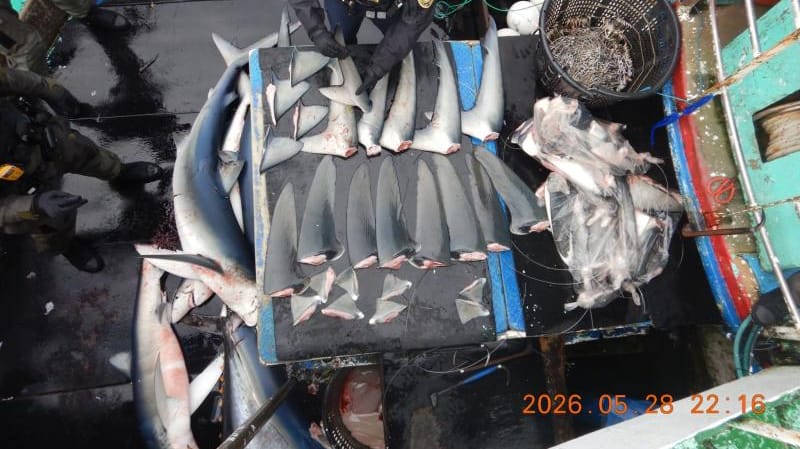
The International Commission for the Conservation of Atlantic Tunas (ICCAT) has strengthened its rules against shark finning, clearing a conservation deadlock that has persisted for almost two decades. While ICCAT adopted a ban on shark finning (slicing off a shark’s valuable fins and discarding the body at sea) back in 2004, the highly wasteful fishing practice continues to be flouted by some member countries.
ICCAT, as one of the five regional fisheries management organizations (RFMOs) globally, oversees conservation of tunas and tuna-like species in the Atlantic Ocean and its adjacent seas. ICCAT has 56 contracting parties spread across the Americas, Africa, Europe and Asia.
The new measures to enforce the ban include a pathway to introduce a full “fins naturally attached” (FNA) policy within no more than three years. The USA and the EU have been pushing for the FNA rule over the years, but some member countries led by Japan resisted the proposal. The agreement to gradually introduce the FNA rule was one of the resolutions adopted during ICCAT’s annual meeting held November 16-23 in Vilamoura, Portugal.
The rule will take effect through a staggered timeline to allow for exceptions put forward by Japan. The FNA policy will apply from 2027 for freshly landed sharks. For sharks landed frozen, exceptions will be made up to 2030, when FNA rules will kick in. In the meantime, vessels landing frozen sharks could use one of these two alternatives.
The first one is to tie fins directly to the corresponding body with rope or wire. The other option is to keep the fins and body separate but marked with well-labeled tags for easy identification. For this case, the marked fins and bodies must be stored in the same hold. Similar alternatives have been adopted by the Indian Ocean Tuna Commission (IOTC), another regional fisheries management organization (RFMO).
However, some environmental campaigners are worried that the alternatives could still be used beyond 2029. The agreement adopted by ICCAT member countries does not clearly define the end date for the alternatives. It states that the alternatives could continue past 2029 if three or more countries officially and consistently use them.
“We are concerned that the compromise on finning ban enforcement is exceedingly complicated and risk-prone with a lengthy timeframe for potential benefits and alternatives that have no scientific basis,” said Sonja Fordham, president of Shark Advocates International.

that matters most
Get the latest maritime news delivered to your inbox daily.
Fordham added that opening the door for entire fleets to start employing problematic techniques involving wires, ropes and tags to sort detached fins needlessly risks an increase in marine debris and threatens long-fought progress toward the only foolproof method for finning ban enforcement: ending at-sea removal of shark fins.
At a time the oceans are experiencing unprecedented levels of overfishing, sharks have been described as among the most vulnerable species yet under-protected. A study published in the journal Nature estimated that global shark populations have plummeted by 71% since 1970, alongside those of their close relatives, rays.