
More Problems for Scotland’s Ferry Replacement Program
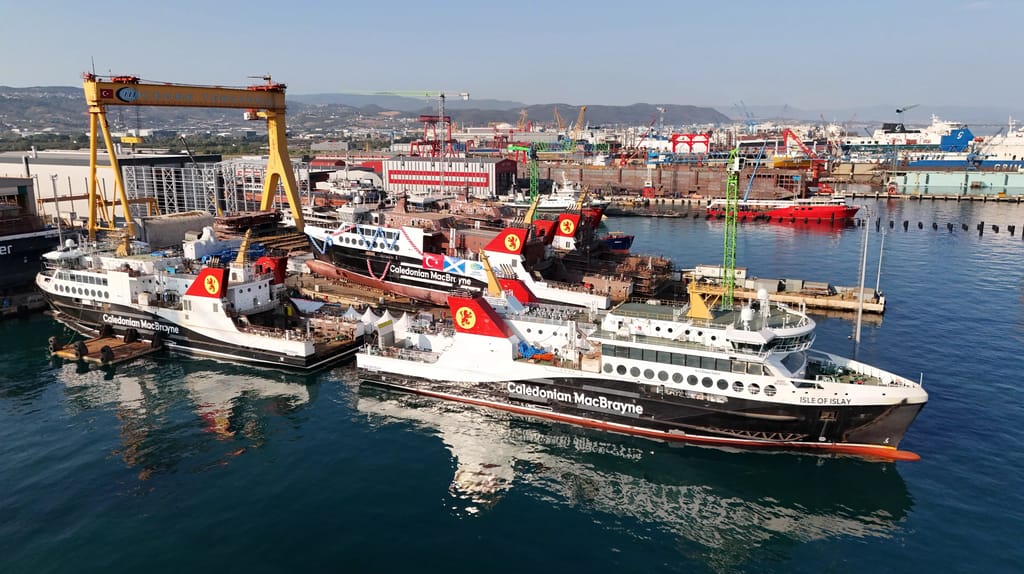
Scotland’s plan for the modernization and improvement of its vital ferries continues to encounter problems, with more reports of delays and cost overruns. The BBC says the next ferry will finally be delivered nearly two years behind schedule, while two others are being delayed until 2027. Costs for these newbuilds have also risen by approximately $27 million, or nearly a 10 percent increase for a project originally valued at approximately £200 million.
This comes even after the state-owned Caledonian Maritime Assets Limited (CMAL) took the unusual step in June 2026 of taking ownership of three incomplete ferries being built at Turkey’s Cemre Shipyard. The company said it was taking the steps because of the precarious financial situation of the yard. It cited economic challenges, including the conflicts in Ukraine and Iran and disruptions in the Red Sea, along with, the BBC says, falling currency exchange rates, supply chain difficulties, and labor shortages. CMAL paid a reported £23 million for full ownership of the three incomplete vessels.
“Taking ownership of the vessels at this stage is a precautionary move to reduce risk, protect the investment already made, and support our objective of bringing these vessels into service as quickly and efficiently as possible,” said Kevin Hobbs, the current chief executive of CMAL.
The Scottish government was fully supporting the move, with reports noting that if the yard collapsed financially, CMAL owned the ships and could tow them out for completion elsewhere.
Despite taking these steps, the BBC reports the problems persist in the program, which is nearly a decade in the making. The Scottish government announced plans for new vessels in April 2018, and by 2019, CMAL began design work for what has ultimately become a construction order for four passenger-car ferries to serve routes including to Islay, the southernmost of the Inner Hebrides islands, off the west coast of Scotland.
The construction plan was part of a broad 10-year program of investment by CMAL, backed by the Scottish government, which committed £580 million for the five years between 2021 and 2026. They highlighted plans to deliver 21 new vessels to the fleet, along with upgrades to harbor infrastructure.
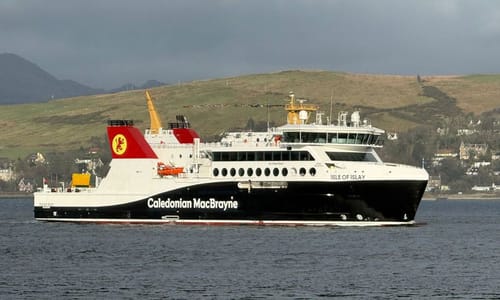
The first of the ferries, Isle of Islay, entered service approximately 15 months behind schedule (CMAL)
Cognizant of the debacle in the construction of the two advanced LNG-fueled ferries that became Glen Sannox and Glen Rosa, which would ultimately take a decade from order to delivery, CMAL highlighted a rigorous program for appointing the shipyard for the island ferry project. Started in 2021, it said 35 organizations expressed interest, and 11 responded during the first round. Ultimately, it was narrowed to four shipyards, Damen in Romania, Remontowa Shipbuilding in Poland, and the Turkish yards Sefine Denizcilik Tersanecilik Turizm and Cemre Marin Edustry.
Cemre was named the preferred bidder in March 2022, after what was reported to have been a “robust assessment of technical and financial criteria.” The £91 million contract to build two 95-meter (312-foot) ferries was awarded in March 2022. The vessels were designed to increase vehicle and freight capacity by 40 percent on the Islay route, with each of the two ferries able to accommodate 450 passengers and 100 cars or 14 commercial vehicles. The contract called for delivery of the first ferry in October 2024 and the second one in early 2025.
The government in October 2022 prioritized additional funding, saying it was working to accelerate plans for the replacement fleet. CMAL used that in February 2023 to finalize a second contract for two additional sister ships at the Cemre yard. These ships, scheduled for delivery in June and October 2025, were for the region of the Hebrides known as “The Little Minch.”
Speaking at the time of the progress, Jim Anderson, director of vessels at CMAL, said, “We have been encouraged by the timescales the yard is achieving on the Island vessels, with the most recent milestones being reached three weeks ahead of schedule.”
The first of the vessels, Isle of Islay, was launched on March 16, 2024, with the company still reporting it was due for delivery in October 2024. Her sister, Loch Indaal, followed her into the water in June 2024, with her delivery scheduled for February 2025.
The delays began to creep into the program after that, with CMAL referencing the difficult global circumstances, which it said led to the ships falling behind schedule. Isle of Islay, originally scheduled for delivery in October 2024, was finally handed over on January 15, 2026, and after a trip from Turkey to Scotland, testing, and crew familiarization, finally entered service in March.
As of June, the company said the second of the ferries, Loch Indaal, had just completed successful sea trials. The third ship, Lochmor, was launched on August 23, 2025, and the final ship of the group, Claymore, was launched in May 2026.

that matters most
Get the latest maritime news delivered to your inbox daily.
According to the latest update seen by the BBC, the second ferry, Loch Indaal, is likely to be delivered in October, and then it will take another two months before she carries her first passengers. Lochmor is scheduled for trials in November, with delivery in early 2027, and Claymor is expected to be delivered in the second quarter of 2027.
Despite all the challenges, CMAL continues to highlight that it is making progress on the long-promised vessel replacements. In addition to the deliveries of the island ferries, Glen Rosa, which had her first steel cut in 2016 and was launched in 2024, will be delivered before the end of 2026. CMAL said in June that it is progressing the Small Vessel Replacement Programme (SVRP) at Remontowa Shipyard in Poland and the construction in China of two new freight-flex vessels for the Northern Isles. At the end of August, CMAL announced the appointment of a ferry design consultancy for the concept design phase for new vessels for its route to Mull, as the fleet modernization continues.
