

Ecuadorian Fishermen Sue U.S. Government Over Drone Strike on Their Vessel
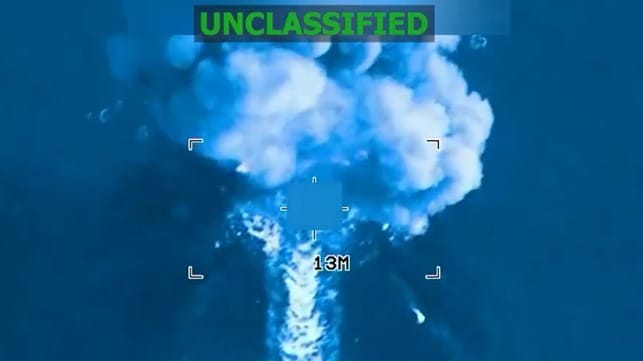
The crew of an Ecuadorian fishing boat are suing the U.S. government for attacking them in an airstrike, injuring at least two people and destroying the vessel. By filing the suit as an admiralty claim, they hope to circumvent any sovereign immunity defense by taking advantage of the provisions of the Suits in Admiralty Act (SIAA), which treats the U.S. government in the same manner as a "private person" for a civil action in admiralty court.
On March 2, 2026, the crew of the vessel La Negra Francisca Duarte II got under way from the fishing port of Manta, Ecuador and headed out to sea with 18 people on board. The plaintiffs say that the vessel transited to the Galapagos for a two-week fishing voyage, then turned around on March 16 and headed for home.
During the return journey, the Duarte II was intercepted by the Ecuadorian Navy and boarded for a search. The inspection proceeded for three hours, and the navy personnel found no issues on board, the plaintiffs said. The fishing vessel was released and allowed to continue its voyage.
On March 17, hours after the boarding and inspection, the crew said that they encountered two armed drones at a position about 385 nautical miles off Manta. The plaintiffs believe that the unmanned aircraft were American, and that they were launched from a vessel.
The drones bombarded the vessel, the crew claimed, setting it on fire. Two people aboard - identified as Jordy Alexander Flores Lucas and Leonel Alberto Pilay Barahona - sustained burns on their backs, arms and legs, they said. All personnel abandoned ship and clambered aboard "small emergency boats" that Duarte II had carried.
Once clear and away from the burning vessel, the survivors navigated towards a "blue ship" in the distance. On approaching, they saw armed personnel on board, who kept them covered with long guns as they approached. Some but not all of the armed servicemembers appeared to be U.S. Coastguardsmen, the plaintiffs claimed.
Flores Lucas and Pilay Barahona had sustained serious injuries in the strike, and they were provided with medical attention on board. The others were bound and detained, the suit claims, and allegedly mistreated in custody.
On March 18, the survivors were transferred to a Salvadoran vessel and taken to El Salvador, seven days' sailing time away. After a period in El Salvador, the survivors were all eventually repatriated, and were not reportedly prosecuted for any wrongdoing.
"At the time the strike was carried out, none of the plaintiffs were engaged in activities that presented a concrete, specific and imminent threat of death or serious physical injury," their counsel claimed. "Means other than lethal force could have reasonably been employed to neutralize any lesser threat they or the boat they were on might have posed."

that matters most
Get the latest maritime news delivered to your inbox daily.
Flores Lucas and Pilay Barahona are asking for compensation for loss of livelihood and lasting physical disability and pain. Their counsel contests the legality of the U.S. lethal strike campaign, and accuses the U.S. government of false imprisonment, assault, and denying plaintiffs the use of their property.
U.S. Southern Command has not claimed responsibility for a strike on a vessel with 18 survivors; the strikes are usually fully lethal, and successfully-rescued suspects are rare. CNN has documented three mysterious, unattributed strikes on fishing boats in the Eastern Pacific since the start of this year, including the Duarte II case.