

Darwin Port Arbitration Proceeds as Landbridge Denies Lease Negotiations
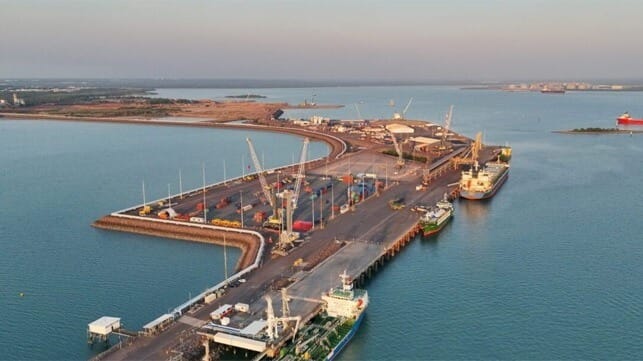
The Chinese company that holds a 99-year lease to operate Australia’s Darwin Port, Landbridge Group, lashed out at the Australian government over assertions that negotiations were underway over the sale of the lease. It said it does not intend to enter into any commercial negotiations for the sale of the port to “allow the Prime Minister to fulfill an election promise.”
Control of the vital port on Australia’s northern coast has become a hot political issue. Anthony Albanese, running for office, declared that he wanted the port returned or seized to end Chinese influence and has repeated the position since becoming Prime Minister of Australia in 2022. Speaking this week, Albanese repeated his statement that negotiations were underway over the future of the port’s operations.
Landbridge quickly denied that it was engaged in any form of discussion or negotiation in relation to the divestment of the lease for the Port of Darwin. It asserts that it “has at all times made it clear” that it is not a willing seller and does not intend to enter into any commercial negotiations.
The prior Australian government sought bids to operate the port in 2015, and Landbridge asserts that it lawfully acquired the lease through an open, competitive, and government-approved process. International concerns were raised about leasing the port to a Chinese company, but the prior government proceeded, laying the groundwork for it to become a political issue.
Landbridge asserts it has sought to work with the government and that its lease has been reviewed on three occasions by government panels. It says the panels found no national security basis for intervention. There were earlier accusations that the company had not fulfilled its investment obligations, but it contends it has met all its financial obligations and turned a money-losing operation into a model port.
It says the government has not explained why forced divestment is necessary, nor why the Australian taxpayers should bear the costs. It claims any action would be inconsistent with the contractual commitments and would constitute breaches of international law.
“Landbridge was left with no alternative but to take steps to protect its legal rights and lodge a formal dispute under the Australia-China Free Trade Agreement (ChAFTA),” the company said in its statement. Landbridge lodged a complaint in April with the World Bank's International Centre for Settlement of Investor Disputes. It requested "arbitration proceedings" and now says it will continue to pursue its claims.
The company is calling on the Australian government not to take steps in breach of its commitments to allow the company the opportunity for its claim to be “properly heard and determined.”

that matters most
Get the latest maritime news delivered to your inbox daily.
Chinese officials assert that the dispute could upset improved relations with Australia. They point to a loosening of tariffs on Australian beef, barley, wine, coal, timber, and lobster during 2023 and 2024.
The Maritime Union supports the move to reclaim control of the port. It, however, also points out a need to resolve the long-running dispute so that it does not hurt jobs and the operation of the port.