


Could Earlier Warning Systems be the Answer to Risk Reduction in Terminals?
Real-time intelligence is transforming how ports think about risk

The container terminal is one of the most complex operational environments on earth. Running around the clock, 365 days a year, with little room for downtime or disruption.
It is also one of the most exposed to risk. Security breaches. Hazardous goods handling. Occupational safety. Cargo spoilage. These are everyday realities that operators must carefully manage, yet many of the processes involved remain reactive.
Continuous reefer monitoring to become the norm
Container terminals occupy an interesting position in the supply chain. They don’t own the boxes passing through their gates, but they are responsible for them while there. That distinction has created something of a visibility gap in container monitoring.
The cold chain market is projected to exceed $400 billion this year, and a meaningful portion of that value moves through container terminals every day in refrigerated units. With these temperature-sensitive goods, the margin for error is thin. Most operators, therefore, dedicate resources to manually monitor reefers at regular intervals. This provides only a snapshot of information, meaning that alarms can be missed and reaction times can be slow.
A single container of high-value pharmaceuticals can be worth anywhere from several hundred thousand to several million dollars. Some shipments of advanced biologics can exceed $10 million per container. When an anomaly occurs, it's essential that data is communicated in real time from the reefer. Beyond cargo value, the industry carries enormous responsibilities related to regulatory compliance. This can prove a significant burden, particularly when accurate historical data on cargo handling is unavailable.
Manual monitoring in the yard also contributes to the risk of injury. Inspecting hundreds to thousands of reefer points several times a day takes hours and can involve climbing up several stacked boxes high on a rack. Globally, the International Labour Organization has cited port environment accident rates that run five to seven times higher than manufacturing. With many new reefers coming out of the factory with telematics as standard, terminal operators stand to significantly reduce the risk and cost associated with reefer monitoring by adopting continuous visibility.
Earlier heat detection is an urgently needed layer of protection
According to the 2025 Allianz Safety and Shipping Review, 2024 data saw a decade-high 250 reported incidents of vessel fires. The consequences are severe: a single incident can run into hundreds of millions of dollars in cargo loss, vessel damage, environmental clean-up, and port disruption, on top of the risk to human life.
The impact extends beyond the ship. Two-fifths of vessel fires occur in the port, according to the US National Fire Protection Association. Berthed vessels are not the only considerations, however, with stored cargo in the yard also a concern. Dangerous goods have permissible dwell times within port boundaries that are often exceeded due to congestion or bottlenecks. It’s estimated that between 10 and 12 percent of all containers carry dangerous goods (TT Club). A significant proportion, some estimates suggest as many as one in five, are misdeclared. The result is incorrect handling, with the people involved blind to the dangers posed.
Lithium-ion batteries present added complexity. Increasingly common in EVs and electronics passing through ports, as well as in the port equipment itself, operators are grappling with how to handle high volumes safely. Capable of thermal runaway, these types of fires are notoriously difficult to extinguish.
Earlier heat detection is fast becoming an added layer of augmented safety strategies on the vessel, tapping into sensor technology to detect anomalies. Terminals are expected to follow suit, with many leading operators already trialing similar solutions.
“Container terminals occupy an interesting position in the supply chain. They don’t own the boxes passing
through their gates, but they are responsible for them while there.”
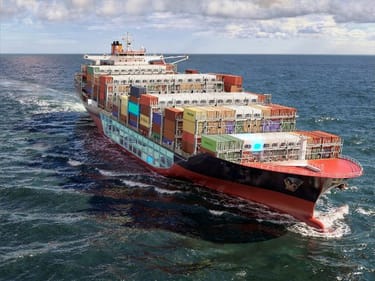
(Source Net Feasa)
Learnings from On-the-Water Visibility
The maritime industry has witnessed a step-change in connectivity in recent years, trending towards fleet-wide digitalization of containers, reefers, and vessels. As a leading provider of wireless vessel networks, with a long history of enabling reefer connectivity onboard, Net Feasa has played a pivotal role in this transformation, and the results have been striking. Its flagship Agentic Control Tower™ (ACT) platform consolidates essential sensor information that enables real-time, mixed-fleet reefer and dry box monitoring and earlier heat detection from the vessel bridge.
The industry response has been significant, not just in adoption, but in a dawning recognition that connected cargo fundamentally changes the nature of risk management. The connected vessel is proving that safer, more efficient operations are not only achievable, but can be done at a lower cost, with immediately measurable ROI.
Bringing the Lesson Ashore
Net Feasa is now bringing Agentic Control Tower™ to ports and terminals. The platform allows operators to immediately identify telemetry-enabled reefers, delivering actionable data into TOS. This results in an immediate reduction of over 50 percent in direct monitoring costs. Additional benefits include improved reaction times to alarms, reduced risk of cargo loss, and lower incidents of stevedore injury.
The use cases for ACT in the terminal are numerous. Open-door alerts with timestamped records actively deter illicit activities such as theft and smuggling. Dangerous goods exceeding their dwell times are flagged. Heat anomalies in hazardous cargo generate real-time alerts well before smoke appears. Whether terminal operators want to integrate ACT into their existing control towers or take advantage of its own powerful visualization, the platform meets them where they are and evolves with their ambitions.
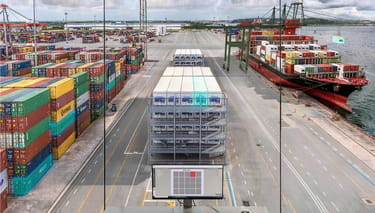
Source: Net Feasa
The Bigger Picture
The momentum is real: Ports that position themselves well in the digital transition will not just stand to reduce risk, they will build a competitive advantage that compounds over time. Connectivity is reaching critical mass in the port, on the vessel, and on the container. We have reached a tipping point in supply chain digitalization, where operators now have the tools necessary to shift from analyzing data to acting on it.
This article is sponsored by Net Feasa, which is headquartered in Ireland, with offices across the United States and Asia Pacific. To learn more, visit www.netfeasa.com
The opinions expressed herein are the author's and not necessarily those of The Maritime Executive.
