
Who Will Rescue You in Iceland?
Adventure cruising around Iceland is a rapidly growing industry. One tourism company advertises the attractions like this: “You are not staying on board, are you? Good! Stepping out into Iceland is as close as you can get to visiting the Moon or Mars.”
This is attracting the attention of the Icelandic Coast Guard and the volunteer Icelandic Association for Search and Rescue. It tends to be smaller cruise vessels, working in the adventure market, that are using lifeboats and tenders to take passengers ashore in the remotest parts of the country.
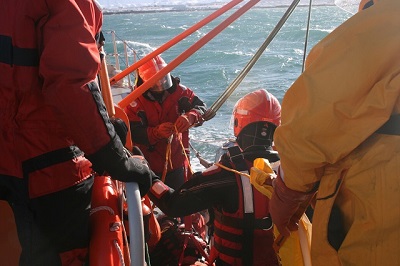 Estimated survival time in Icelandic summer waters with a temperature of around 10 degrees Celcius (50 degrees Fahrenheit) is around two hours, and that is how long it could take rescuers to reach the remote parts of the country.
“Safety in Icelandic waters is a concern for all types of vessels, but taking passengers ashore in remote areas adds to the risks,” says Captain Hilmar Snorrason, principal of the Maritime Safety and Survival Training Centre in Reykjavik which trains the Icelandic seafarers that crew both tourist boats and rescue boats. “What will happen if there is an accident and people are in the water? There are no towns, no doctors in these areas.”
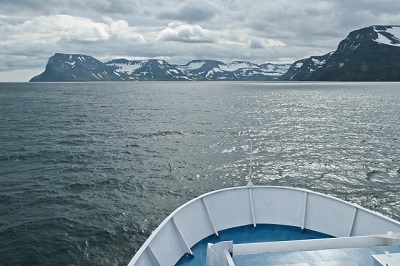 Snorrason has worked on coastal cargo vessels for over 20 years. The reference to some of the remote areas and the moon is not far-fetched, he says. The crews of the local vessels are well trained, but remoteness has the potential to turn an accident into a tragedy.
“Every Icelandic seafarer working on commercial vessels, even those as small as 15m, undergoes at least a five day survival and safety course as well as crowd management training,” he says. The knowledge imparted by the training center to volunteer rescuers has resulted in a considerable decrease in the number of serious accidents and deaths at sea in recent years.
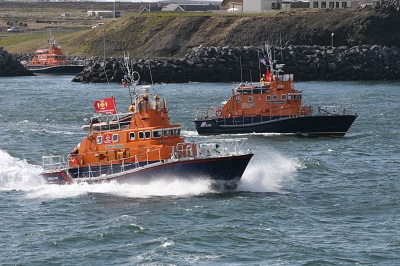 Rescue in Iceland is free of charge. When an accident occurs, both the Coast Guard and the volunteer association are notified. The two organizations have a good working relationship.
Within an hour, 200 volunteers out of a potential 18,000 could leave their work and mobilize some of the 14 all-weather lifeboats located around the country.
Iceland does not have an army, navy or air force, and it is the Icelandic Coast Guard that is ultimately responsible for search and rescue in Iceland’s 758,000 square kilometers of ocean territory, some of the most challenging waters in the world. Its staff of 200 people operate three vessels Þór, Tyr and Ægir, a fixed wing aircraft and two Super Puma helicopters.
Despite the willingness and capabilities of the country’s people, rescue time is highly dependent on just where these resources are when an emergency happens, says Snorrason.
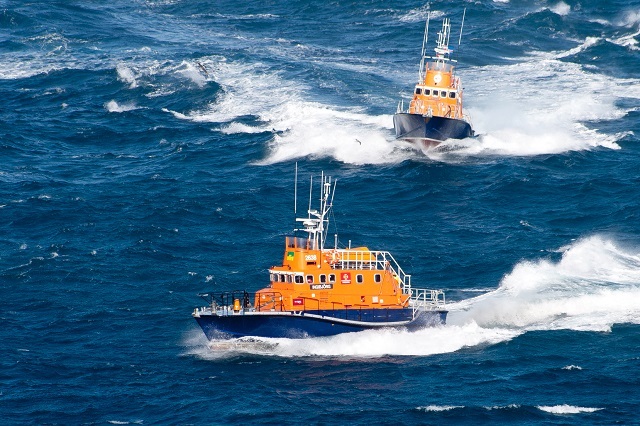
Vessel pictures credit: Captain Hilmar Snorrason
The opinions expressed herein are the author's and not necessarily those of The Maritime Executive.
