


With the Ceasefire on the Brink, Gulf States Prepare
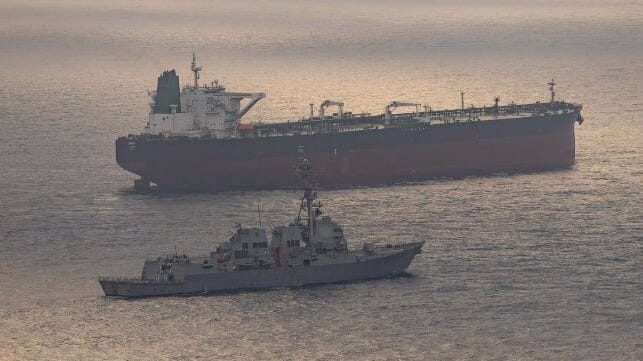
With the ceasefire between Iran and its adversaries hanging in the balance, a lack of substantial progress in the negotiations taking place in Islamabad, and domestic mid-term pressures on President Trump to bring the war to an end, Gulf states are preparing for the worst.
But they are at least hoping for the best. Their priorities are different from those of Israel and the United States, but at a minimum they need the Strait of Hormuz open to traffic without hindrance or, more simply, without a tolling system. They probably place the displacement of hardliner influence in the Iranian government a close second, knowing that without a change of heart in Iranian politics, the threat to a toll-free Strait will not go away in the medium- to long-term.
The Gulf states are encouraged by the clear American build-up of forces in the region, notwithstanding the ceasefire. With the arrival of the USS George H.W. Bush (CVN-77), and the return of the USS Gerald R. Ford (CVN-78), there are now three carrier strike groups within the Central Command (CENTCOM) region, the most since 2003 and a force far greater than needed to enforce a blockade. There is even a fourth carrier, the USS Nimitz (CVN-68), which will soon be off the eastern coast of South America, and which could get to the CENTCOM region quickly if needed. These are only the most visible elements of the U.S. military reinforcement package.
Nonetheless, the most likely outcome of the war is a long, drawn-out negotiation in Islamabad, with the Iranians conceding little, perhaps a short resumption of the war, before a settlement is reached that leaves the Gulf states without the freedom of access through the Strait of Hormuz, which is the bare minimum they need before business can return to normal.
Notwithstanding the Iranian attacks on their countries, so far the GCC countries have invested in restraint, not retaliation. But the time may come when they need to act, with a broader and deeper air campaign than the United States has mounted hitherto. With most of the Iranian air defense network degraded by air attacks since February 28, they might hope they can take advantage of the freedom to operate an air campaign of their own without serious opposition. Together , the Gulf states can muster about 675 strike aircraft, mostly provided by Saudi Arabia and the UAE, whose air forces have already acquired battle experience over Yemen. Gulf states may be testing Iranian defenses already, with drone flights over Tehran reported by the Mehr News Agency, which the United States and Israel have denied they are responsible for.
In the first instance, though, the GCC countries have been reinforcing their security links with allied nations, which has seen, for example, the deployment of Pakistani F-16s to Saudi Arabia and additional British Typhoons and French Rafales sent forward to operate from Gulf airbases. Qatari C-17s have been seen moving military supplies from Karachi to Sharurah on the Saudi border with Yemen, illustrating the breadth of the alliances that Gulf states are calling upon.
Not that any linkage or a joint mission would ever be acknowledged, the Gulf states will note recent comments from Israeli Defense Minister Israel Katz that his country is preparing to renew its war on Iran, and that when it does so, “the attack will be different and deadly and will add devastating blows in the most painful places that will shake and collapse its foundations, following the enormous blows the Iranian terror regime has already suffered so far.” He went on in similarly restrained fashion to describe Israel’s intention “first and foremost to complete the elimination of the Khamenei dynasty... and additionally to return Iran to the Dark Age and the Stone Age by destroying key energy and electricity facilities, and dismantling its national economic infrastructure.”
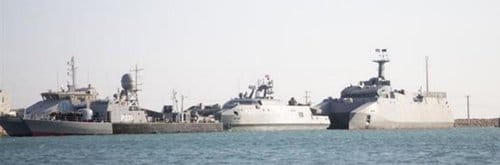
Iranian naval visitors to the UAE, alongside in Sharjah’s Mina Khalid, February 3, 2025 (Iranian MoD)
Attempts to engage the Iranians diplomatically have for the moment apparently been largely abandoned. Most of the Gulf countries made efforts to improve relations with the Iranians in the months leading up to the war, with the UAE, for example, hosting an Iranian naval visit in February 2025 from the IRGC Navy’s Shahid Soleimani Class missile corvette Shahid Rais Ali Delvari (FS313-04) and missile corvette Abu Mahdi al-Muhandis (PC313-01) and the regular Navy’s Sina Class fast attack craft IRINS Zereh (P235). As late as February this year, a UAE Foreign Ministry travelled to Tehran and met the Iranian Foreign Minister Abbas Araghchi. The Saudis attempted likewise, exchanging ambassadors once again with Iran in the summer of 2023; their respective armed forces chiefs of staff met in November 2024. These attempts at diplomatic rapprochement made the Iranian attacks on civilian infrastructure all the more difficult to stomach. The UAE President Sheikh Mohammed bin Zayed is now describing Iran as the enemy, and that “the UAE’s hand can reach and is strong, its flesh is bitter, and we are not easy prey.”

that matters most
Get the latest maritime news delivered to your inbox daily.
While the GCC countries strengthen their defenses as the ceasefire holds and negotiations stagger on, they are broadening their preparations. Bahrain has detained four separate IRGC-trained terrorist cells. The UAE has arrested a 27-strong Sharjah-based IRGC-aligned network, and a widespread campaign is underway to close down businesses with Iranian links. Closure of the Strait also, of course, impacts Iran itself, particularly as prior to the war the UAE was still the primary source of imports, estimated to be valued at some $20 billion annually, into Iran via re-export container terminals, in particular through Jebel Ali. These trade links, and the financial networks to support them, are now being dismantled.
Where the war will lead is still, of course, uncertain - which is what those who sought to avoid the war were primarily afraid of. But the GCC states, while currently exercising restraint, despite the attacks upon them, and standing back from the conflict, are clearly angry and readying themselves for an intensification of the conflict.
The opinions expressed herein are the author's and not necessarily those of The Maritime Executive.
