


The Blockade on Iran Is Now Hitting Home
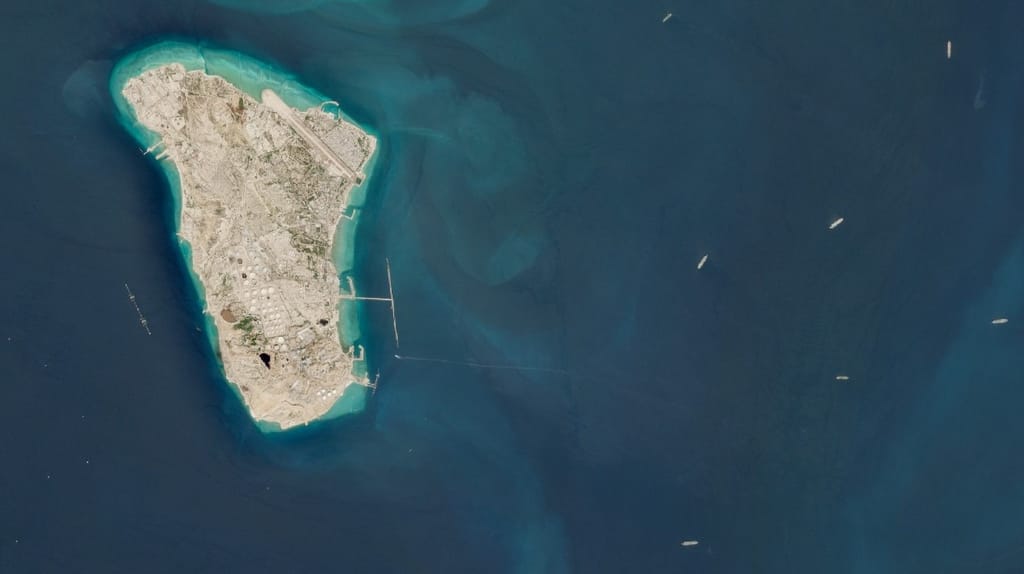
Analysts use the best available information to try to determine how effective the United States' blockade of Iranian shipping has been in putting pressure on Tehran. But inevitably, they do not have the complete picture, particularly when there is unadvertised activity cloaked in secrecy.
The Maritime Executive has tried to estimate how effective the U.S. naval blockade has been, based on the curtailment of Iranian imports and exports through the Strait of Hormuz and on calculations of when Iranian oil stocks held afloat off China and Malaysia will run dry as a revenue source.
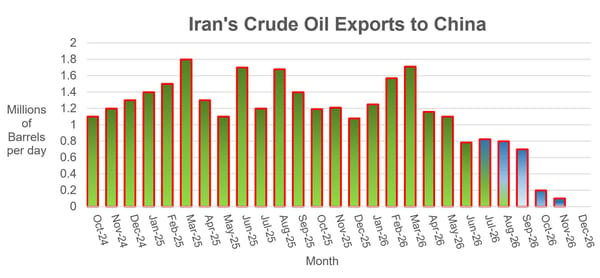
Iranian oil exports, 90% of which previously went to China, are likely to run out imminently as the last stocks held afloat are drained, with the last revenues received before the end of the year. (Estimate based primarily on Kpler data)
But even before the Iranian regime loses the last of its revenue from the sale of its dwindling stock of oil held afloat, Admiral Brad Cooper has said that Central Command has evidence that the cash shortage is now affecting salary and pension payments in Iran's energy, oil, manufacturing, construction, aviation, steel and automotive sectors. Somewhat surprisingly, Cooper claimed, it is also extending to salary payments due to members of the regular military and the IRGC. The Basij internal security forces form part of the IRGC command structure and are the muscle on the streets used to suppress protests and disorder.
The inability to export directly impacts government revenues. But so do the asset freezes and sanctions on financial networks orchestrated by the U.S. Treasury under Operation Economic Fury. The lack of imports also has an impact, creating shortages and thus driving up prices. These factors hurt ordinary Iranians – but increasingly also the regime's core supporters.
The pressures being felt by the Iranian economy are reflected in two particularly sensitive indicators of the linkage between Iran and the outside world: the exchange rate has reached 2,695,000 rials to the dollar despite intervention by the Central Bank of Iran, and inflation has reached 70%. Both the exchange rate and the inflation rate are at all-time records.
In a social media posting on October 16, Admiral Cooper said that while the U.S. naval blockade was 100% effective in controlling traffic to and from Iranian ports, the converse was true for the United States' regional partners, which had passed 400 vessels and 100 million barrels of oil through the Strait of Hormuz in the previous seven days – the equivalent of more than 50 VLCC transits. This traffic is well below pre-war norms but is sufficient to prevent a cliff-edge crisis in the global economy or locally in the Gulf.
As might be expected, the financial pressure on Iran is creating controversy within the Iranian political elite – controversy that supreme leaders have in the past helped to de-escalate and ameliorate. Paydari and IRGC hardliners have urged an escalation of military action against the United States and its allies, and there has been an upsurge of attacks on shipping in the strait.
But the attacks have not yet widened to infrastructure targets in the Gulf countries, suggesting that even the hardliners know this would invite a major response, not only from the United States but now possibly from its Gulf allies as well. The UAE in particular has signaled its readiness to respond to Iranian aggression with force of its own. The elements within the Iranian regime urging a settlement and a return to negotiations are now also finding their voice, led by former President Hassan Rouhani, former Tehran Mayor Gholamhossein Karbaschi and leaders of the reformist Executives of Construction Party, whose views have rarely been heard since the hardline Paydari faction achieved political dominance within the regime.

that matters most
Get the latest maritime news delivered to your inbox daily.
For the maritime community, while this political paralysis is in place, the increasingly desperate hardliner faction, well represented within the IRGC, is ever more likely to resort to further attacks on shipping and has the means under its command and control to do so. There are signs that the IRGC's attacks on shipping are spreading from the immediate area of the Strait of Hormuz to anchorages off Fujairah and Sohar in the Gulf of Oman, and off the UAE and Saudi Arabia as well.
But every escalatory action risks triggering a retaliatory response, which moderates and reformists within the regime fear will spark social disorder. Before negotiations recommence and the war is brought to an end, there is likely to be a period of wider and deeper IRGC-sponsored attacks, with every encouragement offered to the Houthis in Yemen to rally to the cause and join in widening the conflict.
The opinions expressed herein are the author's and not necessarily those of The Maritime Executive.
