

Reports Claim Iran Is Preparing Oil Convoy to Test U.S. Blockade
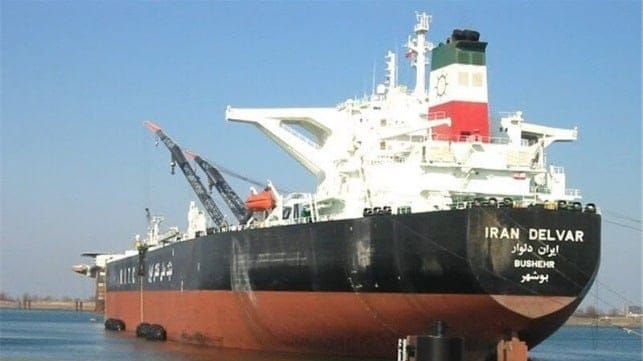
Media reports are picking up on claims from Iran that it is preparing a convoy of tankers to resume oil shipments to the Far East. This comes as the Iranian regime is growing increasingly desperate due to the lack of revenue from the oil industry, as the US has taken even more steps to tighten the blockade.
The speculation about the convoy and a resumption of shipping appears to have come from a report in the Fars News Agency, which is linked to the IRGC, calling for Iran to resume the shipments. It became a report saying that 14 tankers had been loaded at Kharg Island, with crews assigned to the vessels, and they had proudly hoisted the Iranian flags.
Fars backed up the report with a threat against any intervention with the convoy. It said disrupting the Iranian oil exports would cause a new round of attacks on the oil facilities of the United Arab Emirates, Saudi Arabia, Qatar, Kuwait, Oman, and Bahrain.
Adding further credibility to the reports were various observations and statements. Media cited a cryptic message from TankerTrackers.com on social media reading, “BREAKING: Iran appears to be preparing to ship out oil again.” As this escalated into reports of an imminent convoy that would transit the Strait of Hormuz and challenge the blockade, TankerTrackers.com again took to social media, writing, “Wishful thinking. That's definitely not what's going on.”
Further drawing attention were reports that Iran had been observed making its first ship-to-ship transfer of oil in months. United Against a Nuclear Iran, Bloomberg reported, had spotted a transfer of approximately 200,000 barrels of Iranian crude. The reports linked the sanctioned Suezmax tanker Olym (160,383 dwt, claiming a false registry in Guyana) as being positioned alongside the non-sanctioned medium-range tanker Hao Fan (47,199 dwt, claiming a false registry in Nicaragua). Further, the report said the Turkish-owned tanker Hao Fan was spoofing its location to show it was near Oman.
CENTCOM responded to the claims, declaring that any tanker receiving its cargo in a ship-to-ship transfer with a vessel under the blockade would also be considered to be evading the blockade.
Iran’s Foreign Minister Abbas Arahchi told reporters on Friday, “We are making every effort regarding oil exports and negotiations. The blockade must be broken.”
October was the second month, according to the reports, that Iran failed to make any loadings, based on data from Kpler cited by Reuters. Iran had been loading 2 million barrels of crude and condensate daily when the war began. This was the first time since 1979 that Iran had not loaded oil, with reports that production levels are also falling.
As the pressure has grown, Iran has stepped up the attacks on tankers transiting the Strait of Hormuz. October was reported to be at the highest level of the war. UK Maritime Trade Operations said in its weekly report that there were six confirmed strikes in the past seven days, while noting that of the vessels involved in an incident, roughly 45 percent are listed on the PGSA Non-Compliance List. Iran has claimed a much higher pace for the attacks, with UKMTO and others confirming the reports are delayed or not being filed. Further, it highlights that transits through the Strait of Hormuz confirmed with AIS transmission have fallen in the past two weeks. It said, "US-stated facilitated transits were roughly level."

that matters most
Get the latest maritime news delivered to your inbox daily.
Windward, however, observes in its latest analysis that Iran does not need the tankers anchored off Kharg Island to challenge the U.S. blockade. Those vessels would also have to make the Strait of Hormuz transit, while Windward calculates there are 31 laden sanctioned tankers past the Strait of Hormuz holding in the Arabian Sea within one day’s distance of the blockade line. It estimates there are 4.9 million barrels on four crude oil tankers, as well as LPG or refined products near the blockade line.
Iran, Windward notes, has used LPG tankers to test the blockade. Windward reports it tracked 11 LPG tankers that attempted to challenge the line in September and October.