

WSJ Report: US Investigates Iran in 50 Tanker Cyberattacks
As many as 50 tankers carrying crude oil, LPG carriers, and other chemical product vessels are believed to have been the victims of cyberattacks in recent months, reports The Wall Street Journal. Speaking with U.S. officials and others familiar with the situation, the newspaper reports that U.S. officials suspect Iran is likely behind the attacks, although some have also raised questions about Russia.
The newspaper speculates that Iran is attempting to disrupt maritime transportation and possibly cause a major incident at an international port outside the Middle East. It points to the potential of Iran attempting to cause an explosion, a collision, or an oil spill.
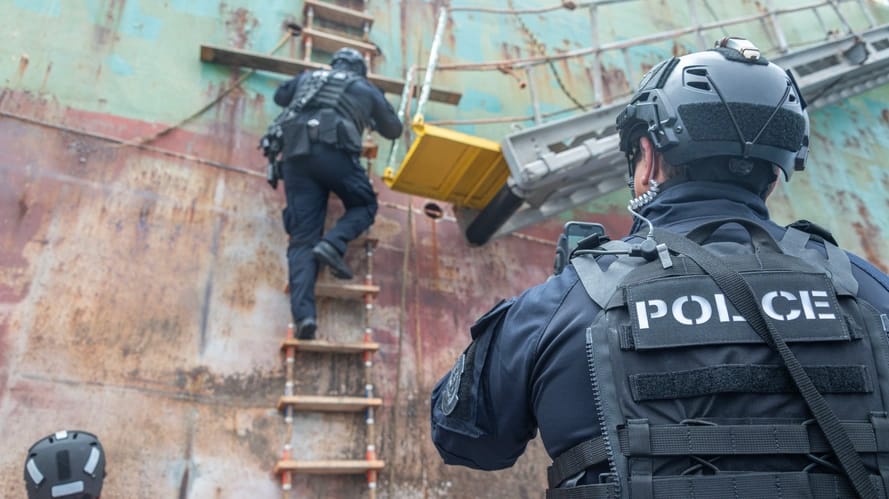
Reports of the cyberattacks against tankers far from the Middle East first appeared in August with stories that at least two tankers bound for Texas had been targeted. The U.S. Coast Guard reportedly boarded the ships for an inspection before permitting them to approach US ports. Another tanker approaching Italy, The Wall Street Journal reports, exhibited erratic sailing patterns.
The U.S. Coast Guard Cyber Command and Federal Bureau of Investigation (FBI) warned that the attacks sought to exploit vulnerabilities in the widely used Fortinet FortiGate device, reports WSJ. It writes that the routers are popular in the maritime industry according to U.S. officials.
The Wall Street Journal, however, reveals the attacks have also been more direct, involving bomb threats and threatening messages to crewmembers. One VLCC that was identified in the August attacks, VL Prosperity, confirmed to the WSJ that it had undergone a cyber screening before being cleared for normal operations. The newspaper, however, also reports the vessel received a ransom note, which was published in a Russian-language posting on Telegram. The 319,547-dwt tanker managed by HMM also received a bomb threat.
A European shipowner confirmed to The Wall Street Journal that two of its officers on a vessel also received threatening messages on their cellphones. It reports some of the threatening messages have been sent in the Farsi language spoken in Iran, but they have not necessarily been confirmed to be coming from Iran.
A Trump administration official seemed to downplay the instances to The Wall Street Journal, calling them “little more than a minor nuisance.” They report that the administration asserts no evidence has been found indicating Iranian involvement.
The report says, however, at least four additional ships have been boarded for inspections in recent weeks as they neared the U.S. It also says the targeted ships have not been limited to North America, with reports from Europe and Asia.
The story comes as tensions are already high in the United States amid a rash of cyber outages, which the administration has blamed on upgrades and bugs. Globally, there have also been attacks such as one on supermarkets in France that destroyed perishable food.

that matters most
Get the latest maritime news delivered to your inbox daily.
Earlier in the week, The Financial Times also reported that U.S. ports are also under siege from cyberattacks. It cited hundreds of attempts on the Port of Corpus Christi, Texas, and the Port of Los Angeles in California. The ports said cybersecurity is a priority, and they have been able to defend from the onslaught, but there have been some disruptions, such as a gate outage at the Port of Wilmington, North Carolina, which was blamed on a cyberattack.
The U.S. Coast Guard has issued a series of warnings and is enacting new cybersecurity requirements for ports and vessels. Some of the regulations are already in effect, and just last week the USCG issued a new article encouraging firms to prepare now for the next wave of requirements coming in July 2027. Vessel and facility owners and operators have just over seven months to designate a Cybersecurity Officer, complete a Cybersecurity Assessment, and submit a Cybersecurity Plan to the Coast Guard.