

Vermont Eyes Nova Scotia's Offshore Wind Resources
Landlocked Vermont wants access to offshore wind power to diversify its grid supply, but the odds of procuring it from the U.S. Eastern Seaboard are limited for the foreseeable future. Given the regulatory and business climate for offshore wind in the United States, Vermont is following Massachusetts' lead and going to Canada for its wind power. Vermont's governor has set up a multiyear agreement with the government of Nova Scotia to look into options for buying and importing Canadian wind power, not unlike a deal signed by Massuchsetts' government in February.
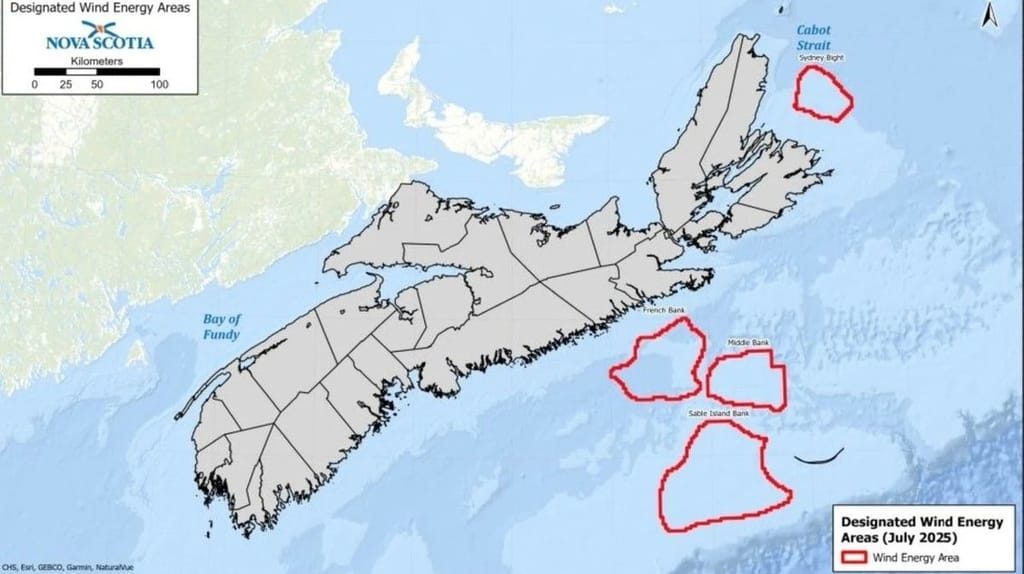
Nova Scotia has suitable conditions for wind power generation, and is planning to put licenses for up to 15 gigawatts of capacity out to tender in the near future. The timeline is as-yet uncertain, as the province has delayed an initial tender expected this year in order to run a new round of consultations with First Nations.

that matters most
Get the latest maritime news delivered to your inbox daily.
The province says that it has the capability to supply about one-quarter of Canada's power needs with offshore wind alone - an abundance that would supply Nova Scotia, with enough left over for other provinces and for American consumers. Potential lease areas are located off the island's southeastern and northeastern coastlines; the consultations focus on three blocks located nearer to shore. Nova Scotia's premier, Tim Houston, calls the plan "Wind West" and has secured a CA$100 million support package from Canada's federal government to move the proposal forward. Early efforts include wind-measurement buoys and scoping studies on long distance transmission lines.
That power is attractive to Canada's southern neighbors. "We need clean, affordable power at scale. We have a shortage of those resources, and Nova Scotia has an incredible resource they are hoping to capitalize on — and they are looking for partners," said Vermont Department of Public Service commissioner Kerrick Johnson, speaking to Vermont weekly Seven Days. If carried out, the deal might see power from Nova Scotia routed over the Canadian grid to the Vermont border, where an existing HVDC interconnection would carry it over onto the American grid. Alternatively, it might require new long-distance transmission infrastructure to move the power to market in New England.