U.K. to Double Offshore Wind Capacity
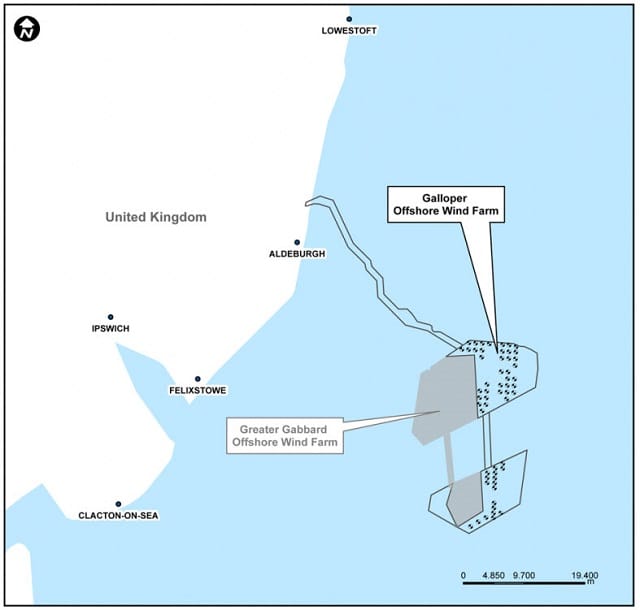
RenewableUK, the trade association representing the wind industry, says the announcement by RWE Innogy of new project partners and investors for the Galloper offshore wind farm off the coast of Suffolk, U.K., demonstrates the robustness of Britain’s world-leading offshore wind market.

that matters most
Get the latest maritime news delivered to your inbox daily.
UK Green Investment Bank (GIB), Siemens Financial Services and Macquarie Capital, join RWE Innogy in becoming 25 percent joint equity partners of the 336MW Galloper Offshore wind project. The deal will enable construction of the project to commence in November 2015.
The news follows the announcement on Wednesday that Dong Energy has made a final investment decision to build Walney Extension offshore wind farm off the coast of Cumbria.
The confirmation of the two projects, which have a combined capacity of nearly one gigawatt, means that the U.K. now has more than 10GW of offshore wind capacity either operational or under construction, or with financial support fully secured.
This consolidates Britain’s global lead in offshore wind, and will double our current operation capacity of just over 5GW. 10GW of offshore wind will generate sufficient electricity to meet the needs of more than seven million British homes.
RenewableUK’s Director of Policy for Economics and Regulation, Dr Gordon Edge, said “The U.K. is the number one destination for offshore wind investors. This week’s two major announcements of offshore wind projects achieving financial close, securing billions of pounds in investment, show that it remains an attractive place to do offshore business.
“The Government’s advisory body, the Committee on Climate Change, is now recommending we install 1-2 gigawatts of offshore wind a year throughout the 2020s to meet out carbon reduction goals, so we could reach as much as 30GW by 2030. The CCC says offshore wind is set to become cheaper than gas during the next decade, so it offers excellent value for money in terms of keeping bills down. We’re also generating jobs, with 13,000 people already working in the industry – that could increase to 44,000 in less than 10 years.
“However, if we’re to continue to deliver ambitious offshore infrastructure projects throughout the 2020s, we need a clear plan from government stating how much offshore wind capacity it wants over the next decade. We’ve had some encouraging signals so far, but we need details of how the financial framework is going to work for offshore wind to deliver at scale, as a key part of the Government’s industrial strategy.”